

Tokyo
Sushi Kobayashi
鮨 こばやし
Tucked away on a quiet backstreet in Ebisu, Sushi Kobayashi marks the long-awaited debut of Chef Ikuya Kobayashi, whose name already carries weight among Japanʼs leading sushi
artisans. Having trained for ten years at the legendary Sushi Saito, earned two stars at its Hong Kong branch and later led 3110NZ by LDH Kitchen, he presents a personal vision of Edomae sushi at his very own counter. From the temperature of the rice to the balance with each topping, every detail is calibrated to express a refined flavor.
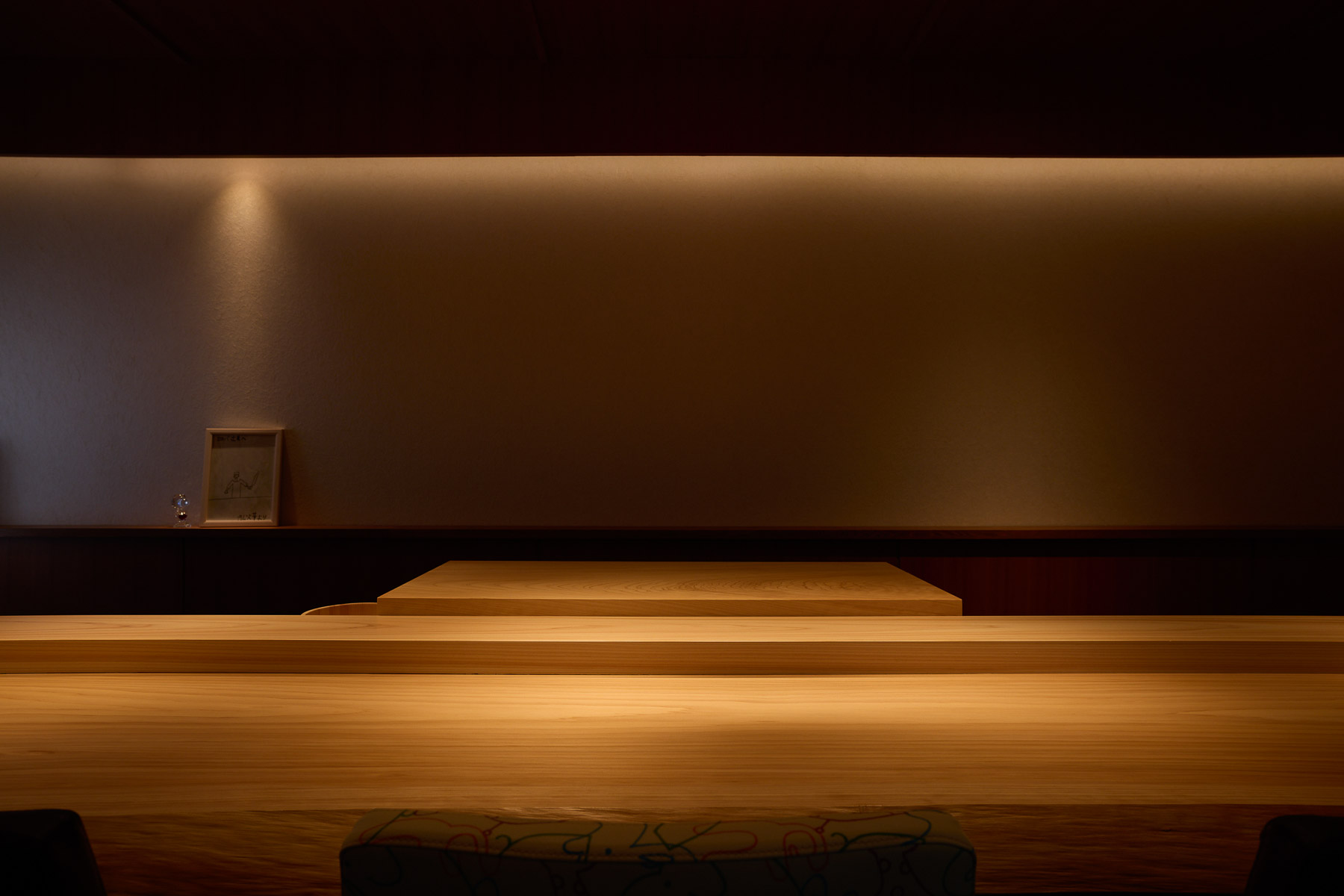
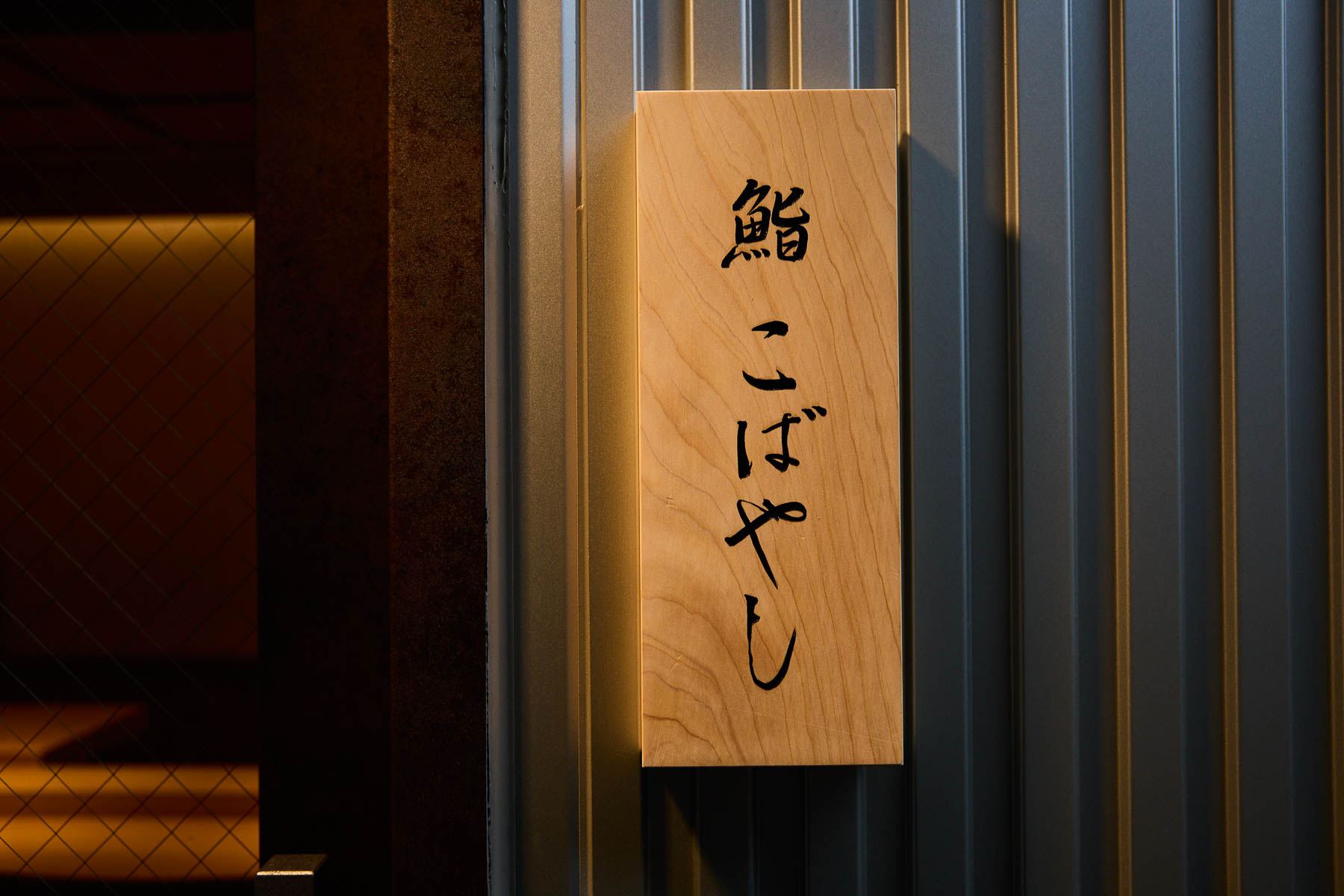
Opened in October 2025, Sushi Kobayashi sits on the second floor of a new building, accessed by a narrow staircase. The handwritten sign, created by the chefʼs father, offers a warming
welcome. Inside, an eight-seat hinoki counter stretches across the pristine dining room. Gazing down a row of black chairs, your eyes will quickly notice one different chair in the
middle, featuring an animal motif. “Thatʼs the VIP seat,” he jokes, revealing his sense of humor beneath his composed demeanor.
Each piece of nigiri is presented on a stunning piece of tableware. The collection centers on Arita porcelain and other fine Japanese ceramics. The drinks menu also complements the experience, with a selected mix of Champagne, Burgundy wines and sake. Among them, Abekan Junmai Karakuchi from Miyagi Prefecture is the chefʼs personal favorite. Near the
window, a large slab of aged wood serves as both decor and symbol. “I found it at a lumber shop in Shizuoka,” Kobayashi explains. “It came from a 500-year-old shrine tree in Niigata-
My hometown. It felt like destiny.”
CUISINE
A Quest for Purity and Balance
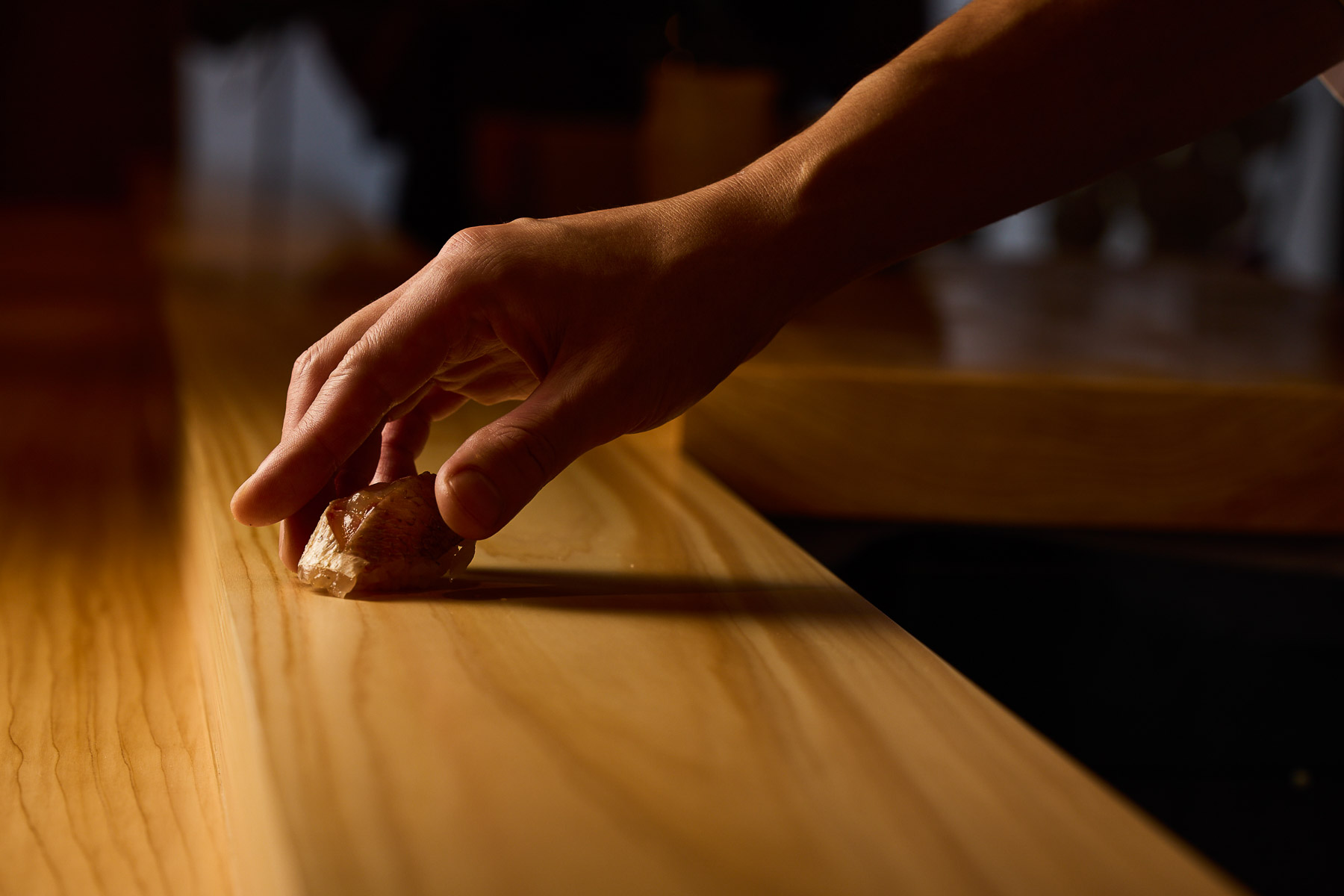
Drawing on the techniques refined during his years at Sushi Saito, Kobayashiʼs guiding principle is simple. “I want my sushi to have a clean, not overpowering flavor,” he explains.
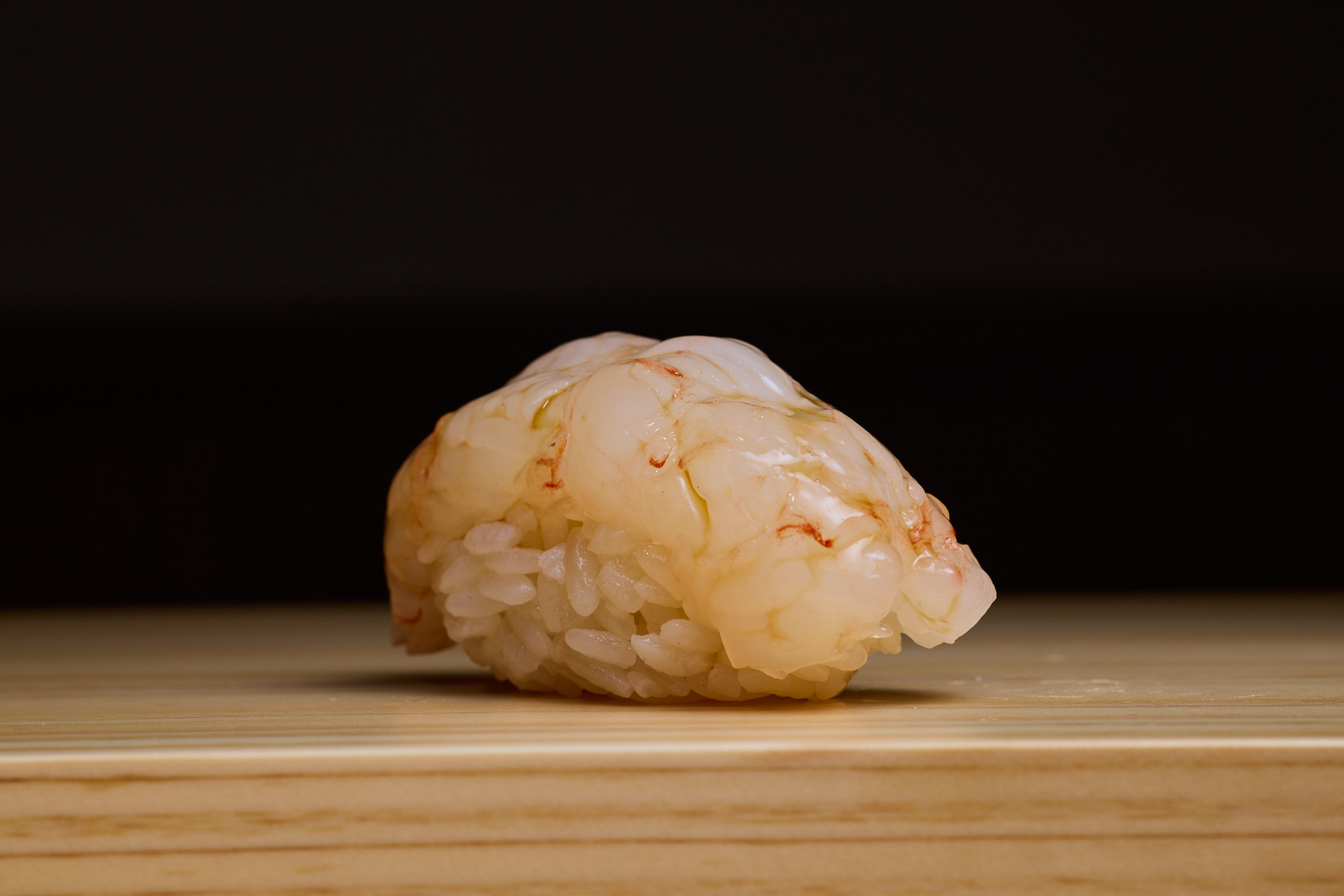
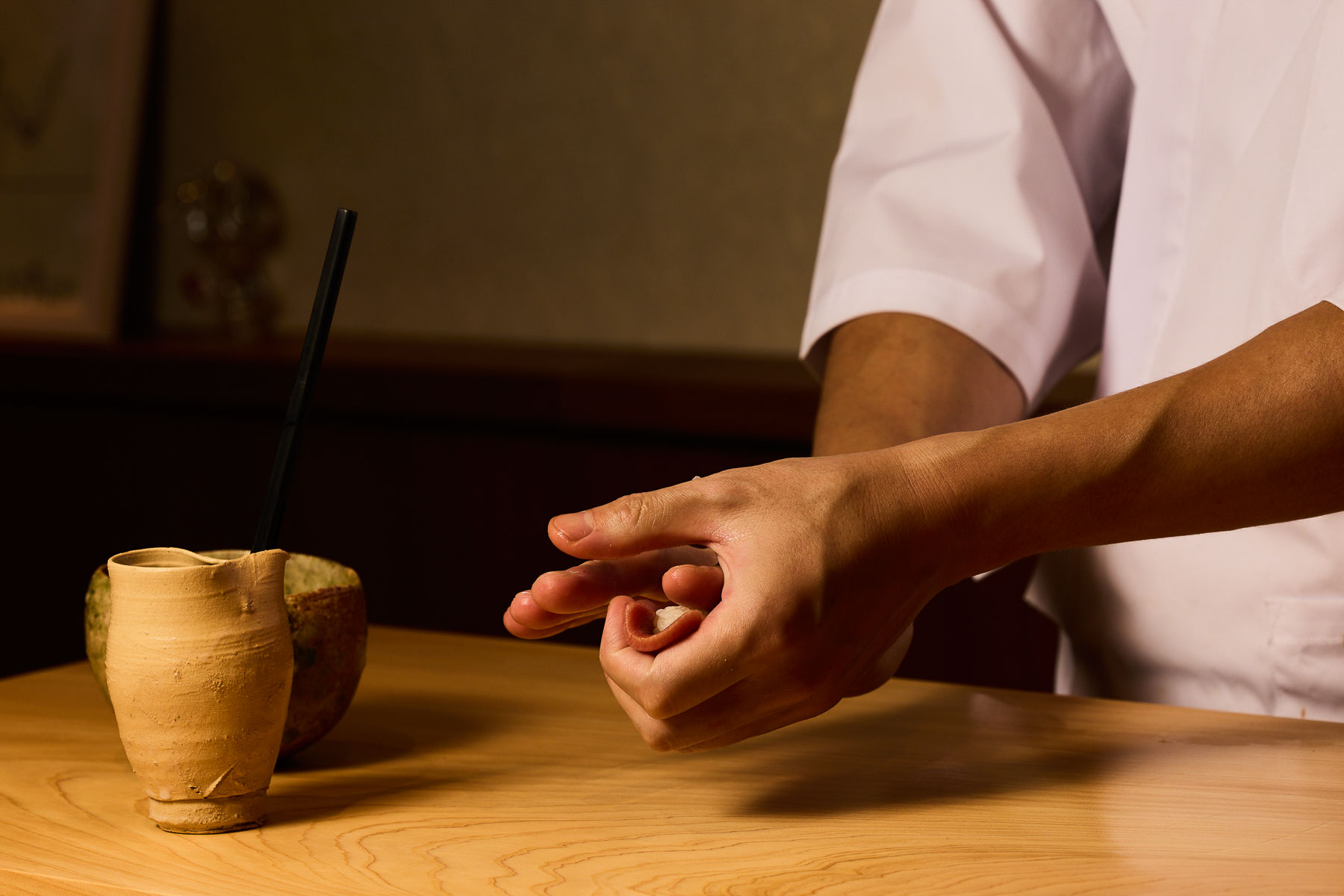
To start, the harmony between rice and topping takes precedence. The temperature of the rice is adjusted to complement each ingredient- slightly warmer for fatty fish, and around body temperature for squid and raw shrimp. The nikiri soy glaze leans subtly sweet, enhancingthe flavor of the fish rather than dominating it.
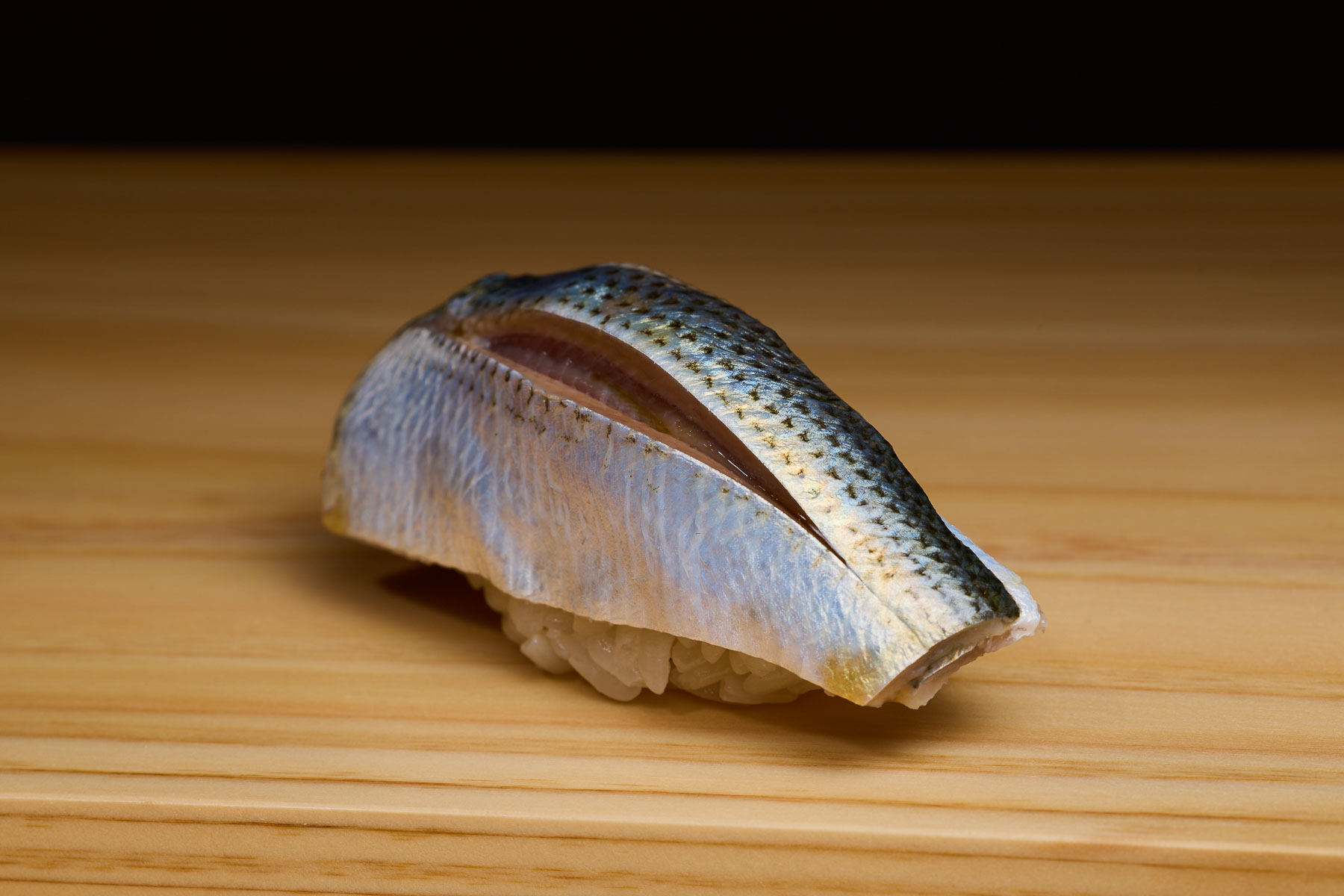
His kohada, the benchmark of Edomae sushi, is salted first, then marinated in vinegar for 15 to 20 hours, and finished with a delicate squeeze of sudachi citrus. The piece leaves a tender
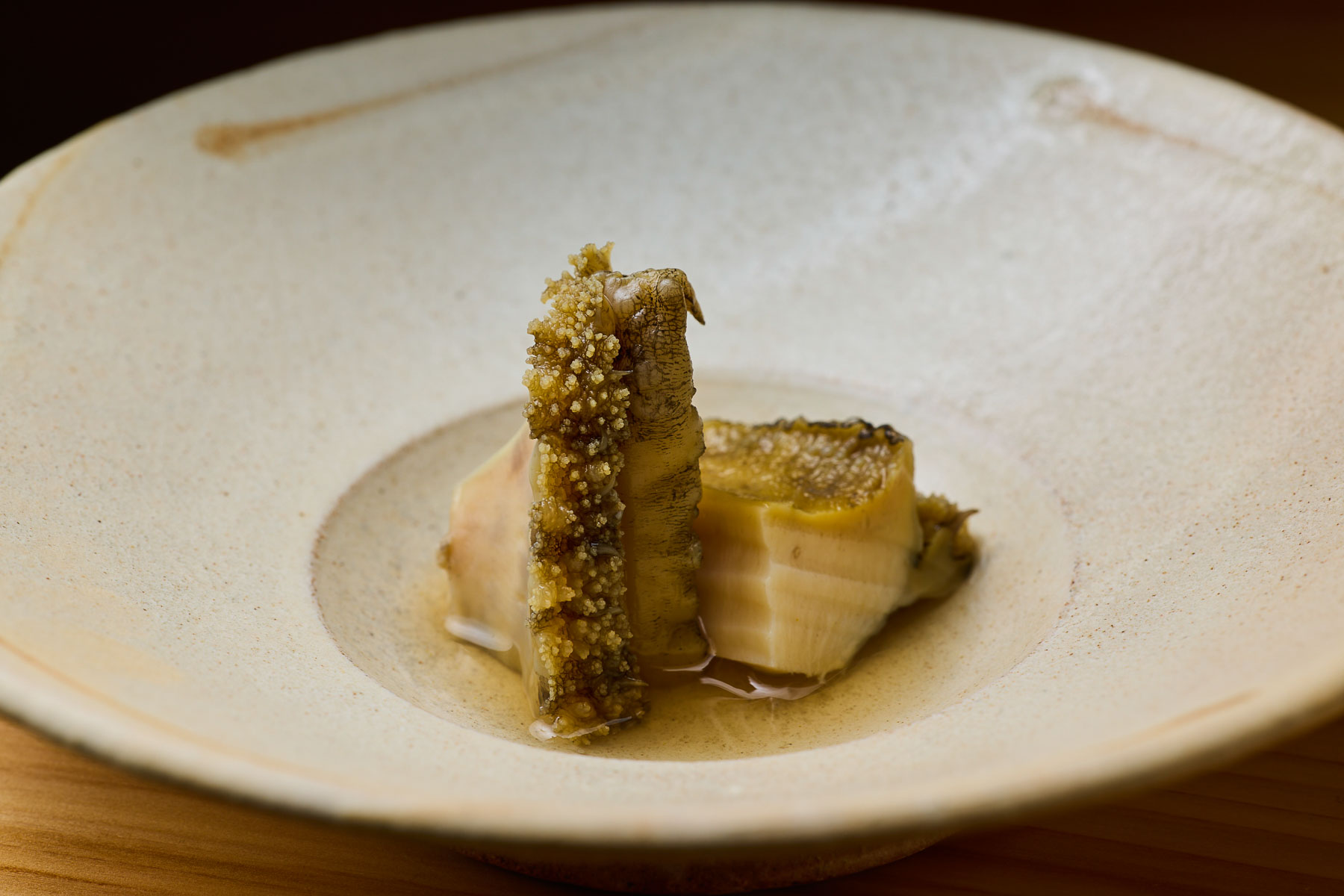
and fragrant memory on the palate. The abalone, a chef signature, is cooked gently with nothing but kombu, sake and salt, yielding remarkable softness and sweetness. “You wonʼt
find this prepared quite the same way anywhere else,” Kobayashi says with pride.
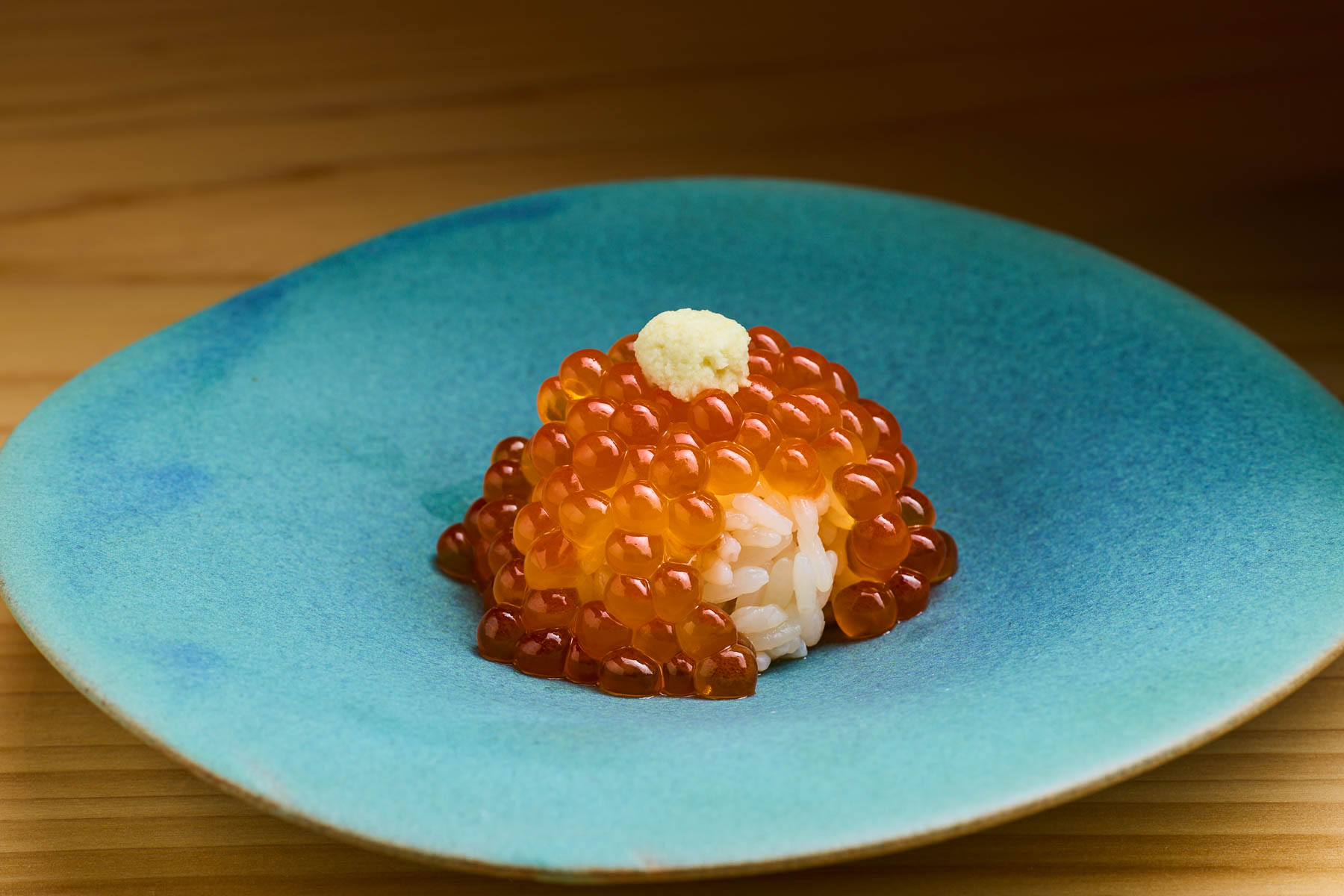
The salmon roe from Aomori is marinated in soy sauce and arranged like amber pearls over a small mound of rice, with a touch of wasabi gleaming on top. Presented on a celadon-blue
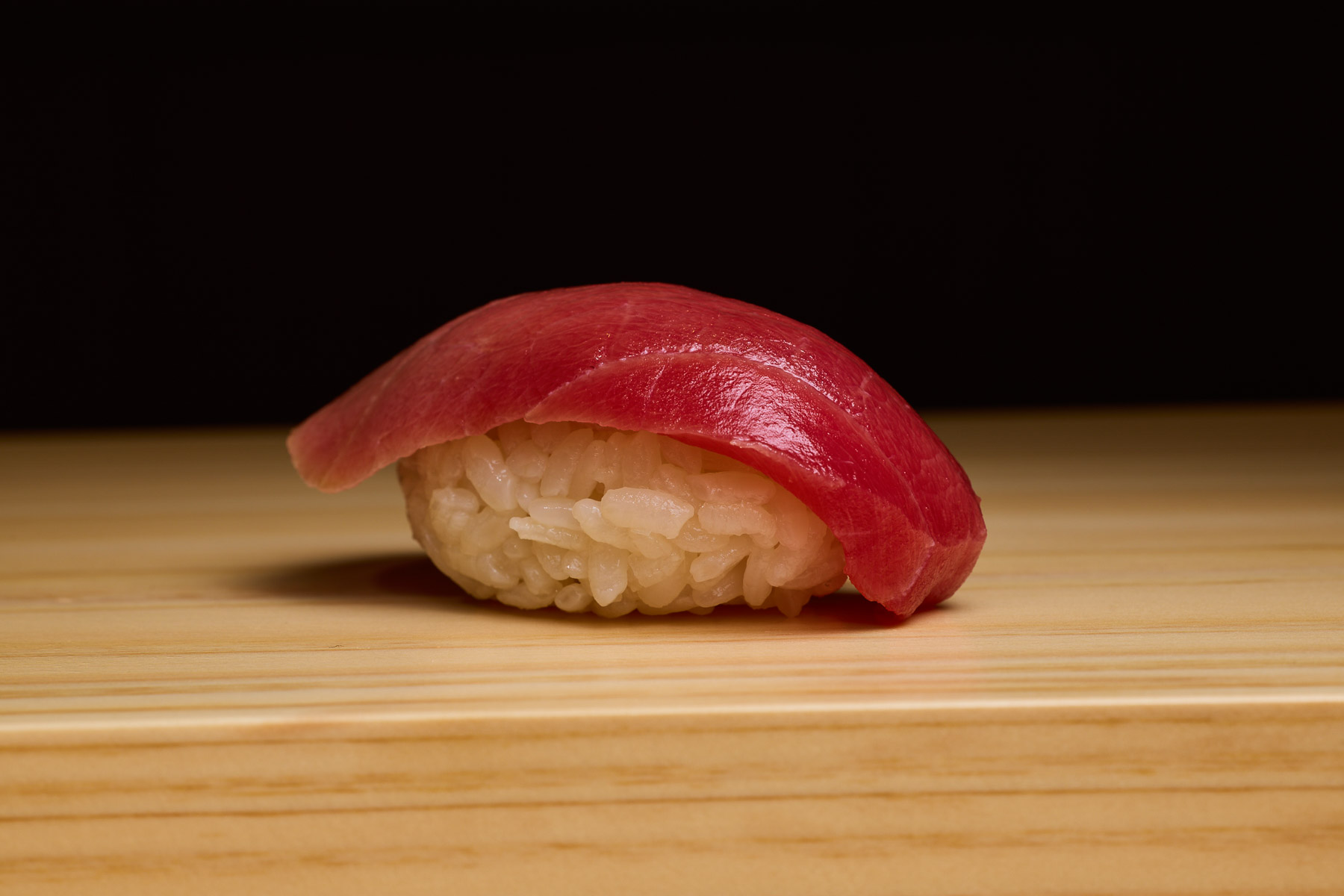
plate, it glows under the counter light. The rich chutoro comes from the renowned Toyosu vendor Yamayuki, offering a supple texture and deep flavor that unfolds over the warm rice.
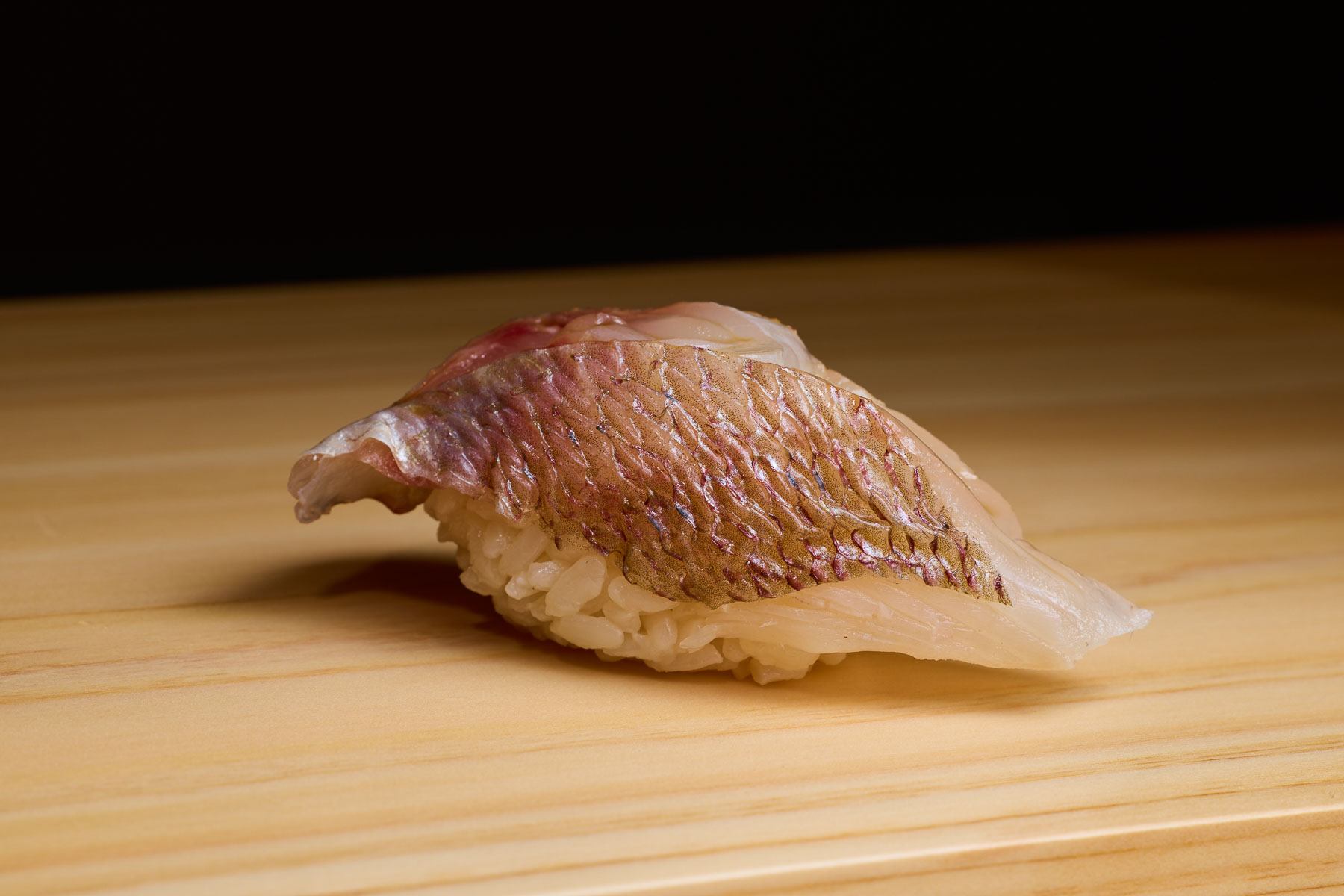
Young sea bream from Choshi is wrapped overnight in white kombu for its umami to mature. Botan shrimp from Hokkaido rests on rice that is cooled slightly to highlight its sweetness.
INGREDIENTS
Kobayashi continues to source from many of the same suppliers trusted by Sushi Saito, yet makes his own daily decisions based on what he finds at the Toyosu market. Top-grade tuna arrives from Yamayuki, while wasabi comes from a dedicated grower in Shizuoka. Nori seaweed is sourced from the clear waters of Ariake.
The rice is Sababiyori, chosen after an extensive search. With balanced moisture and a resonant umami, it requires only minimal vinegar and salt. The grain size, Kobayashi notes,
perfectly matches his ideal balance with the topping. “Among all the varieties I tried, this was the one that truly fit the image of the sushi I wanted to make.”
CHEF
Ikuya Kobayashi
Mementos
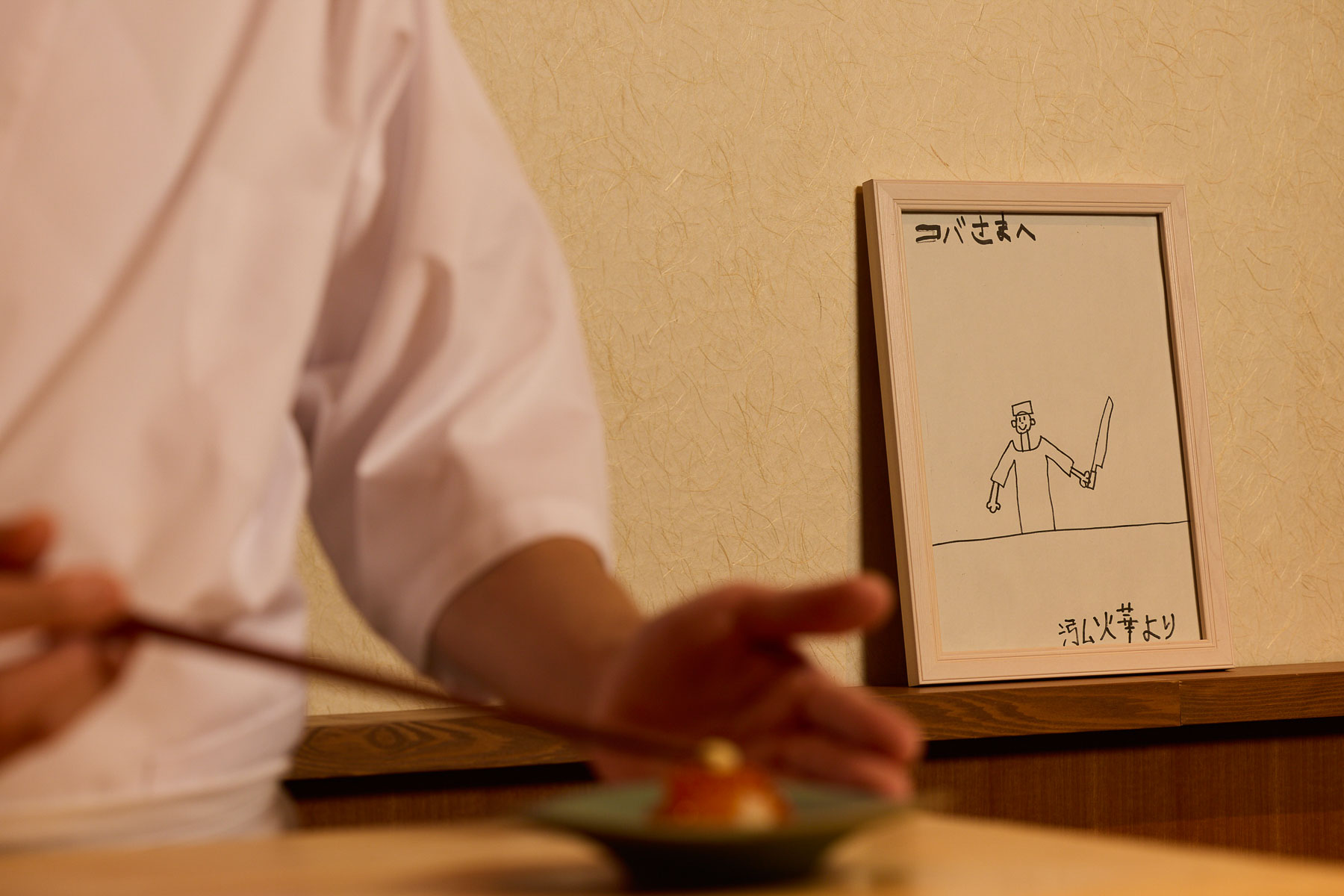
Though Sushi Kobayashi opened only recently, Kobayashi already enjoys a strong and loyal following built over years at the counter. He cherishes the gifts and letters given to him by
long-time guests, which he now displays proudly in his new restaurant.
Among these mementos is a painting by the son of a foreign guest who has been dining at Kobayashiʼs counters for nearly fifteen years. When the boy recently visited, he brought the
drawing along with a handwritten note. “I love Kobaʼs sushi and bragged about it to my friends,” it said.
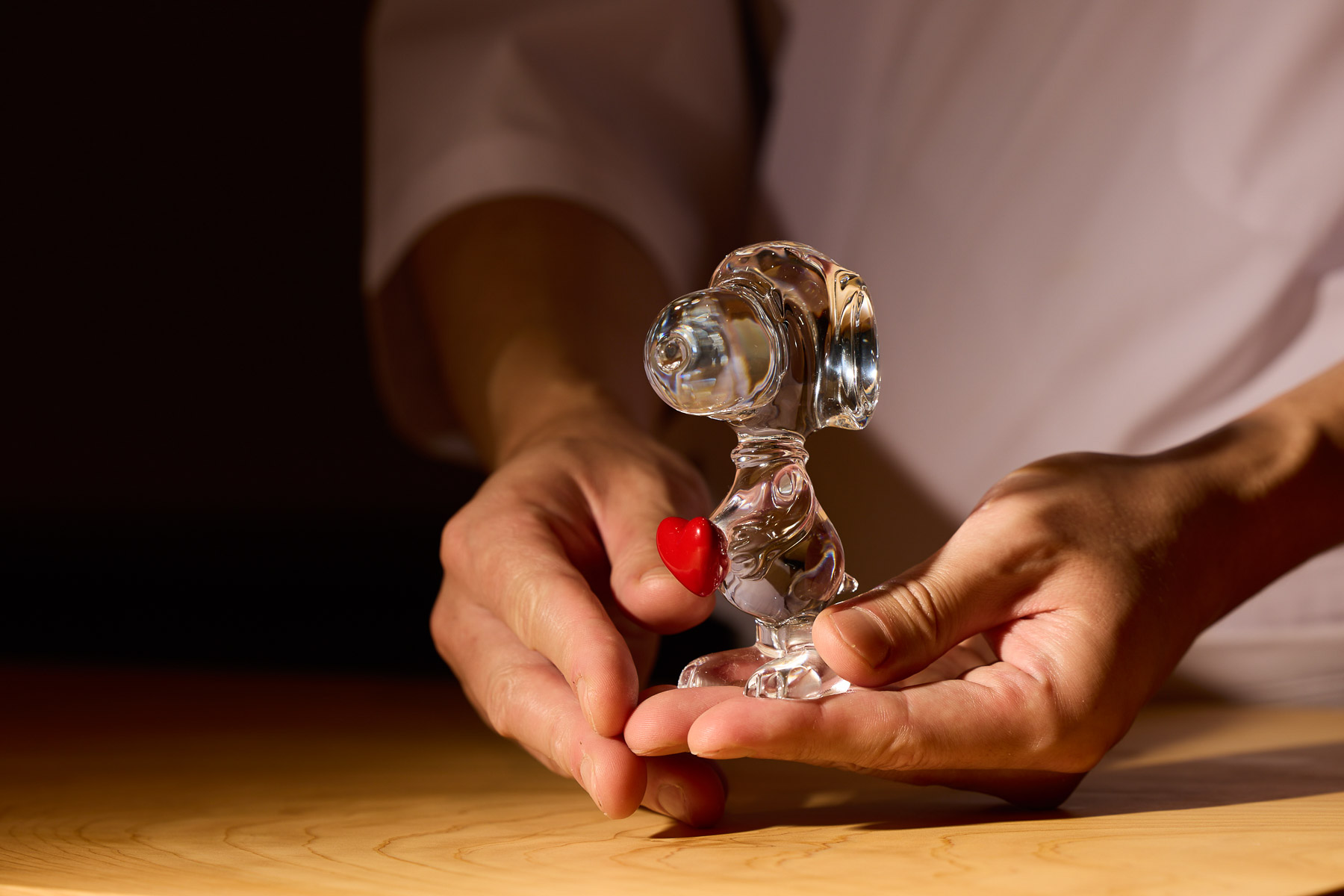
Another treasured item is a Baccarat Snoopy figuring, a gift from another guest on his birthday in 2023. The two first met in Hong Kong at Sushi Saito and their friendship has continued across borders ever since. At Sushi Kobayashi, these connections extend far beyond the counter.
Course
- The price includes our booking fee of ¥8,000
- The price includes our booking fee of ¥8,000
Tokyo
Sushi Kobayashi
鮨 こばやし


- GENRE
- Sushi, Ebisu
- ADDRESS
-
2F Ebisu Abac Building, 2-18-8 Ebisu, Shibuya, Tokyo, Japan

- OPEN
- 12PM / 6PM
- CLOSED
- Sundays and Mondays
- URL
- NA
- PHONE
- NA


