

Fukuoka
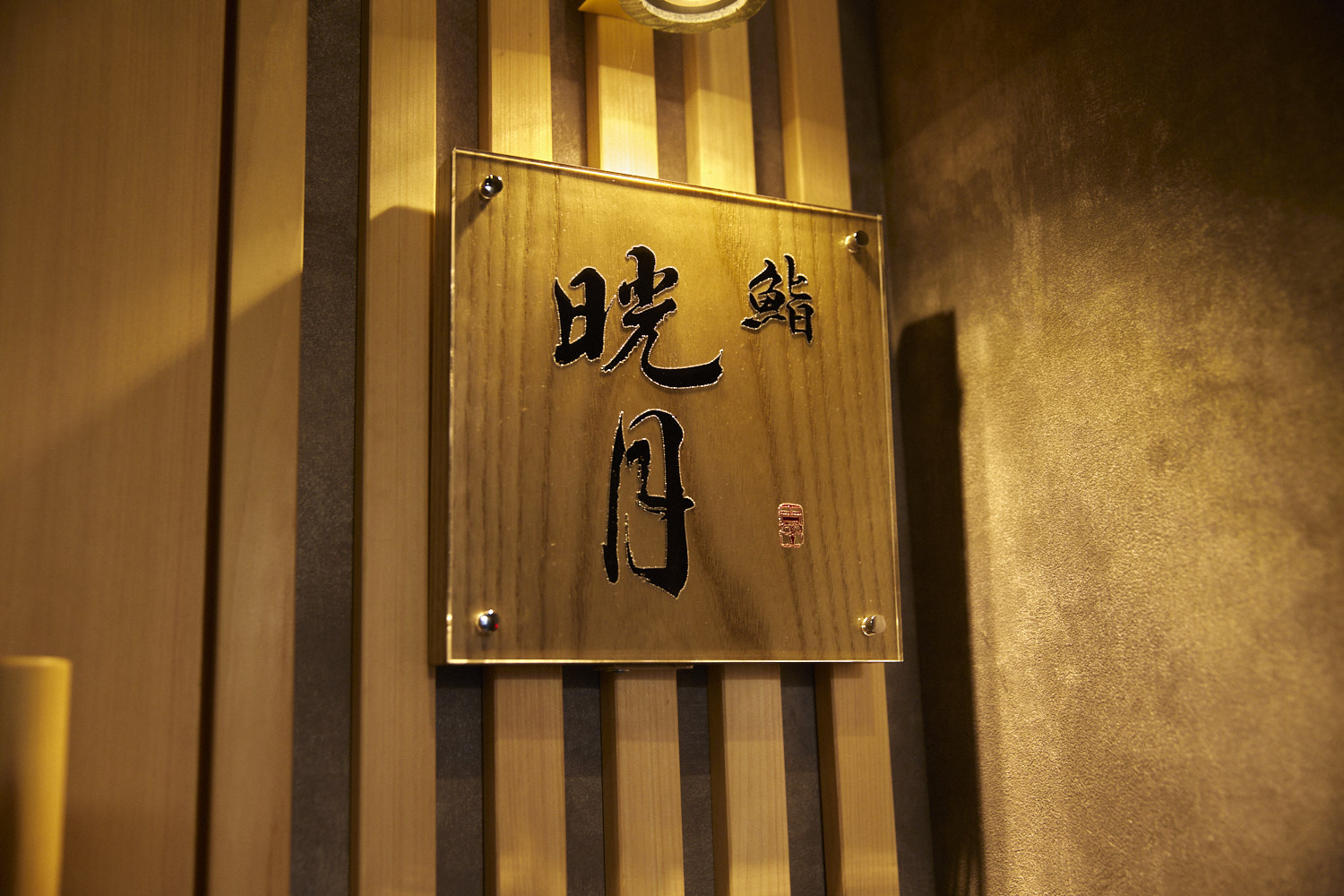
Sushi Kogetsu
鮨 晄月
The experience at Sushi Kogetsu is shaped by Kyushu’s culinary traditions. Led by Daisuke Hata, the new restaurant draws on the techniques he mastered during his apprenticeship at Tenzushi Kyomachi, one of Japan’s most influential sushi bars. He forms his nigiri using a distinctive “Kyushumae” technique that leaves the rice slightly loose, allowing it to fall apart with the topping in the mouth. Served with warm hospitality, Hata’s refined cuisine offers a taste of the region’s culture and its seasonal flavors.
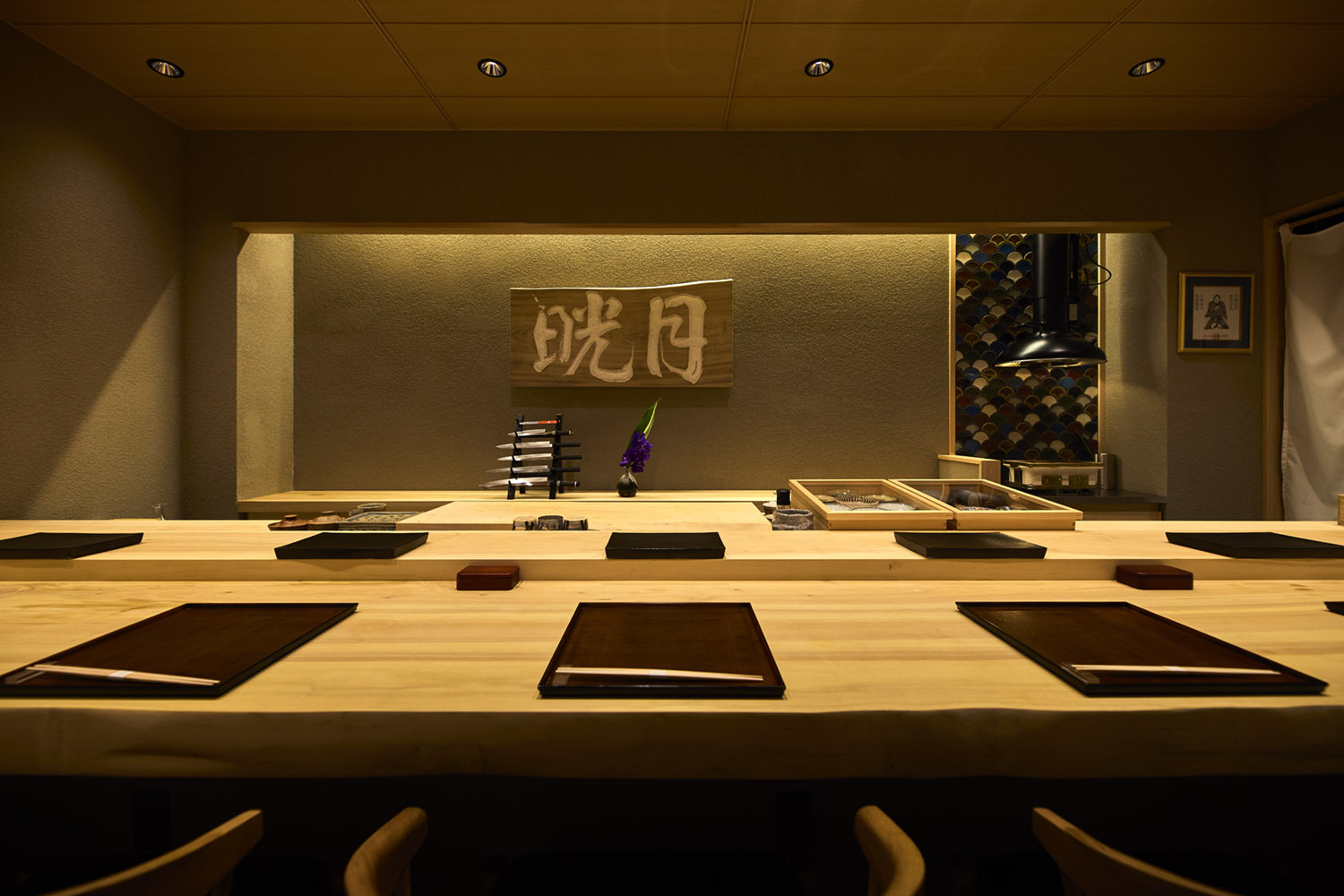
Opened in November 2025, Sushi Kogetsu is located a short walk from Kokura Station, a neighborhood of stores and small restaurants in the heart of Kitakyushu. Inside, the eight-seat counter is carved from pale ginkgo wood. The smooth counter is made completely flat so each guest can see the chef’s movements from slicing tuna to molding a piece of nigiri. The setting creates an intimate and inviting atmosphere.
“Taste is central, but I hope guests also enjoy the time they spend in the room,” Hata says. What matters most to him is when diners tell him that they had a great time as they leave, a remark he sees as something deeper than praise for his dishes. His sense of hospitality extends to the fishermen and suppliers behind every ingredient, whose work he aims to honor through his own. On his days off, he visits growers and sake breweries to understand their craft firsthand and bring their intentions back to his counter.
CUISINE
Kyushumae Sushi, Rooted in the Tenzushi Tradition
Sushi Kogetsu’s omakase experience reflects the philosophy Hata internalized under Koichi Amano of Tenzushi Kyomachi, one of Japan’s most influential sushi bars. Tenzushi’s signature squid nigiri appears in tribute to his training, but the rest of the menu reveals a more personal interpretation of the Kyushumae-style sushi.
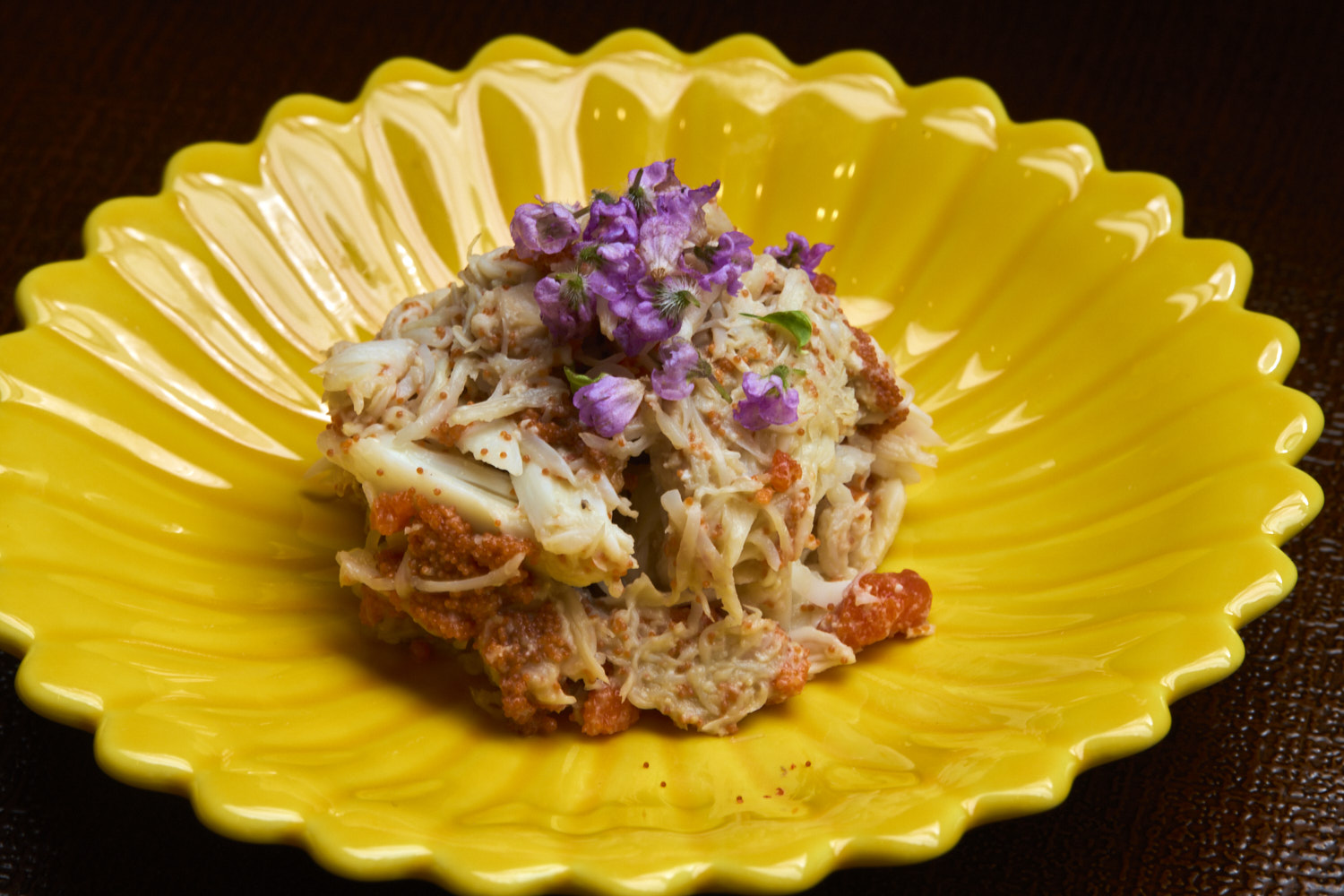
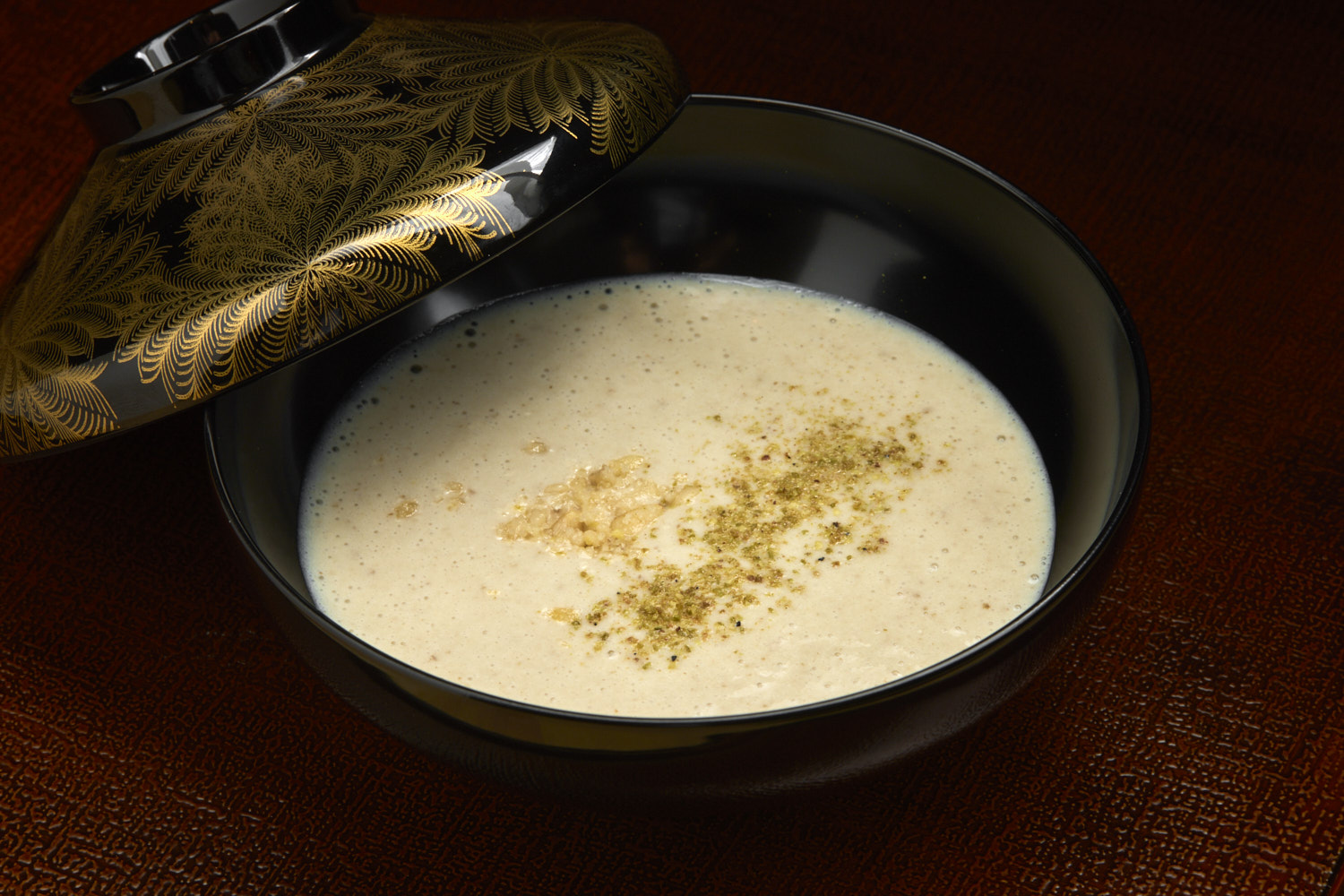
The opening dish is always surinagashi, a traditional pureed soup that gently prepares the stomach before the sequence of raw fish. It’s served warm in winter with ingredients such as burdock root and soy milk, and chilled in the summer with vegetables such as okra and mountain yam. Presented on a vivid yellow plate, the seasonal crab is steamed, flaked, dressed in sanbai-zu and finished with shiso blossoms. Other appetizers such as charcoal-grilled dried horse mackerel, deep-fried ginkgo nuts and bonito sashimi demonstrate the chef’s mastery of traditional Japanese cuisine.
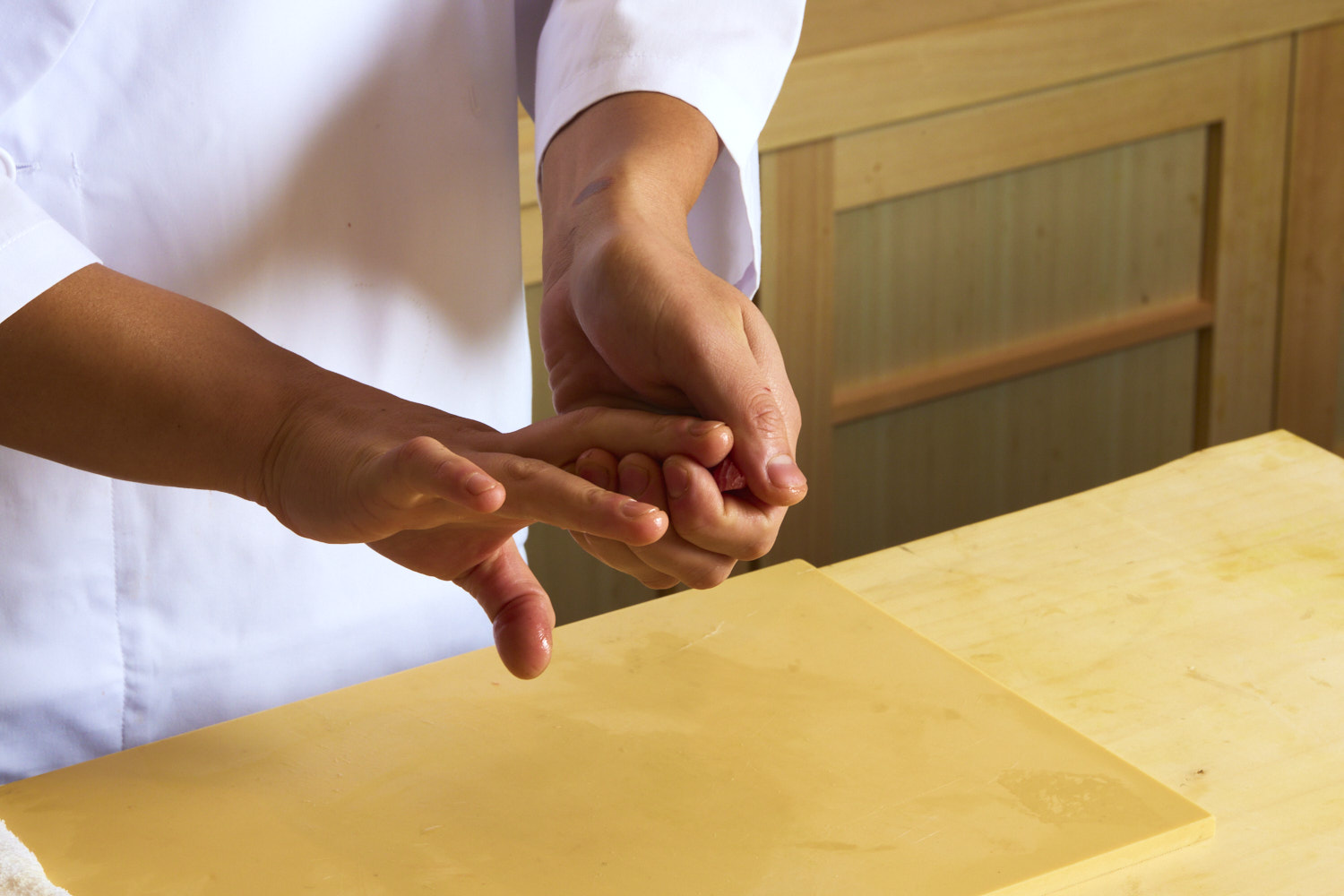
The nigiri course starts with tiger prawns, a choice that allows guests to enjoy their rich sweetness without interference from stronger flavors that appear later in the course. Different from the classic hontegaeshi in Edomae-style sushi, Hata shapes the rice molds using the kotegaeshi technique, a gentle turning motion that adds air to the center while keeping the exterior lightly firm. Unlike the firmer Edomae grip, the nigiri settles softly on the palate, allowing the rice and topping to loosen as you eat it.
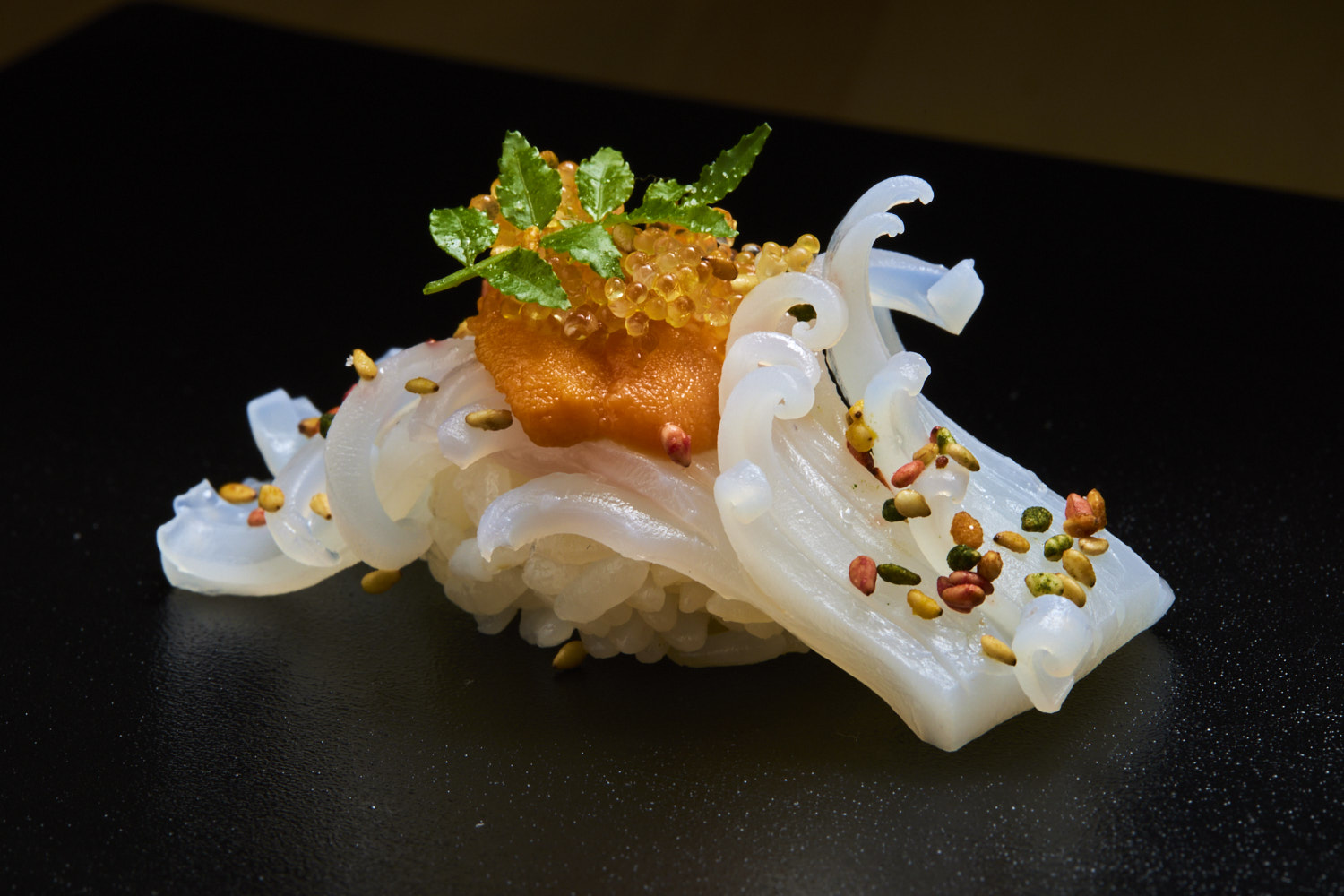
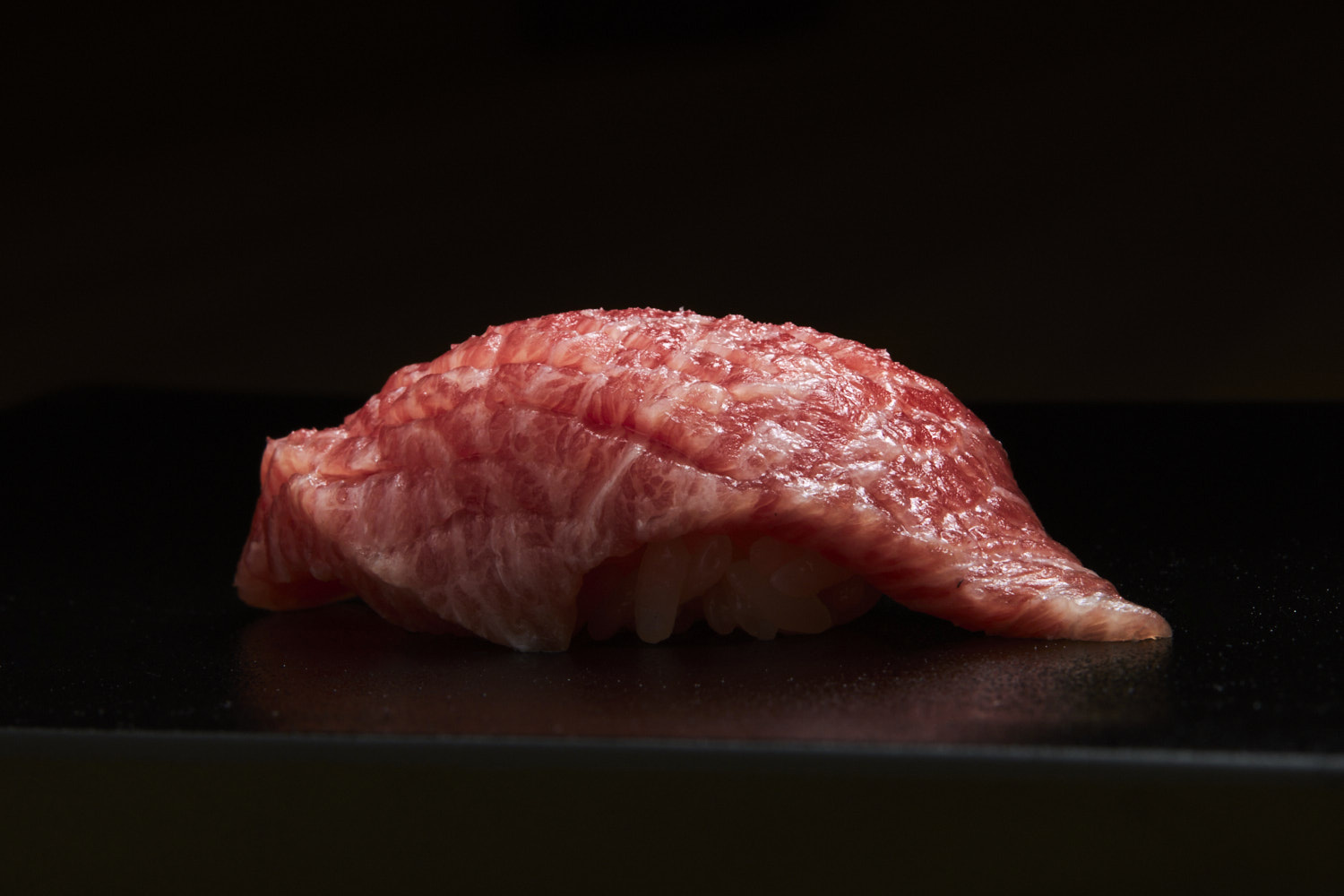
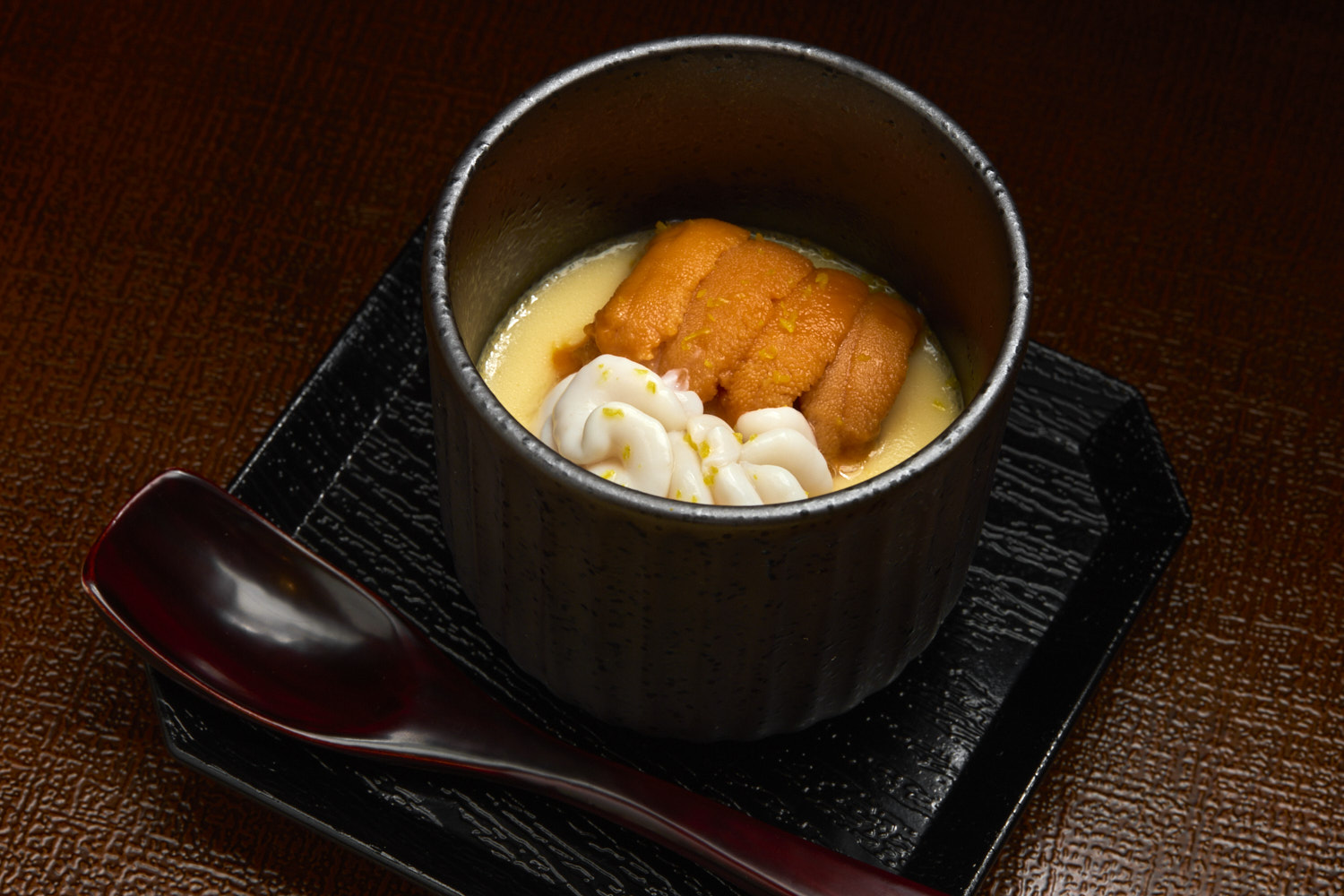
The Tenzushi-style squid is made with neon flying squid from Saga Prefecture and topped with sea urchin, flying fish roe, sesame seeds and a touch of citrus. The layers of colors and textures create a small work of art. The marbled piece of tuna is marinated with a broth of dried tuna, sardines and bonito, deepening its rich umami.
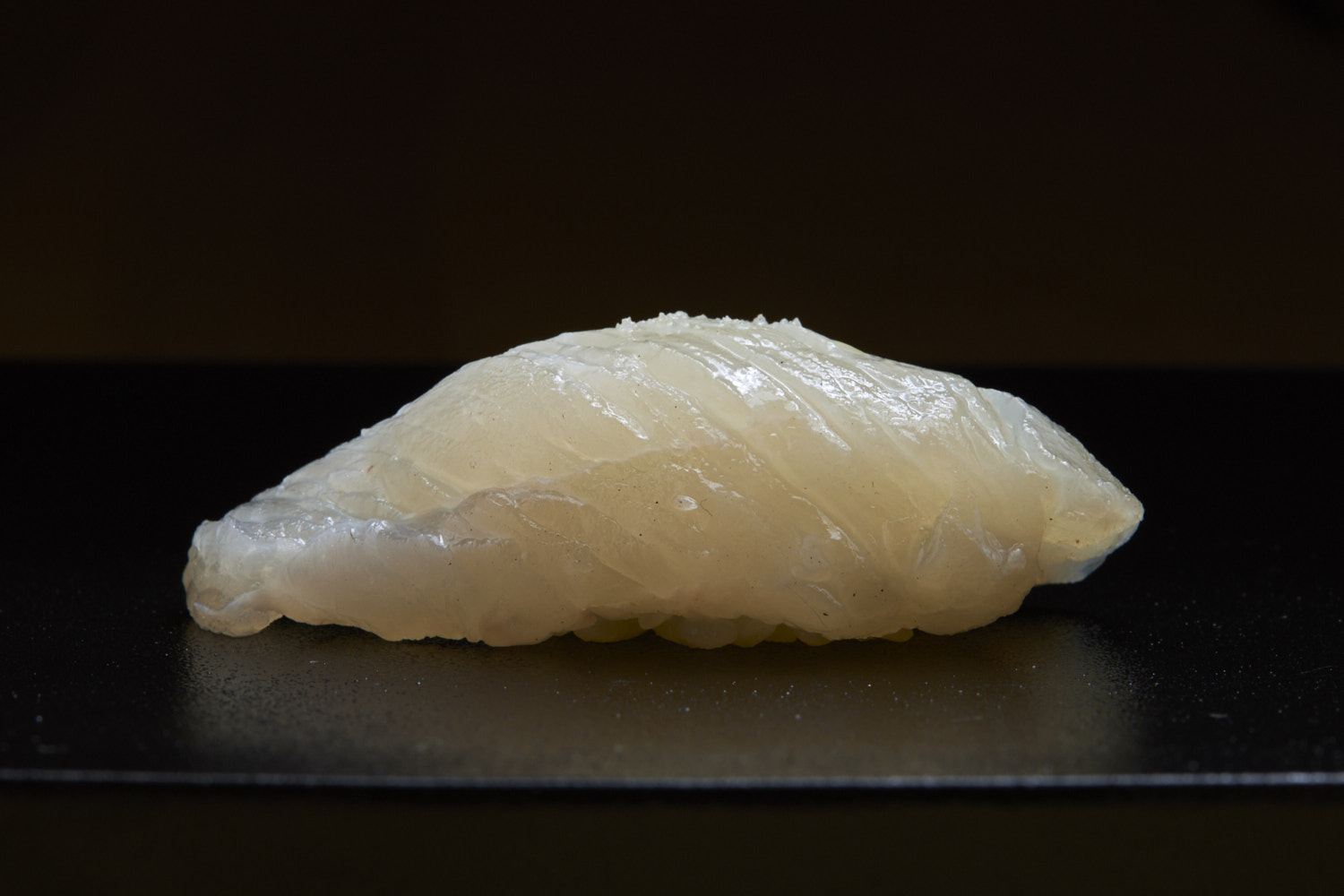
Kohada from Amakusa is firmly seasoned for a clean finish. Kue, or longtooth grouper, is served simply with a light touch of salt to highlight its flavor. The rice is seasoned with an original blend of four vinegars, and the soy sauce is a careful mix of five different ones.
For dessert, Hata serves vanilla ice cream made with eggs, drizzled with rum and salt. “Sushi restaurants typically finish with a sweet tamago omelet, but I thought ice cream could work just as well,” he says with a smile.
INGREDIENTS
At Sushi Kogetsu, Hata is cultivating his own network of suppliers. Seasonal food arrives from the main fisheries in Kyoto, Amakusa and two in Kyushu. The chef often joins the fishermen on their boats and visits producers to understand the work firsthand. Tuna comes from Yamayuki in Toyosu, one of the top tuna suppliers in the country.
For sushi rice, Hata uses Hinohikari grown in Oita, known for its glossy grains and sweet flavor. The fields are cultivated without pesticides and fed by exceptionally clean water, described by locals as a place where fireflies dance. The wasabi is a blend of two varieties, one from Gotemba with a sticky texture and another from Saga with a fresher profile. Eggs come from the Ranoo farm in Oita.
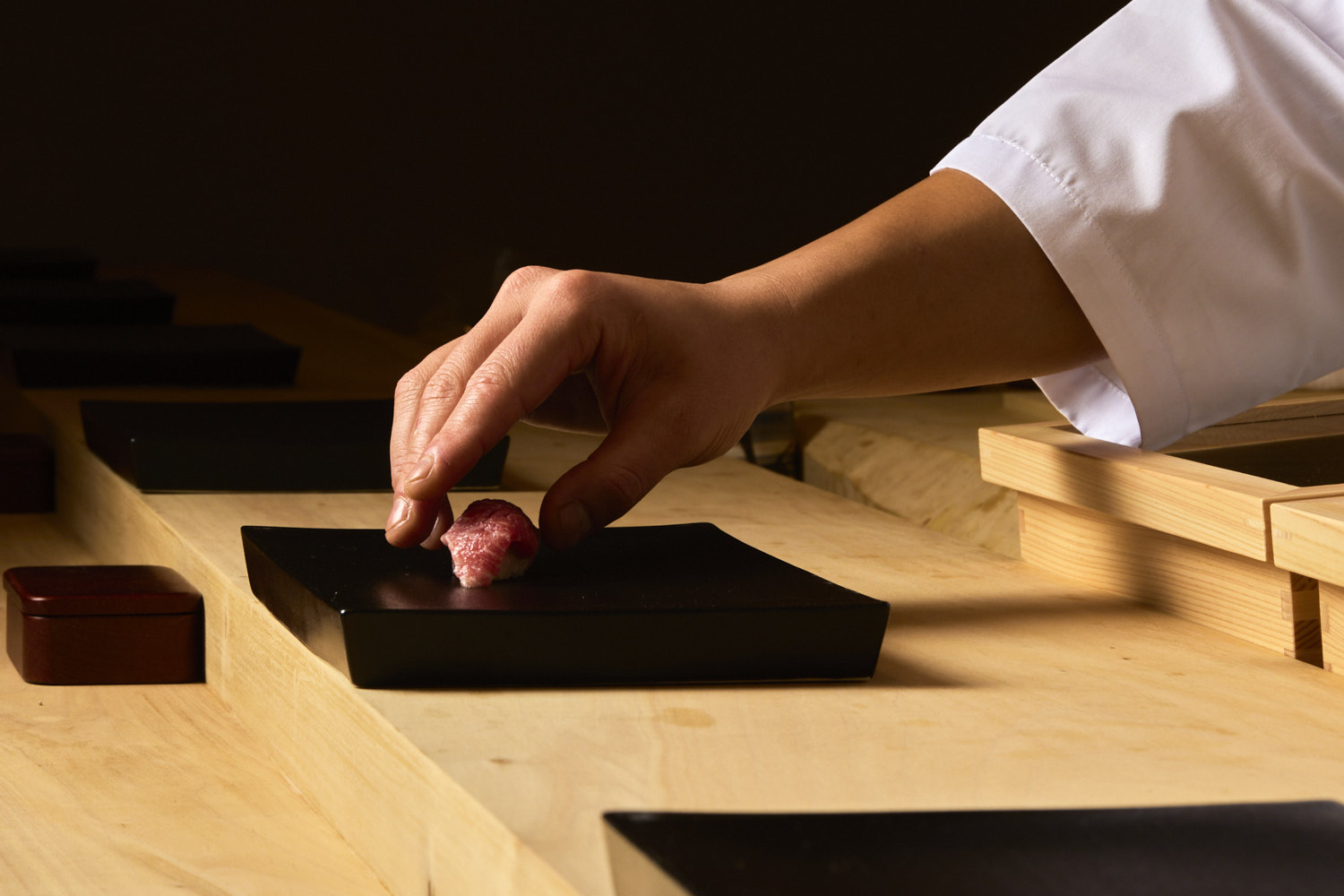
CHEF
Daisuke Hata
SAKE
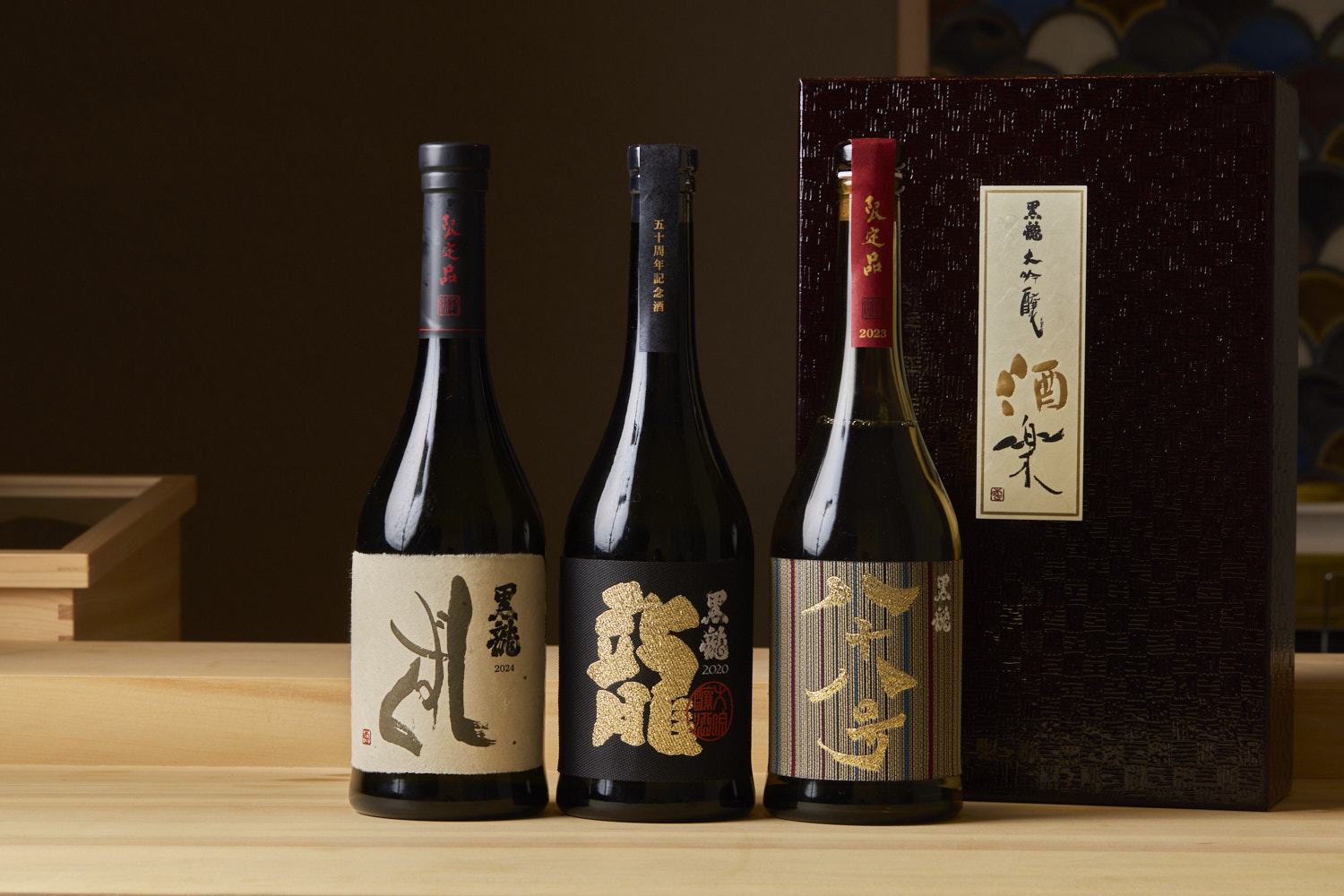
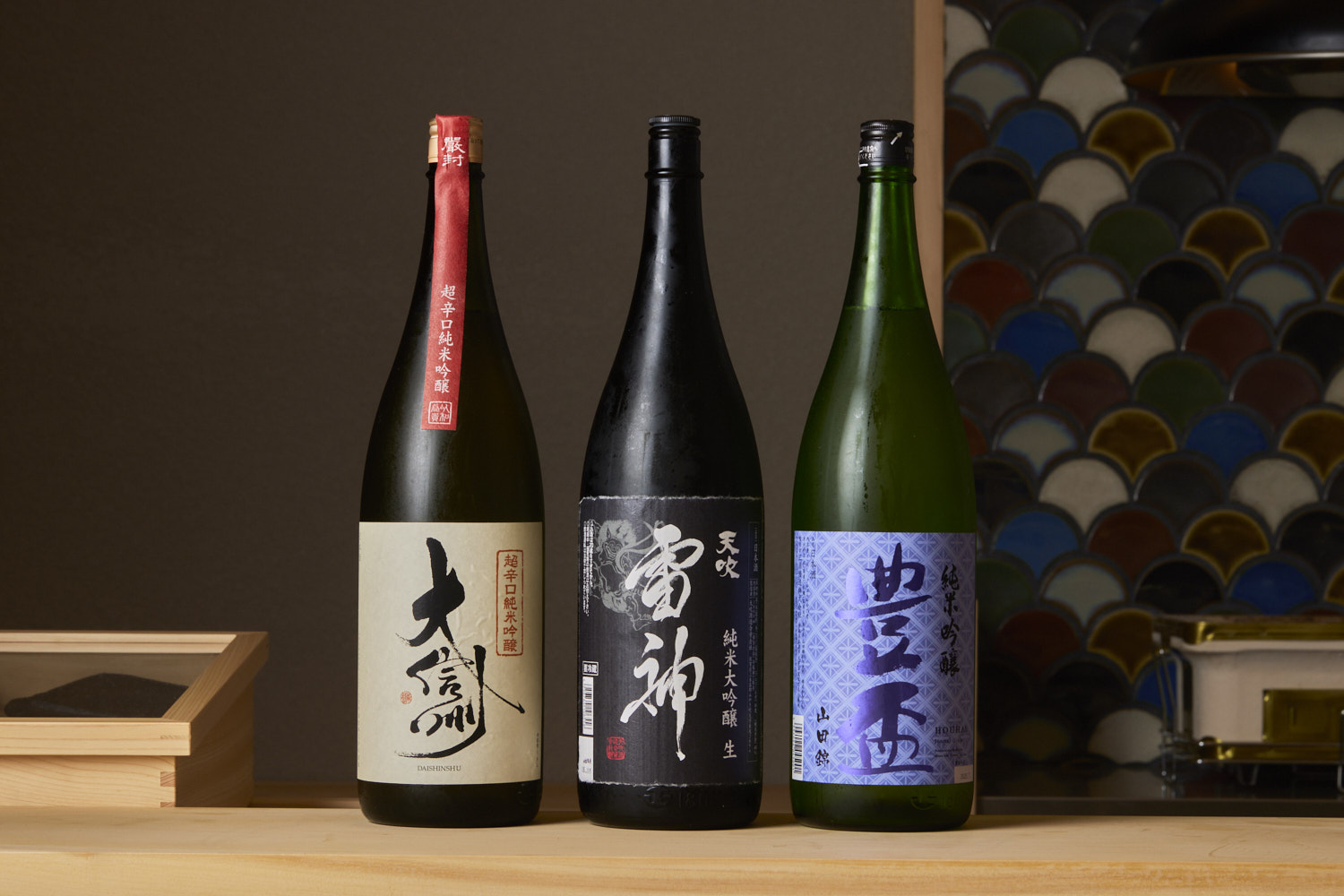
Hata selects a variety of rare and fine sake from breweries he has built close relationships with over the years. Without a printed menu, he shares his personal recommendations with guests as the meal progresses. Some of his favorite vintages include the auction-style Muni from Kokuryu Sake Brewery in Fukui Prefecture, as well as Shizuku and Yasohachigo. Hata recalls visiting Kokuryu’s auberge, Kanshuku En ESHIKOTO, where President Naoto Mizuno himself guided the tour through the property. He speaks with respect for their approach to brewing.
He also feels a strong connection to Amabuki Shuzo in Saga Prefecture. Amabuki uses various flower yeasts, one of which is abelia. The flower holds meaning for Hata because of his mother, who often repeated the phrase that appears on the Sushi Kogetsu menu: the more the rice ripens, the more it bows its head. Abelia was her favorite flower, carrying the message of modesty. When Hata shared this story with the brewery’s president, Sotaro Kinoshita, he responded warmly and began visiting the restaurant regularly.
Course
- The price includes our booking fee of ¥8,000
- The price includes our booking fee of ¥8,000
Fukuoka
Sushi Kogetsu
鮨 晄月


- GENRE
- Sushi, Kokura
- ADDRESS
-
Miwa BLDG 202, 1-4-11 Uomachi, Kokurakita Ward, Kitakyushu-city, Fukuoka, Japan

- OPEN
- 12PM / 6PM
- CLOSED
- Sundays
- URL
- NA
- PHONE
- NA


