

Aichi
Joun
如雲
As its name suggests, the cuisine at Joun unfolds like drifting clouds. Gentle in flavor yet layered in depth, the omakase centers on Japan’s most coveted wagyu and seasonal delicacies. The menu follows an ingredient calendar that Chef Akiyuki Yamauchi compiles annually, allowing guests to time their visits around specialties like winter crab and early spring bamboo shoots. Salt and heavy seasoning are absent in his preparation; instead, he adopts traditional techniques to draw out the inherent umami of the ingredients.
Opened in late 2024, Joun marks the culmination of Yamauchi’s career, following his earlier successes at Joun Yamauchi and Awai Joun. He was among the earlier pioneers of kappo-style wagyu cuisine, applying Japanese methods to the preparation and flavoring of the meat. At Joun, he continues to evolve his approach, working exclusively with three of the country’s top beef brands— Omi, Hida and Matsusaka.
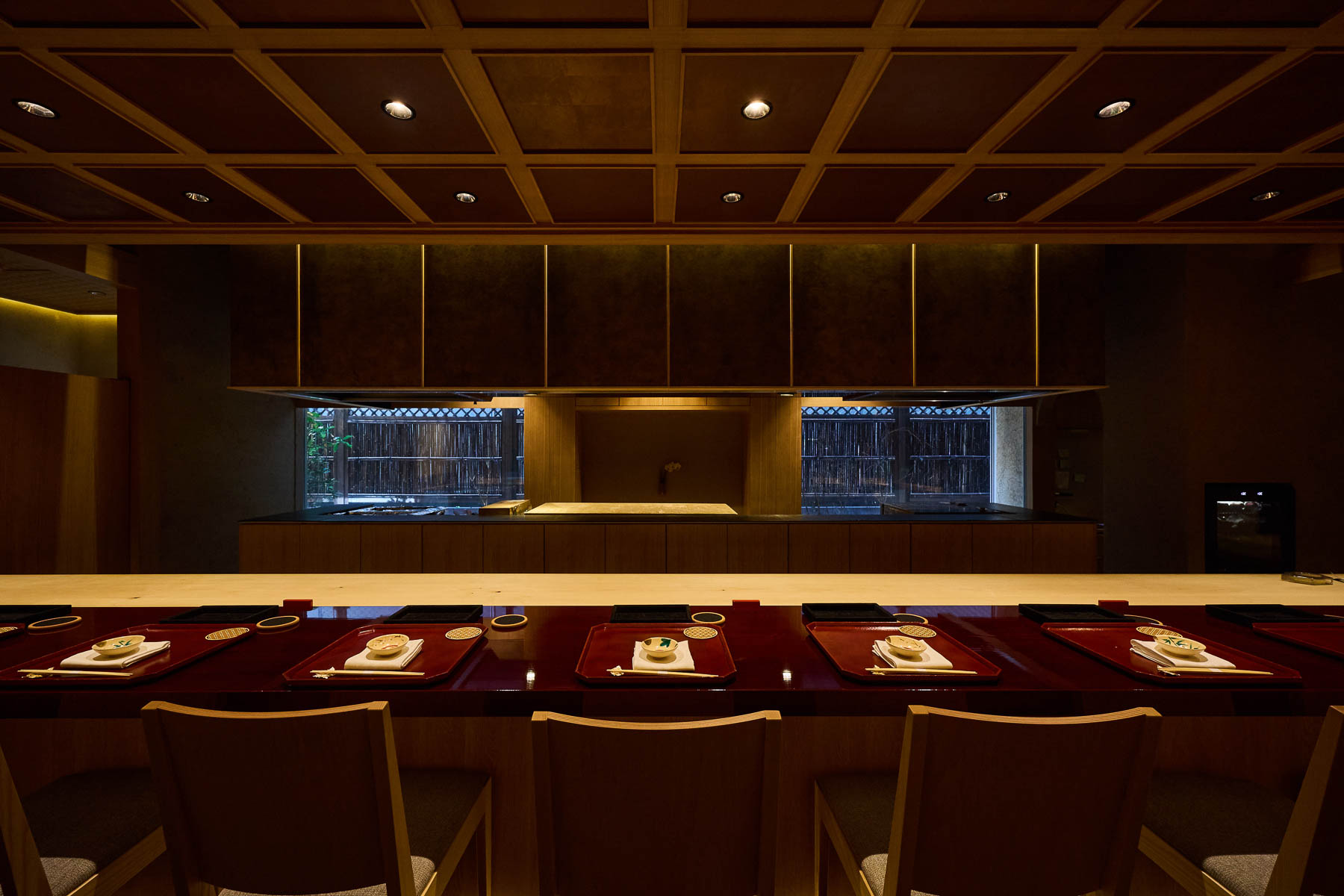
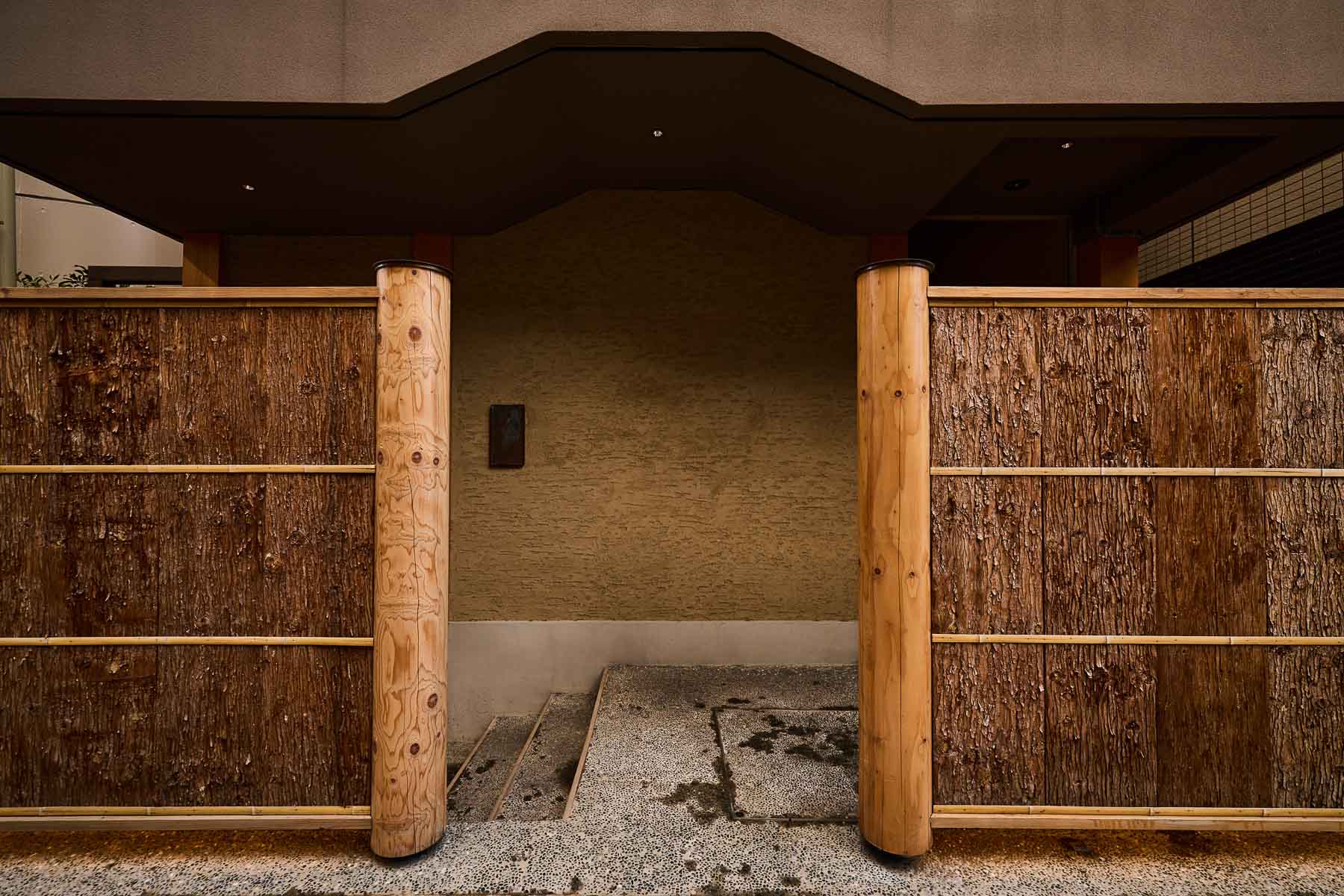
The restaurant sits in a quiet residential neighborhood, just a short car ride from Nagoya Station. The elegant entrance is marked by calligraphy written by the chef himself. Inside, the dining room is designed in sukiya-zukuri style, with a coffered ceiling and carefully framed views toward the kitchen and the adjacent tea room.
The eight-seat counter is a statement piece, made from a single slab of 240-year old zelkova wood. Its broad surface is finished in layers of lacquer that catch the low, warm light. Tableware changes entirely each month in tandem with the menu. The selection favors contemporary ceramic artists from the Tokai region while also incorporating late Edo-period antiques.
CUISINE
Prime beef. Omakase rhythm.
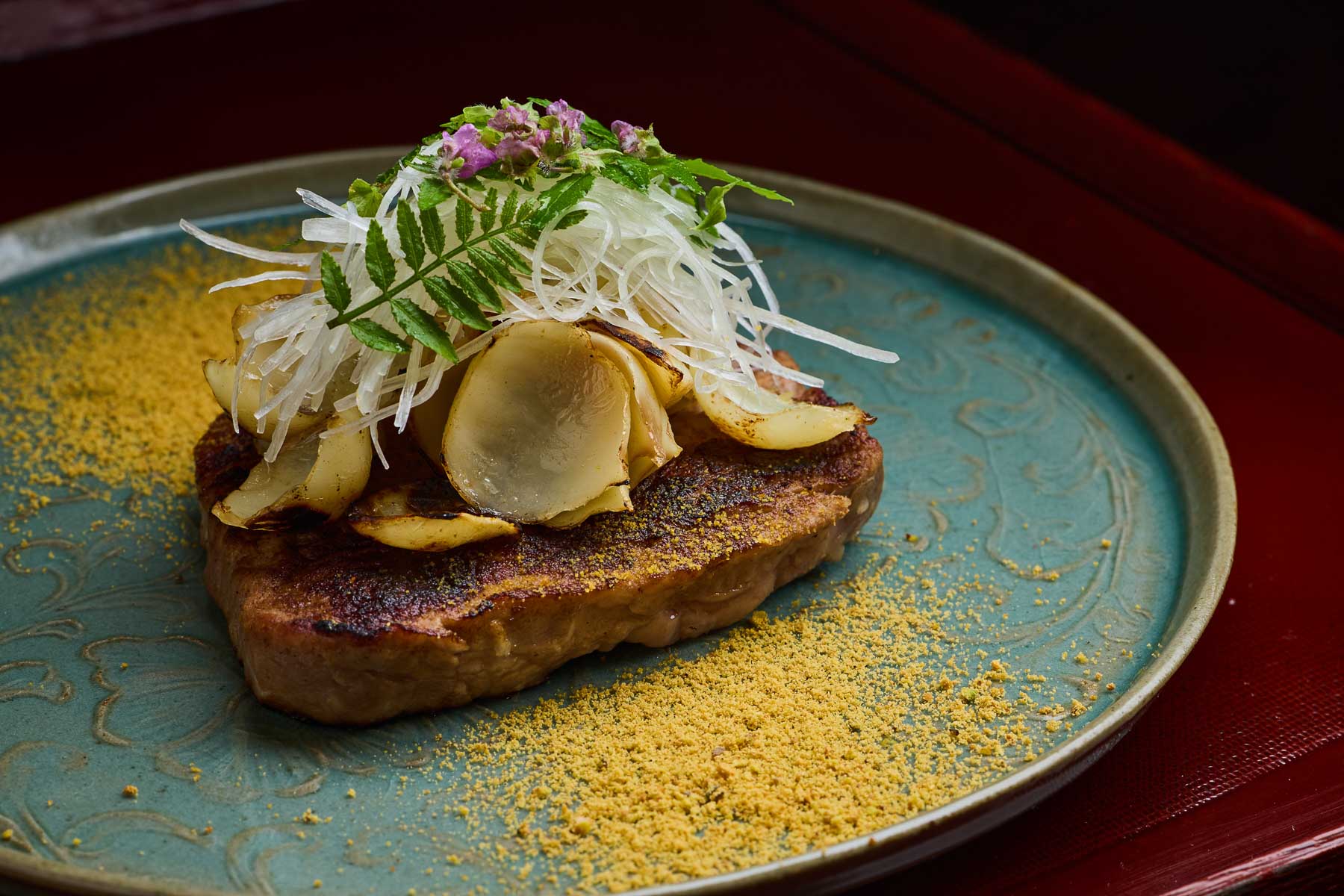
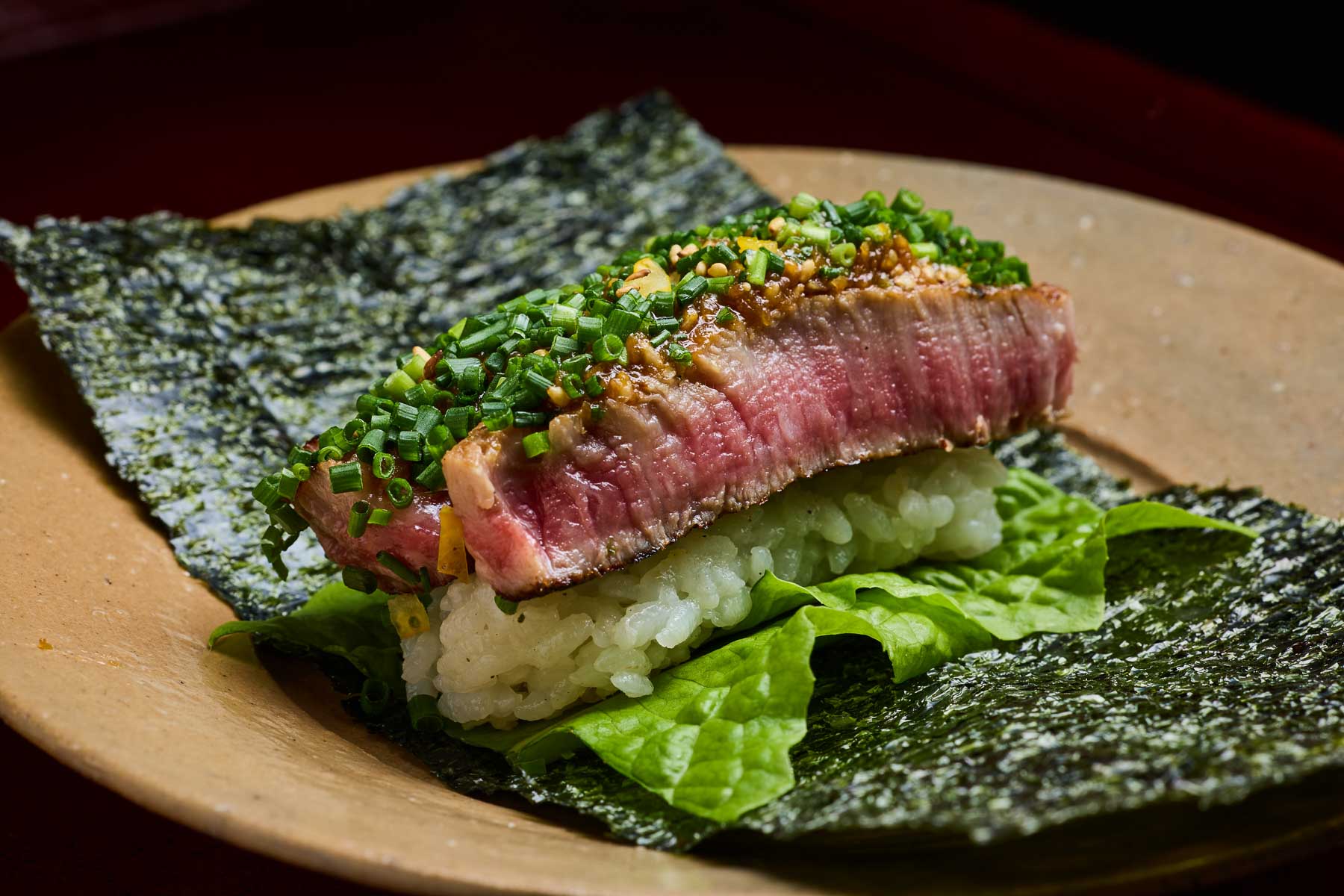
Joun’s seasonal omakase is centered on Japanese beef and seasonal ingredients sourced at their peak. Signature meat dishes are determined annually and appear throughout the year. One of the dishes for 2026 is the Chateaubriand roll. The grilled meat is wrapped with rice in seaweed like sushi; the rich sweetness of the beef bursts in your mouth with every bite. The fillet steak is cooked over binchotan charcoal, topped with Hoba miso, a specialty of Hida Takayama, and served with large Gekko lilies and roasted walnut powder.
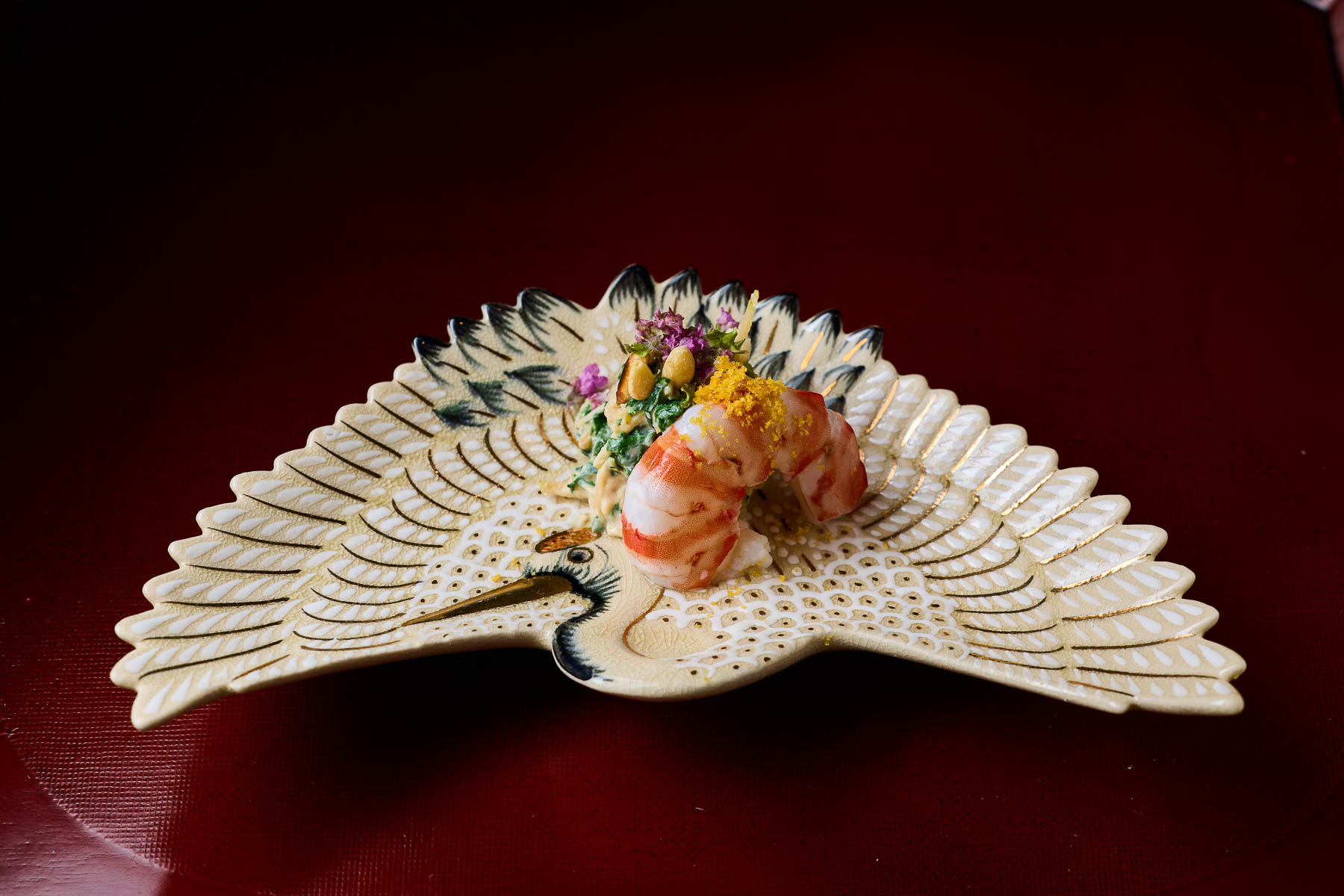
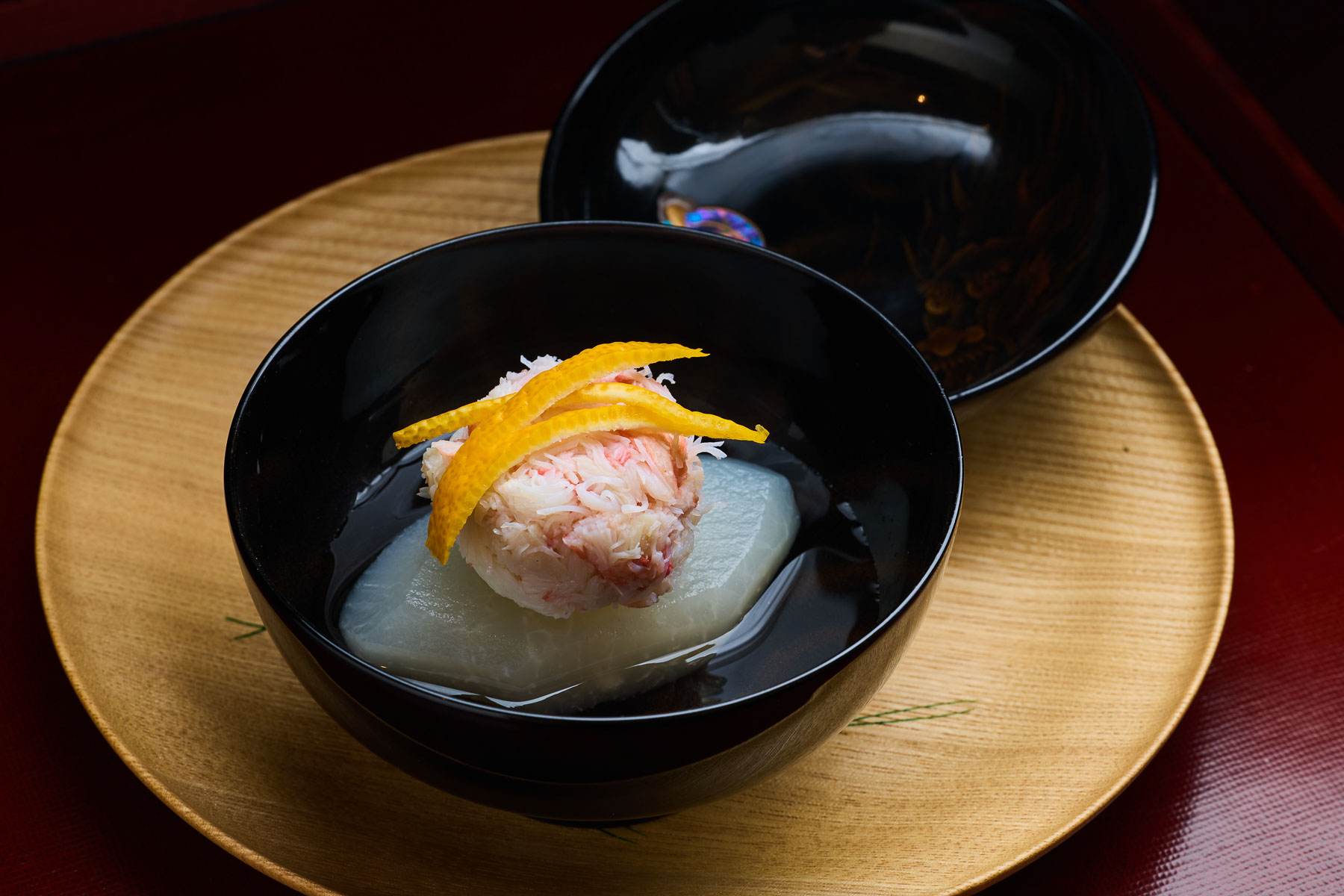
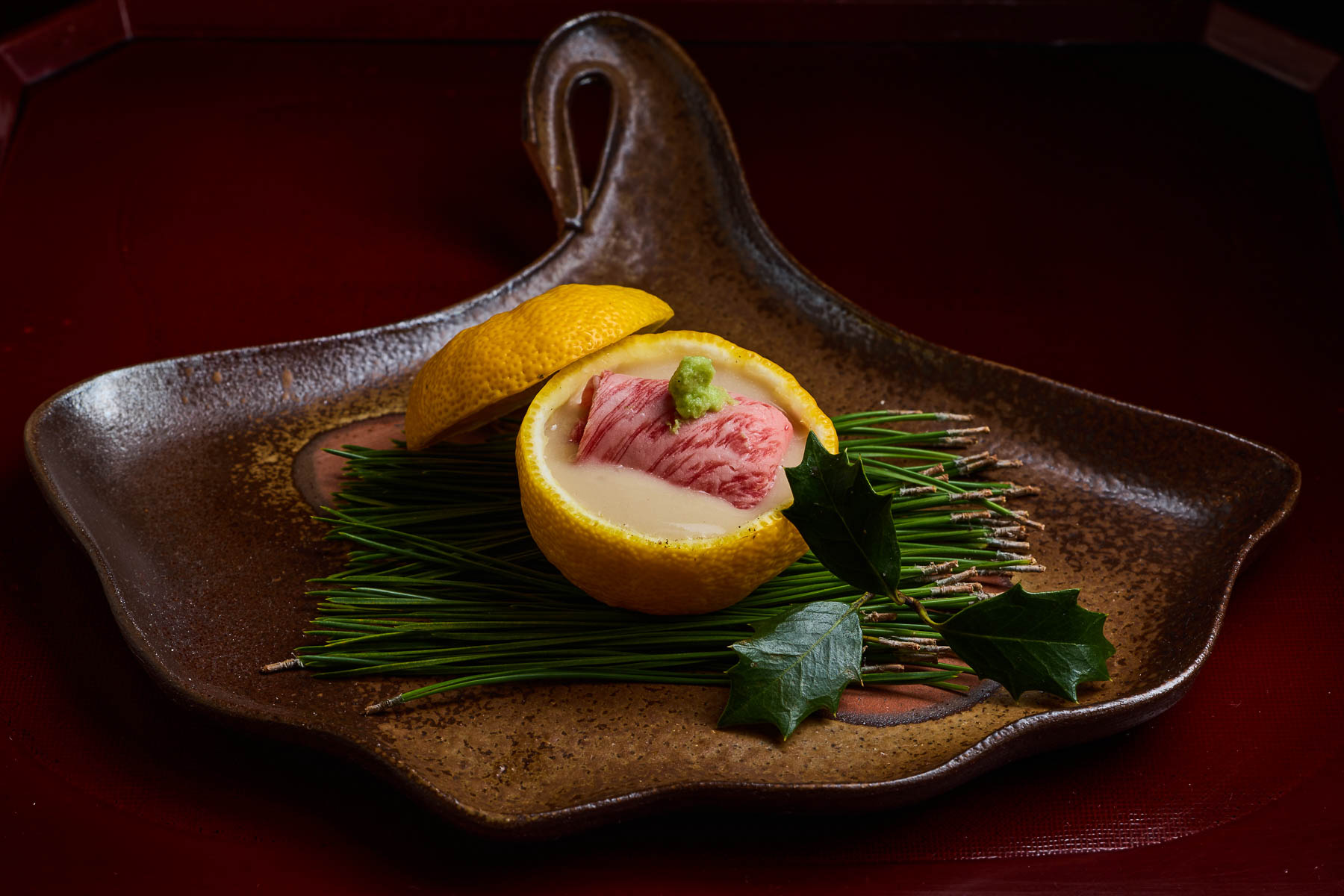
Soup changes monthly with seasonal ingredients. This month’s bowl features Matsuba crab from Hyogo Prefecture, paired with Omi turnip. The rich dashi, made from Rishiri kombu and dried bonito flakes, is simmered for approximately three hours. The Kuruma shrimp appetizer is served with chrysanthemum greens and an ancient Shiga apple variety prepared in a lightly vinegared sauce.
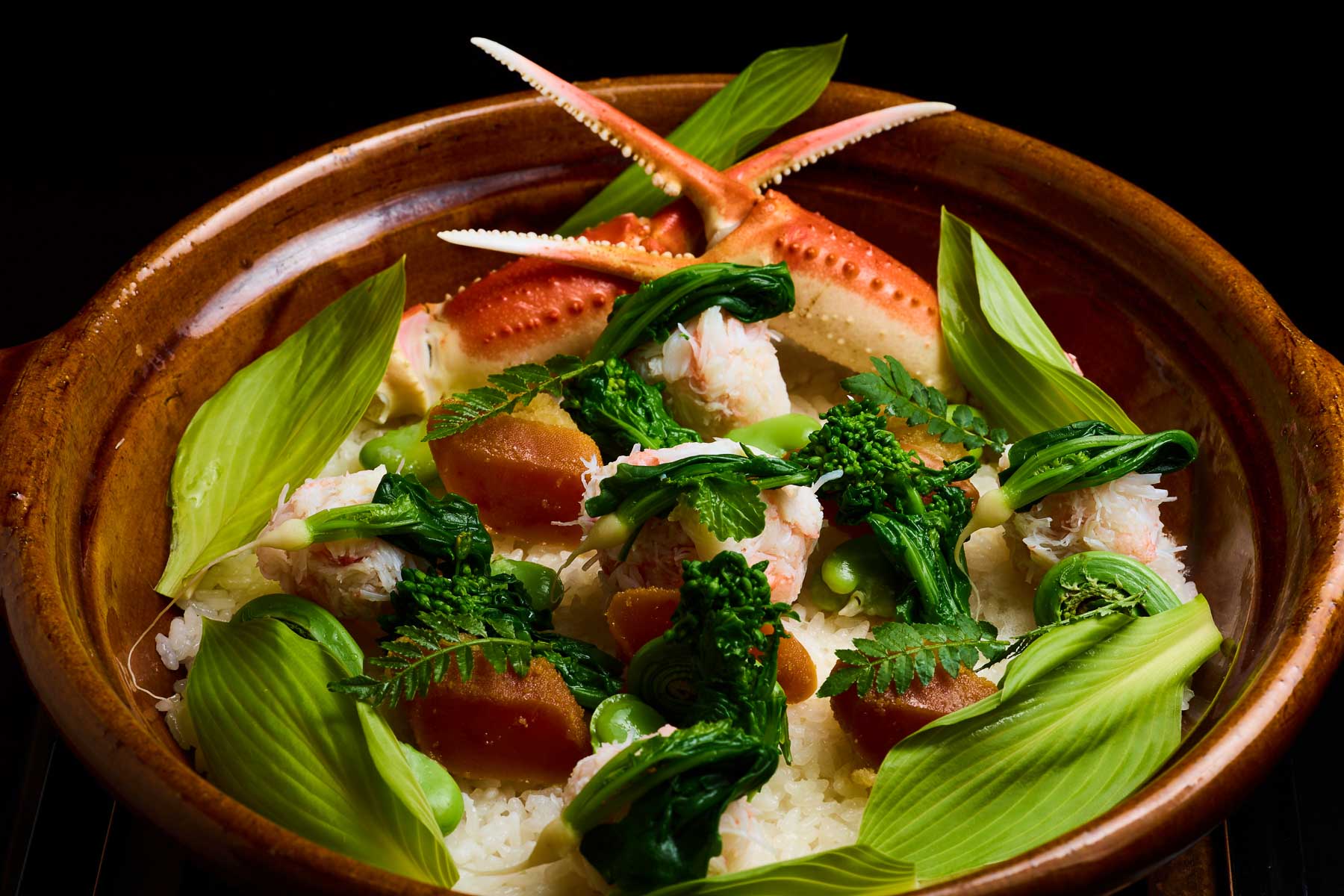
Served towards the end of the meal, the clay pot rice rekindles the excitement at the table. When the lid is lifted to reveal the colorful ingredients, steam rises across the counter and fills the room with a delicious aroma. In winter, it may arrive with crab, karasumi, kinome, and wild vegetables; in spring, the combination can shift to bamboo shoots, shark fin or eel.
INGREDIENT
Every year, Yamauchi puts together an ingredients calendar, a guide for guests to plan their visits around seasonal specialties. The 2026 menu opens in January with pufferfish and Matsuba crab followed in February by Echizen crab. March brings Ise lobster and clams while April highlights sansho pepper, shark fin and bamboo shoots. In May, the spotlight shifts to shellfish, shark fin and wild vegetables before June turns to ayu sweetfish, abalone and eel. July and August are dedicated to a feast of beef dishes. Early autumn introduces grouper, hairy crab and matsutake mushrooms in September. From October through November, Japanese mitten crab take center stage followed by Matsuba crab from mid-November through the end of December.
Beef is sourced from three regions: Omi beef from Shiga, Hida beef from Gifu and Matsusaka beef from Mie, each selected for its distinct character. Fish are selected by Yamauchi according to seasonal conditions rather than fixed provenance. Vegetables come primarily from Gifu and Aichi, while the rice served is the original strain of Ryu no Hitomi grown in Gero in Gifu Prefecture. Seaweed comes from Onizaki Fishing Port in Aichi. He also likes to incorporate more unusual ingredients in his menu, such as large Gekko lilies from Hokkaido and heirloom Japanese apples.
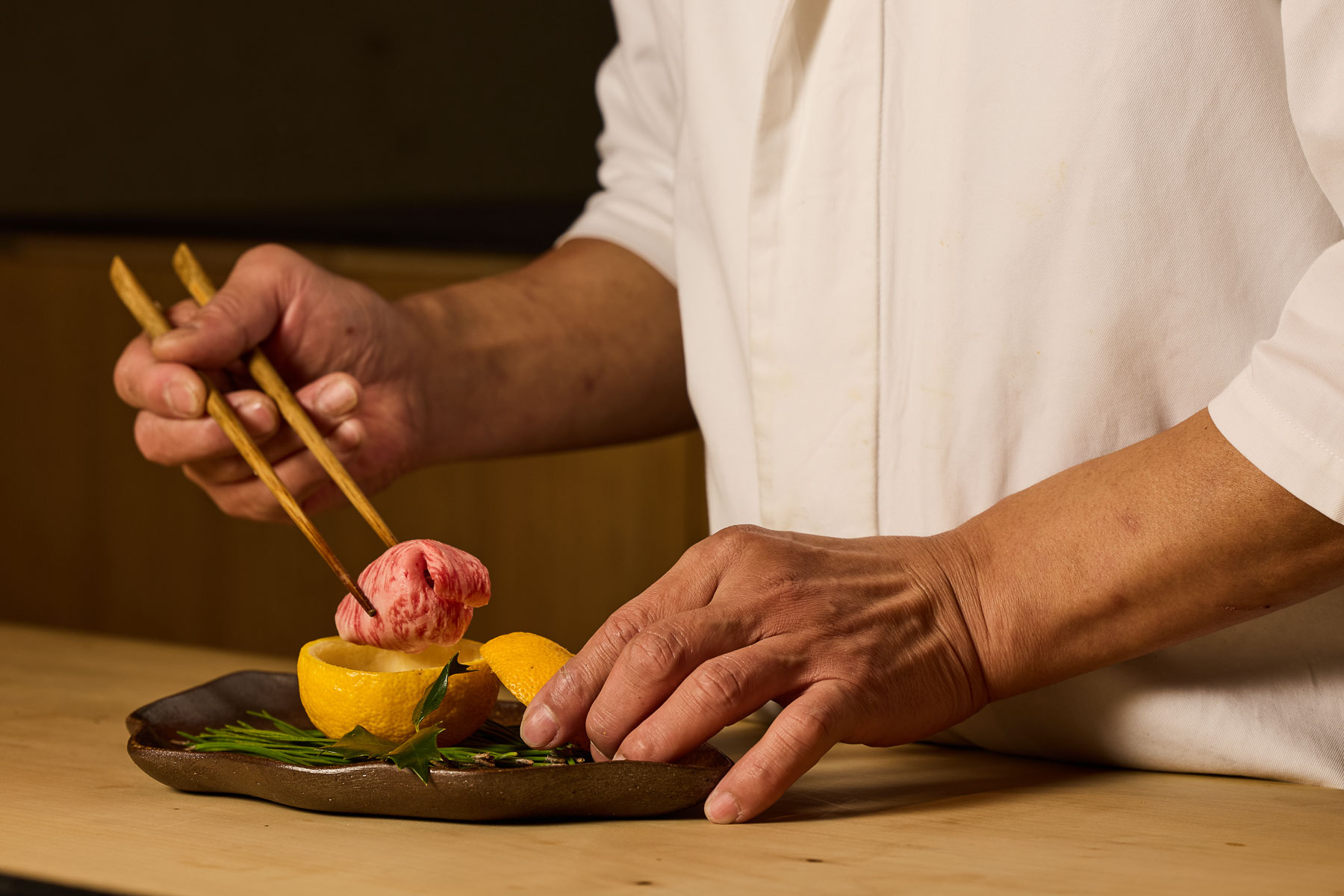
CHEF
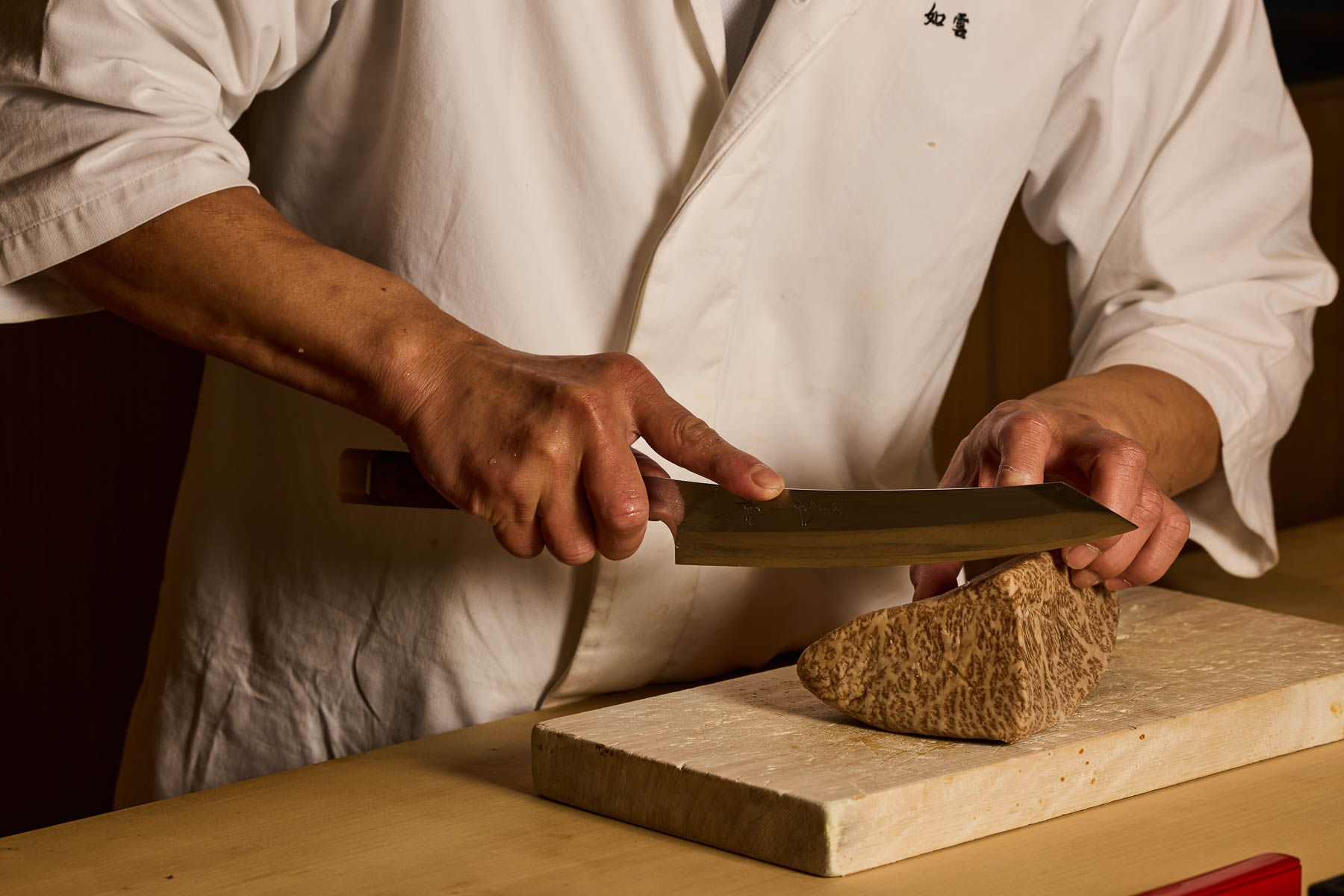
Akiyuki Yamauchi
Meat
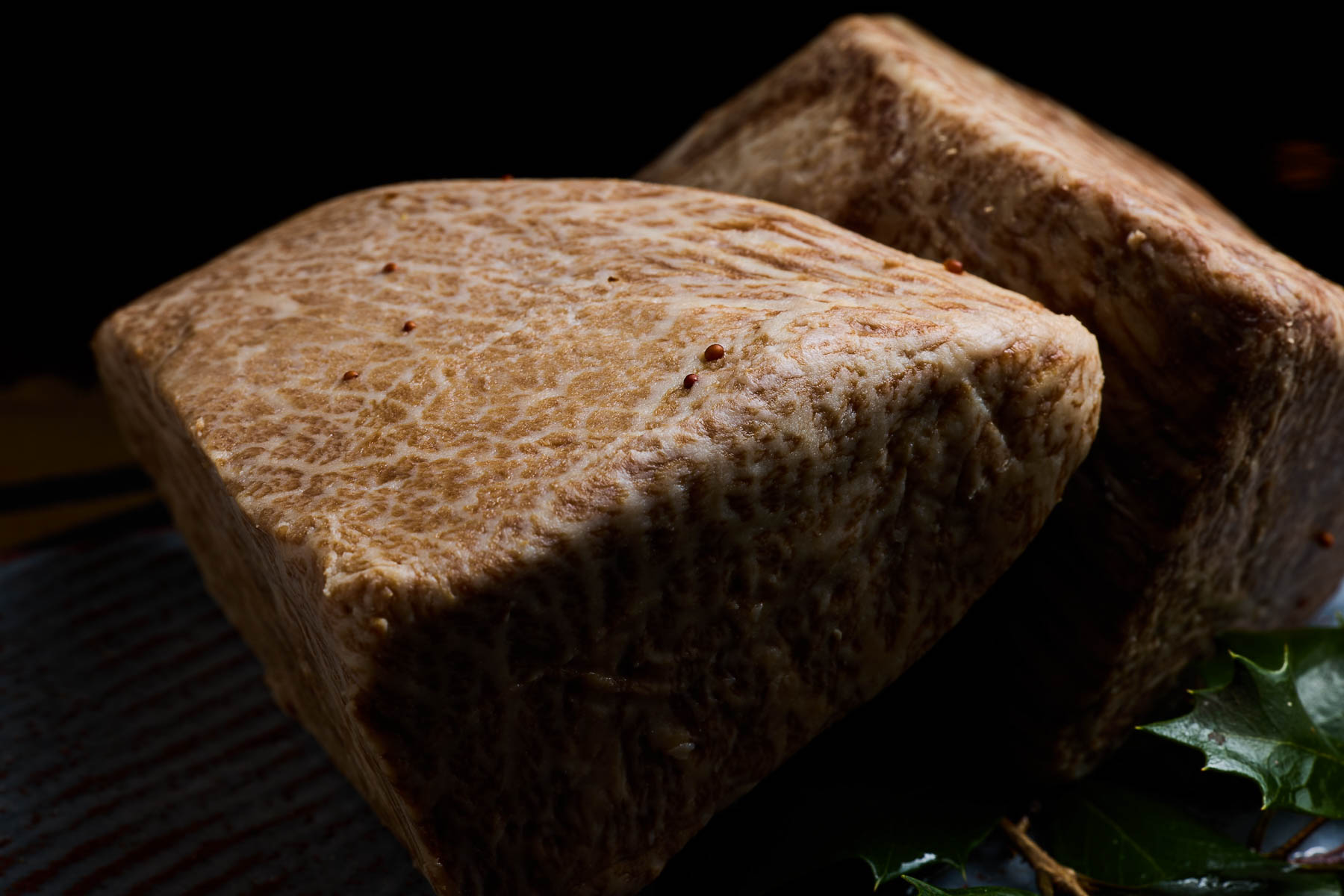
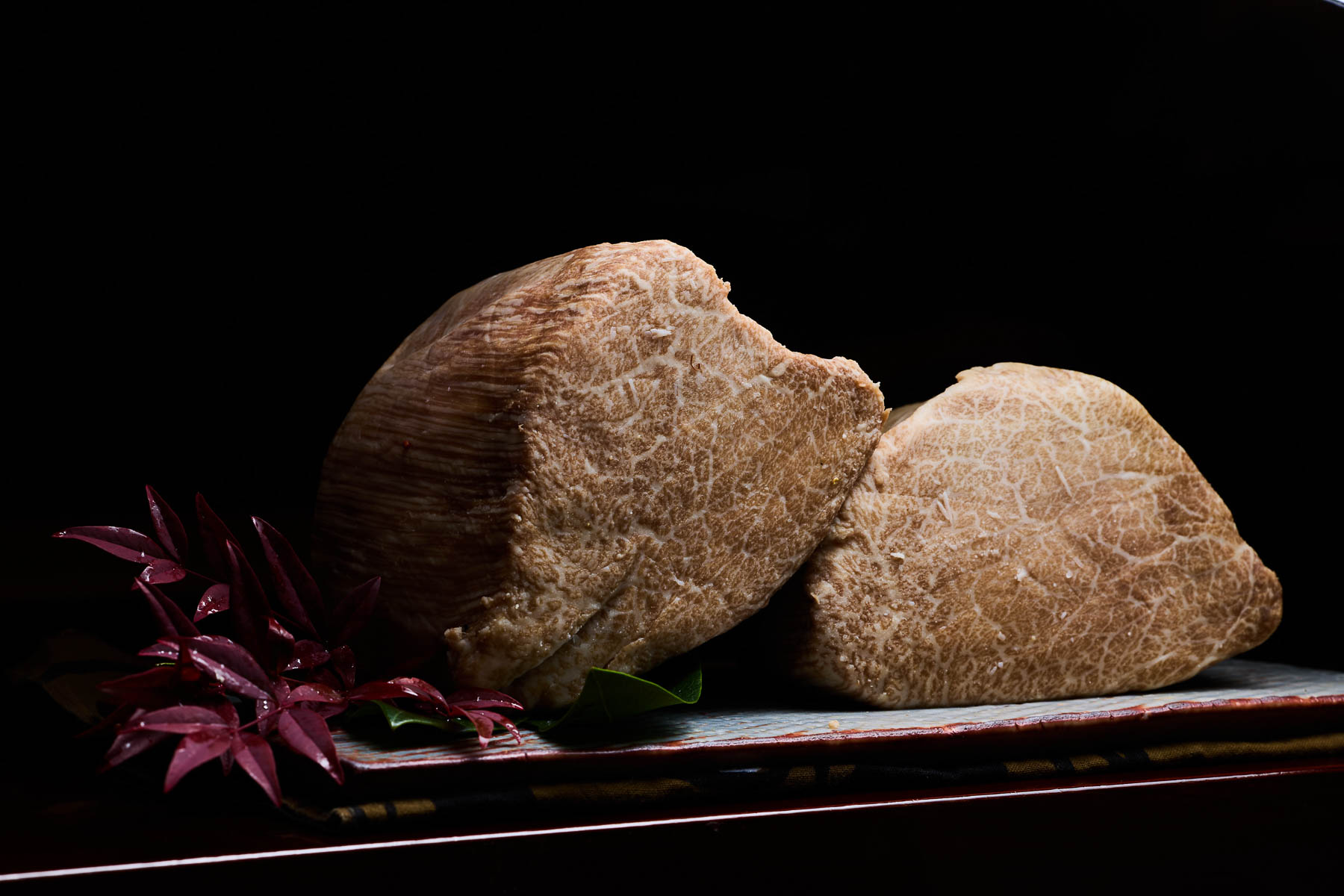
Meat forms the backbone of the cuisine at Joun. After years of experience, Yamauchi has narrowed his selection to three breeds—Omi beef from Shiga Prefecture, Hida beef from Gifu, and Matsusaka beef from Mie—each selected for its distinct qualities. Rather than relying on wholesale markets, they are sourced directly from producers with whom Yamauchi has long-standing relationships. Fillet is used consistently, often accompanied by cuts such as thigh or sirloin.
As with all of his cooking, the meat is prepared without salt or pepper. Flavor is developed instead through techniques such as saikyo-zuke that work gradually through the ingredient. More commonly used for fish and vegetables, saikyo-zuke is a Kyoto technique in which ingredients are gently cured in a sweet, pale miso made with rice koji. Koji-zuke uses rice koji, a fermented culture fundamental to Japanese cuisine, to tenderize and deepen flavor. Yuuan-yaki involves marinating ingredients in a mixture of soy sauce, mirin and citrus before grilling. These methods allow the meat’s umami to develop from within and over time, Yamauchi explains.
Course
- The price includes our booking fee of ¥8,000
- The price includes our booking fee of ¥8,000
Aichi
Joun
如雲


- GENRE
- Kaiseki, Nagoya
- ADDRESS
-
1F, 1-7-7 Nagono, Nishi-ku, Nagoya, Aichi 451-0042

- OPEN
- 6PM
- CLOSED
- Sundays
- URL
- NA
- PHONE
- NA


