

Tokyo
John
ジョン
There are restaurants that feed you, and restaurants that stay with you. John is the latter. Chef Masataka Yoshimura calls his dessert omakase a journey of flavors — an experience of sweet and savory dishes created with the intention of an artist. The entire menu changes monthly with a new theme, where every recipe, drink, tableware and even background music is reconsidered alongside it. A persimmon grilled over charcoal and finished with white miso butter. Fresh strawberries marinated in rose-scented sugar. A full course dedicated to chocolate and Amazonian cacao. Each visit is designed to feel like a first.
John relocated from Uguisudani to Ikejiri-Ohashi in 2025, redesigning the space from the ground up. Yoshimura's vision is that the experience begins the moment a guest steps through the door. Inside, a wall of 180 glass blocks creates a corridor that shifts from luminous to shadowed as the afternoon passes. "The shimmering light creates a fantastical glow, like looking up at the surface from the ocean," he says. A winding passage leads from there to the dining room. "It's like walking through a cave that takes you to an excavated restaurant.
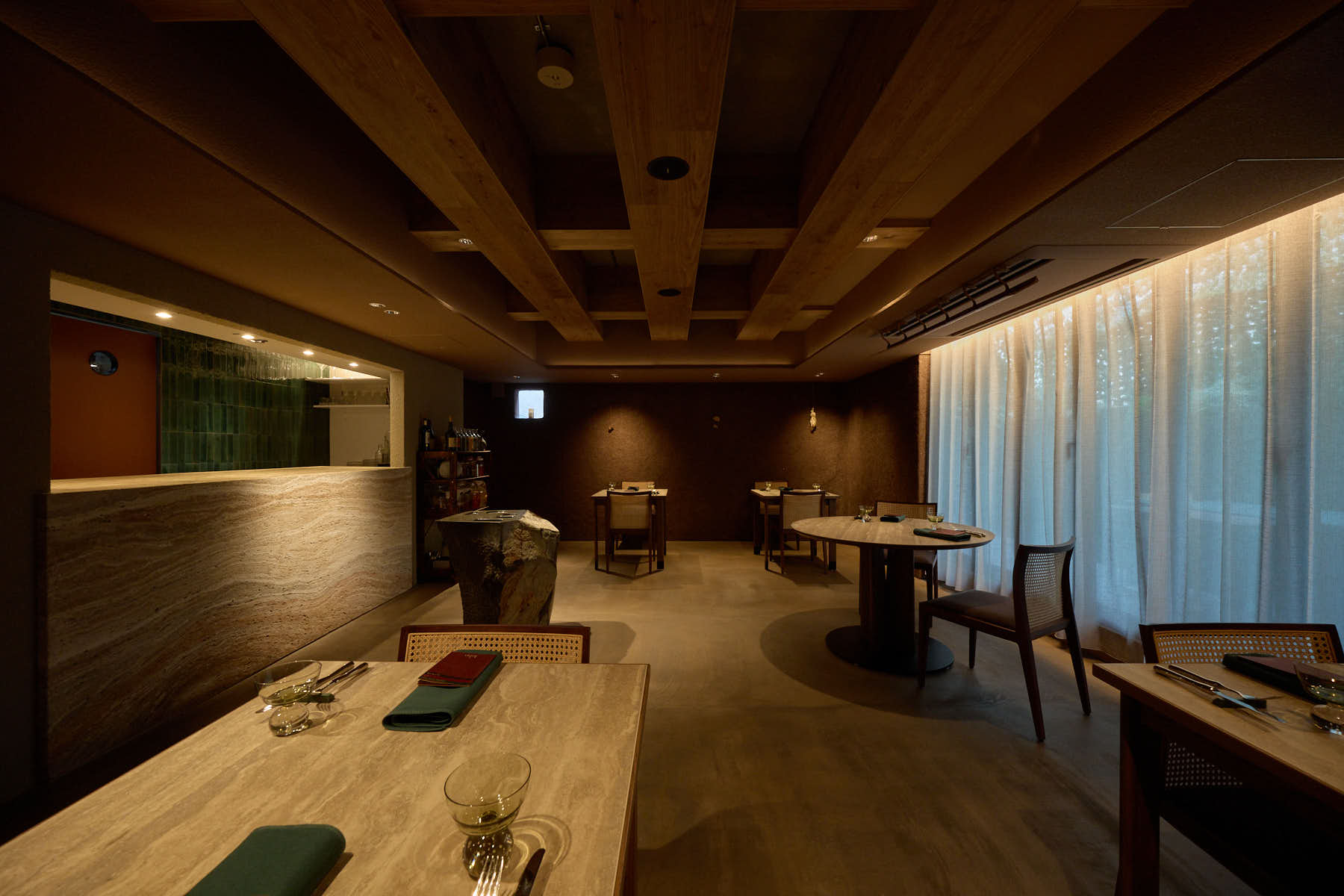
The spacious dining area is furnished with a handful of tables, accommodating about eight guests in total. The counter, where the chef presents the dishes, resembles a strip of geological strata, representing the idea of time and history as well as the cross-sections of the dishes. At the center stands the "Stone Station," a tabletop carved from a piece of Datekan stone, said to have formed roughly 20 million years ago. Fruits and breads are arranged across it as decor.
CUISINE
Seasonal dessert journey, touched by fermentation
John’s omakase menu changes entirely each month, built around a unique theme. In February, “A Journey of Pottery” offers a menu with charcoal grilling as its key technique. March follows with “A Journey of Black Strawberries,” featuring Shinku no Misuzu, a rare Chiba variety. The April theme dives into the world of chocolate and Amazonian cacao.
The course is typically made up of 15 dishes, made up of 10 desserts and 5 savory courses. “The balance between sweet and savory is deliberate,” Yoshimura explains. “I think about how I use salt, umami and char throughout the sequence. I want to avoid sweetness from building up so the guests can enjoy the meal until the final course.”
John’s dessert dishes are created using unique techniques such as fermentation and aromatic oil that add complexity to the flavors. Flour is used sparingly, keeping the palate clean and allowing the fragrance of the ingredients to linger. The presentation of each course is, in itself, stunning — a single element set against dark ceramic or raw stone.
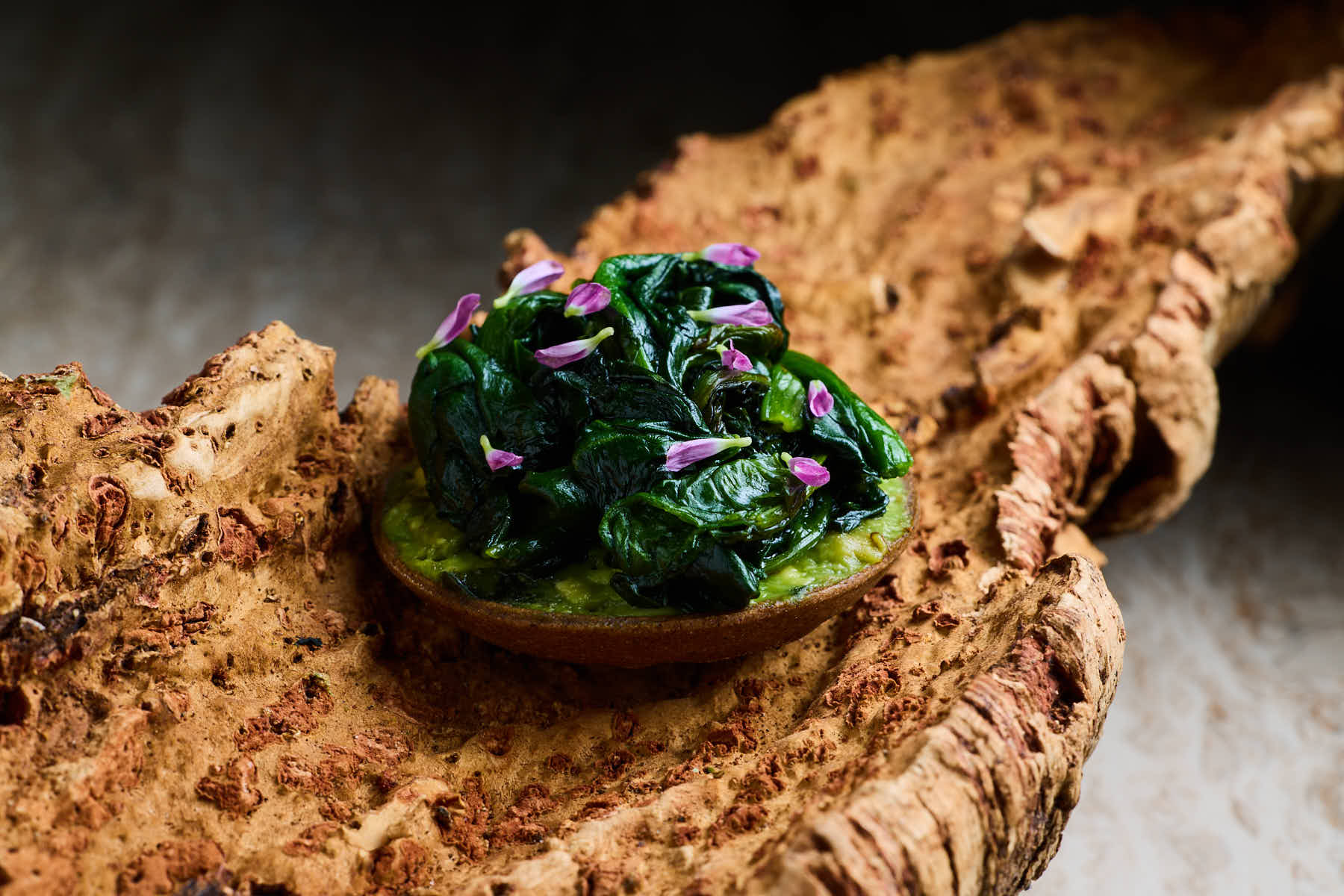
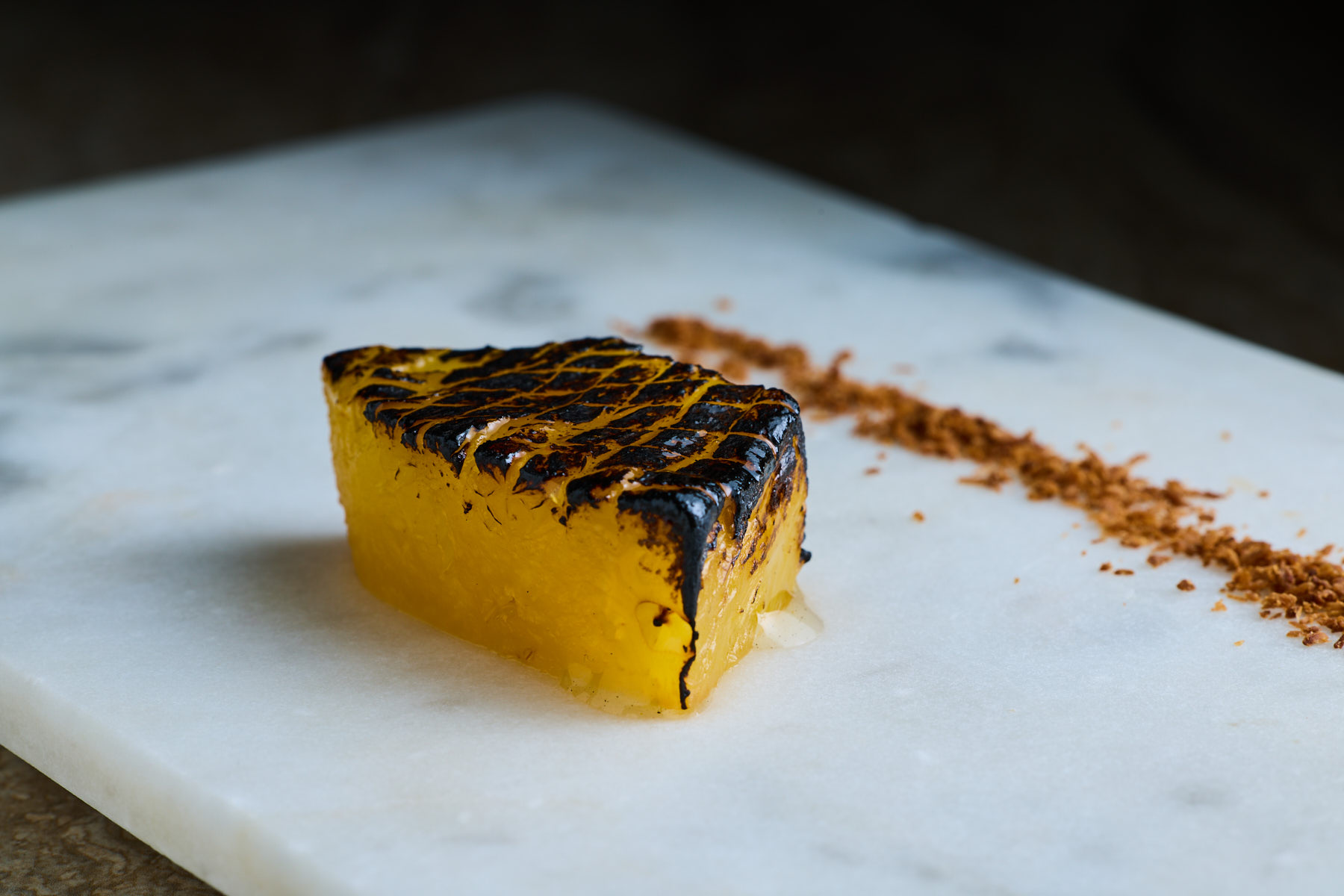
The meal begins with a light, savory tart, served on a dish made of wood. The shell is filled with avocado, roasted seaweed and a paste drawn from clam broth, finished with charcoal-grilled spinach. A green pineapple, sourced from the Philippines, is stewed into a compote with roasted green tea and lime, charcoal-grilled, brushed with Japanese pepper oil, and served with roasted coconut.
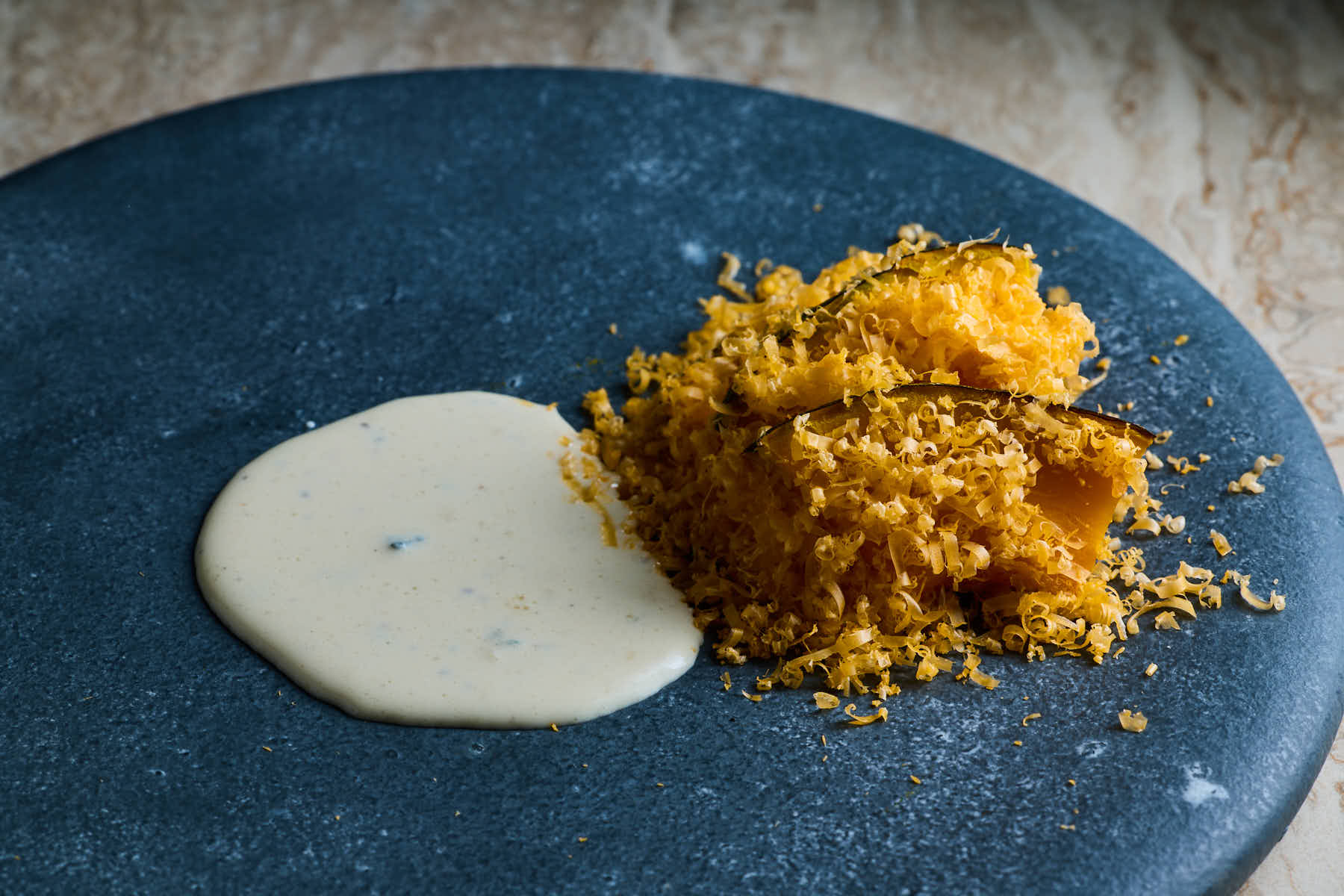
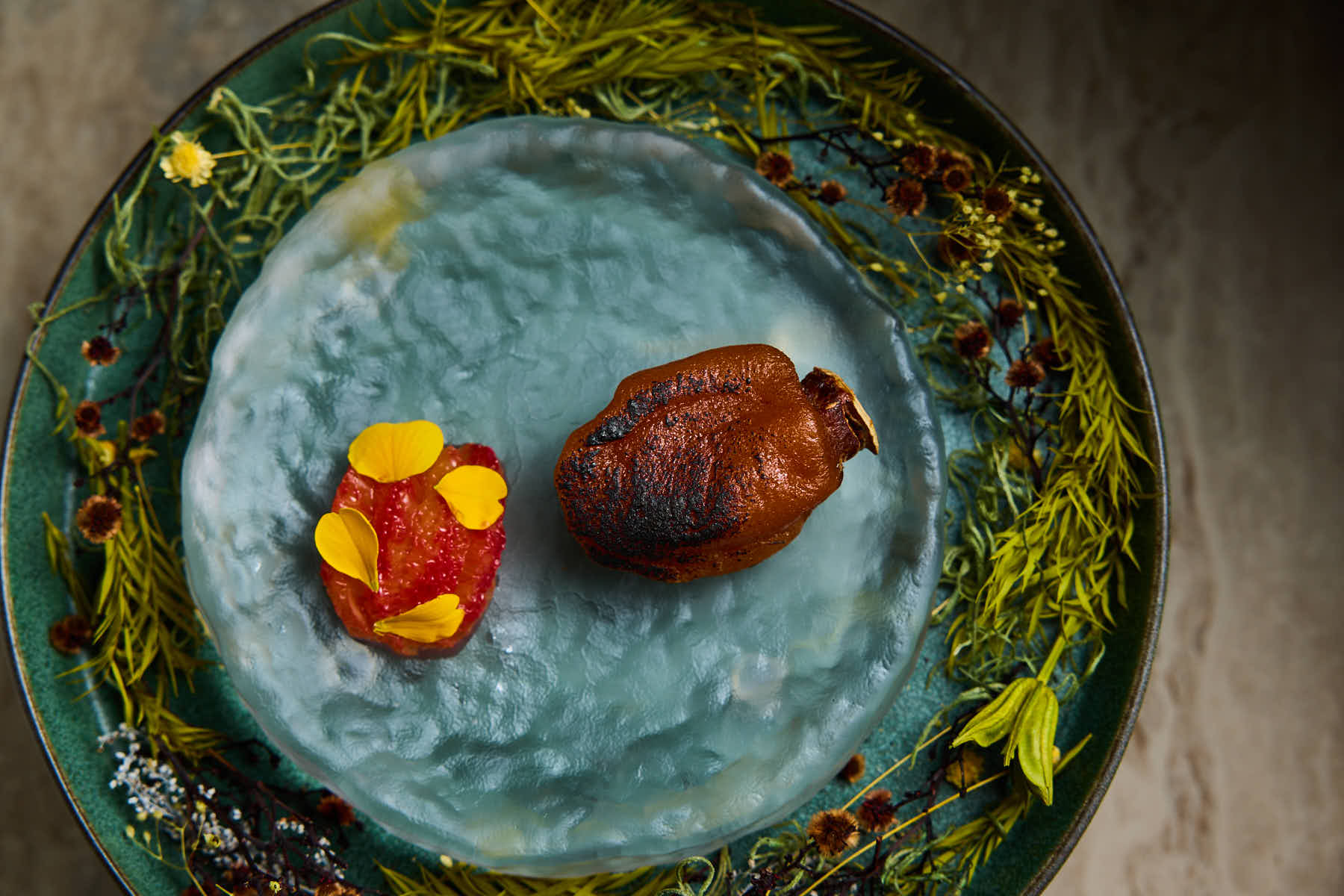
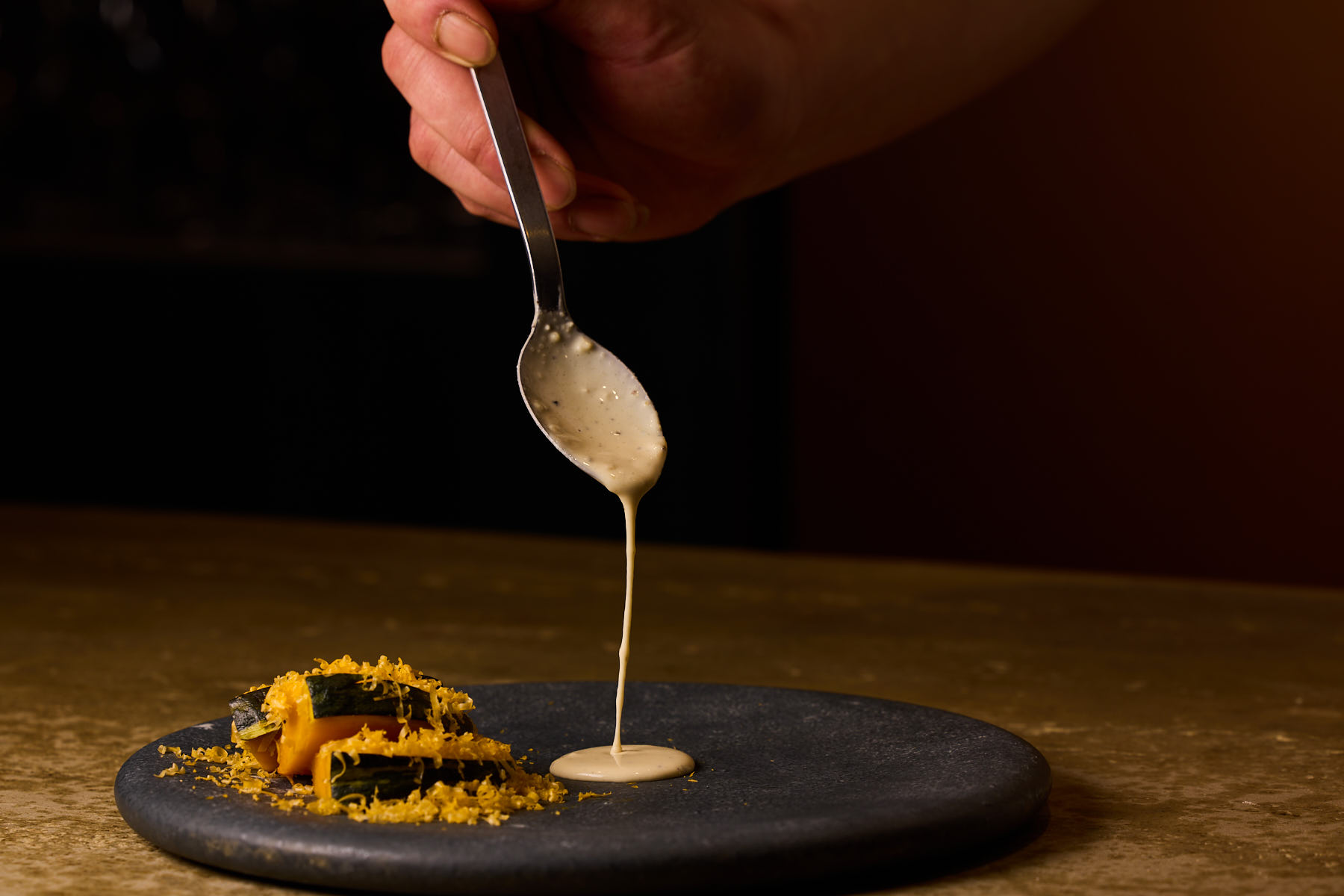
Sliced pumpkin and kumquat are topped with shaved mimolette, drizzled with a gorgonzola sauce. Homemade dried persimmons are rehydrated in citrus kombucha, grilled over charcoal and finished with white miso butter and dried blood oranges.
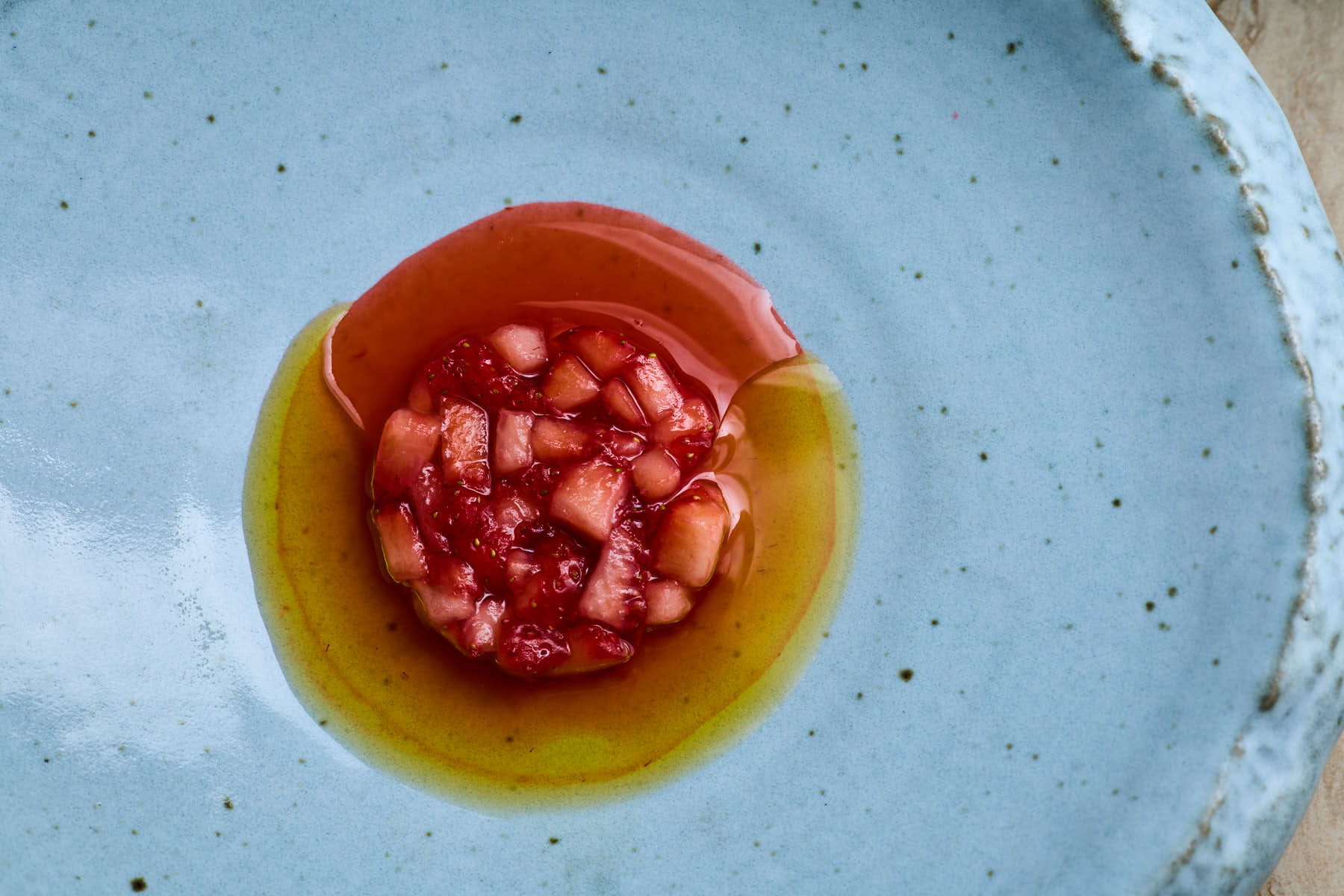
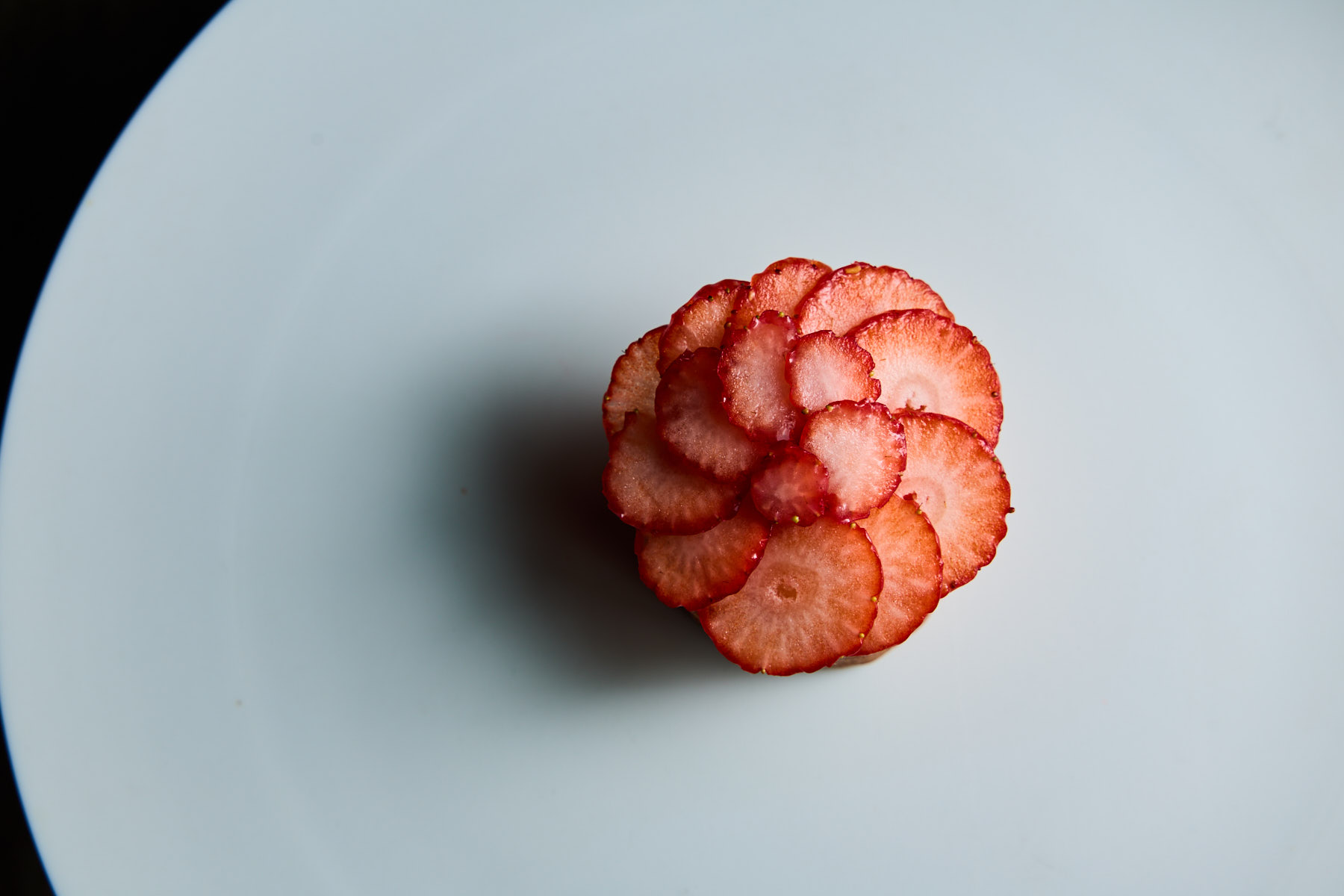
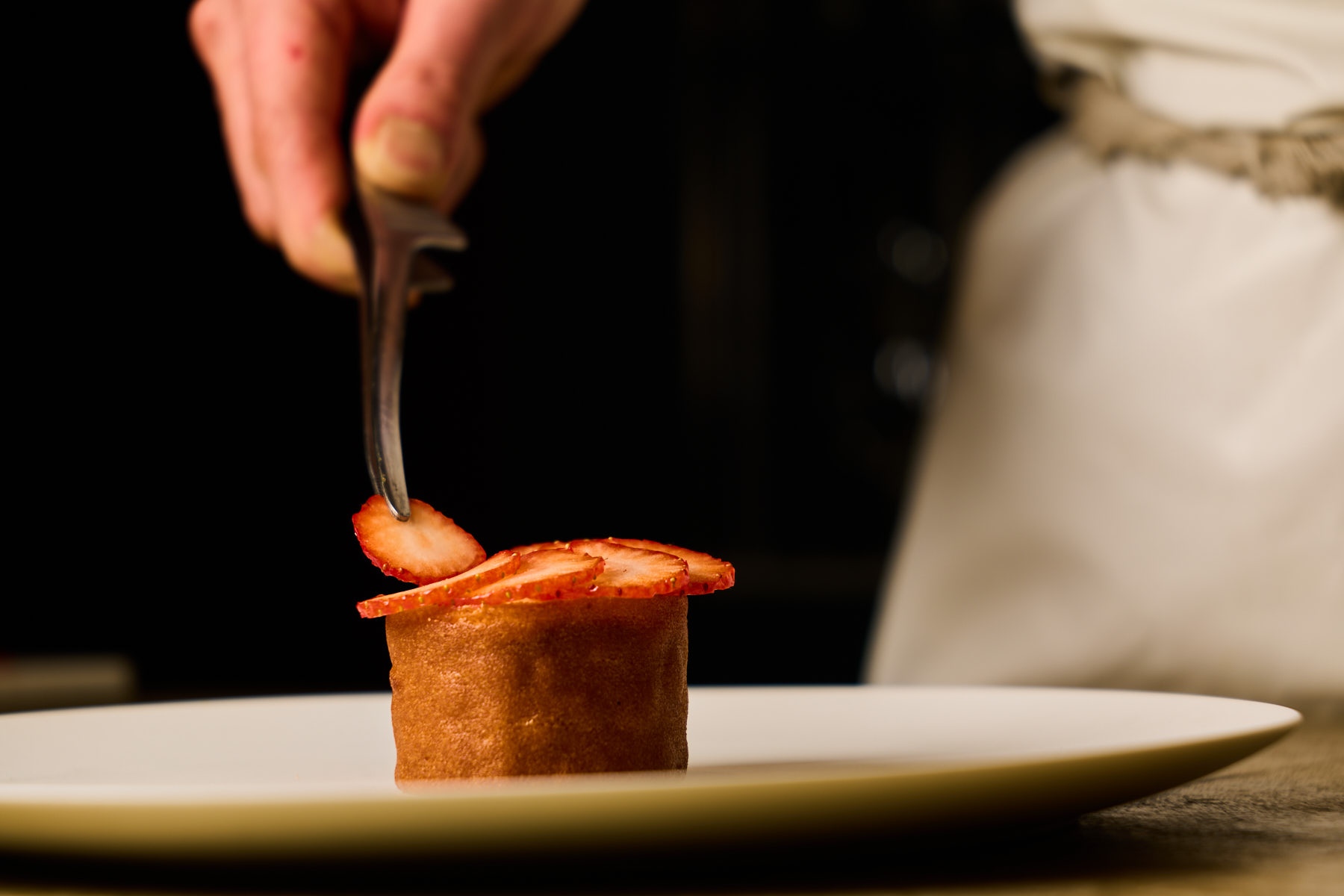
The first strawberry course features fresh strawberries marinated in rose-scented sugar. The sauce is fermented strawberry juice; the finishing oil is grapeseed, steeped with charcoal for four days. The second course takes the form of a langue de chat pastry, made with cream and yogurt that has been fermented at room temperature for a week. The dish is seasoned with green cardamom and filled with fermented strawberry pulp.
INGRIDIENTS
Yoshimura sources his fruits through his own network that he cultivated by visiting producers directly when something catches his attention. The course’s most prized ingredient is Shinku no Misuzu, a rare strawberry variety from Chiba Prefecture that ripens to an almost jam-like softness. Citrus and blueberries come from Tochigi. Sweet potatoes from Akita are harvested in October, aged through the winter and brought to the table from March onward. Bananas and seaweed arrive from Okinawa. Cheese, an essential ingredient in Yoshimura's kitchen, is supplied by Lammas, a specialty shop in Sangenjaya. Many of the oils and vinegars are made in-house.
CHEF
Masataka Yoshimura
DRINK
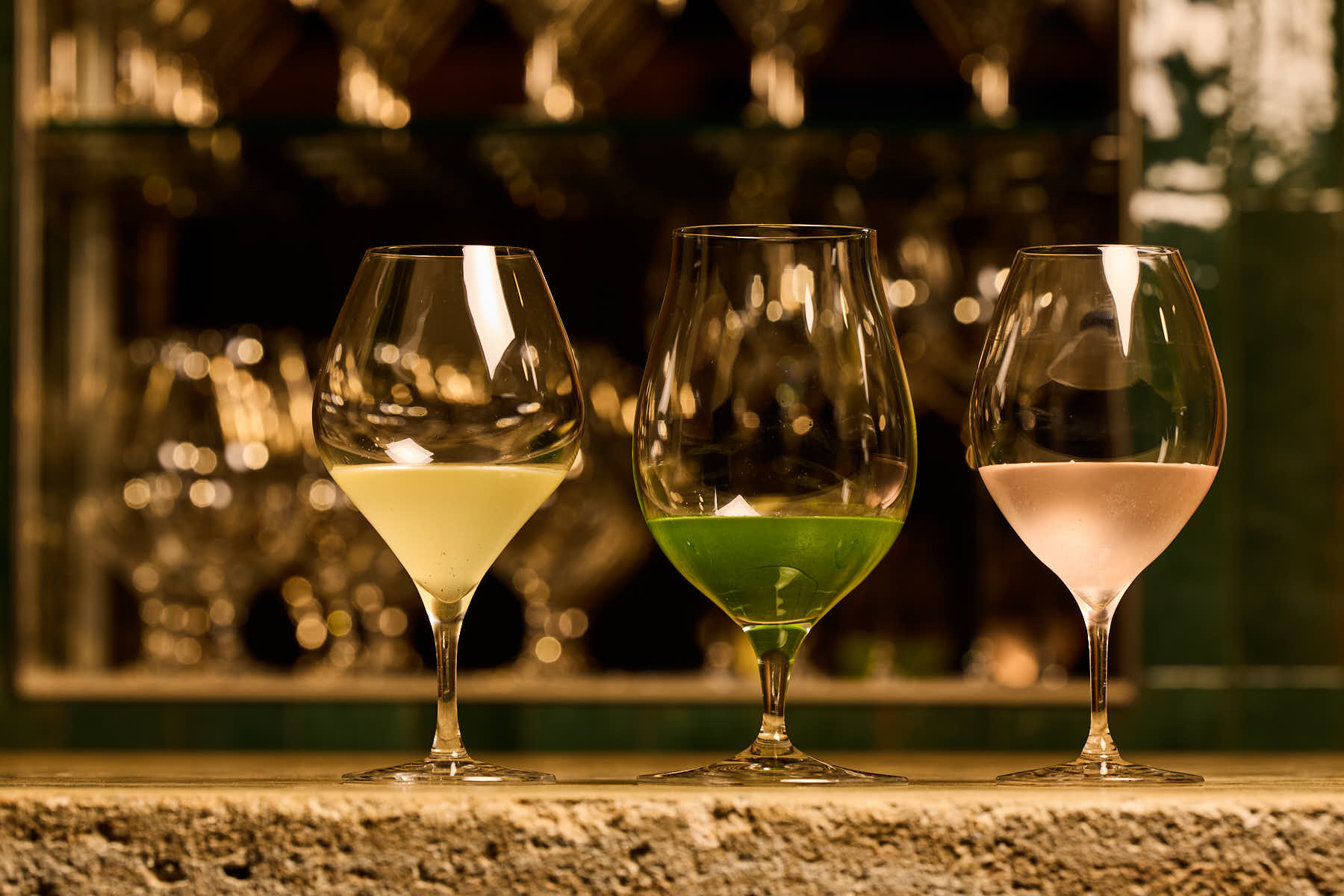
The drinks at John are not chosen to complement the courses but to complete them. Rotating monthly alongside with the menu, guests can choose between alcoholic and non-alcoholic options, all of which are made to serve as the final “sauce” for each dish they accompany, Yoshimura describes.
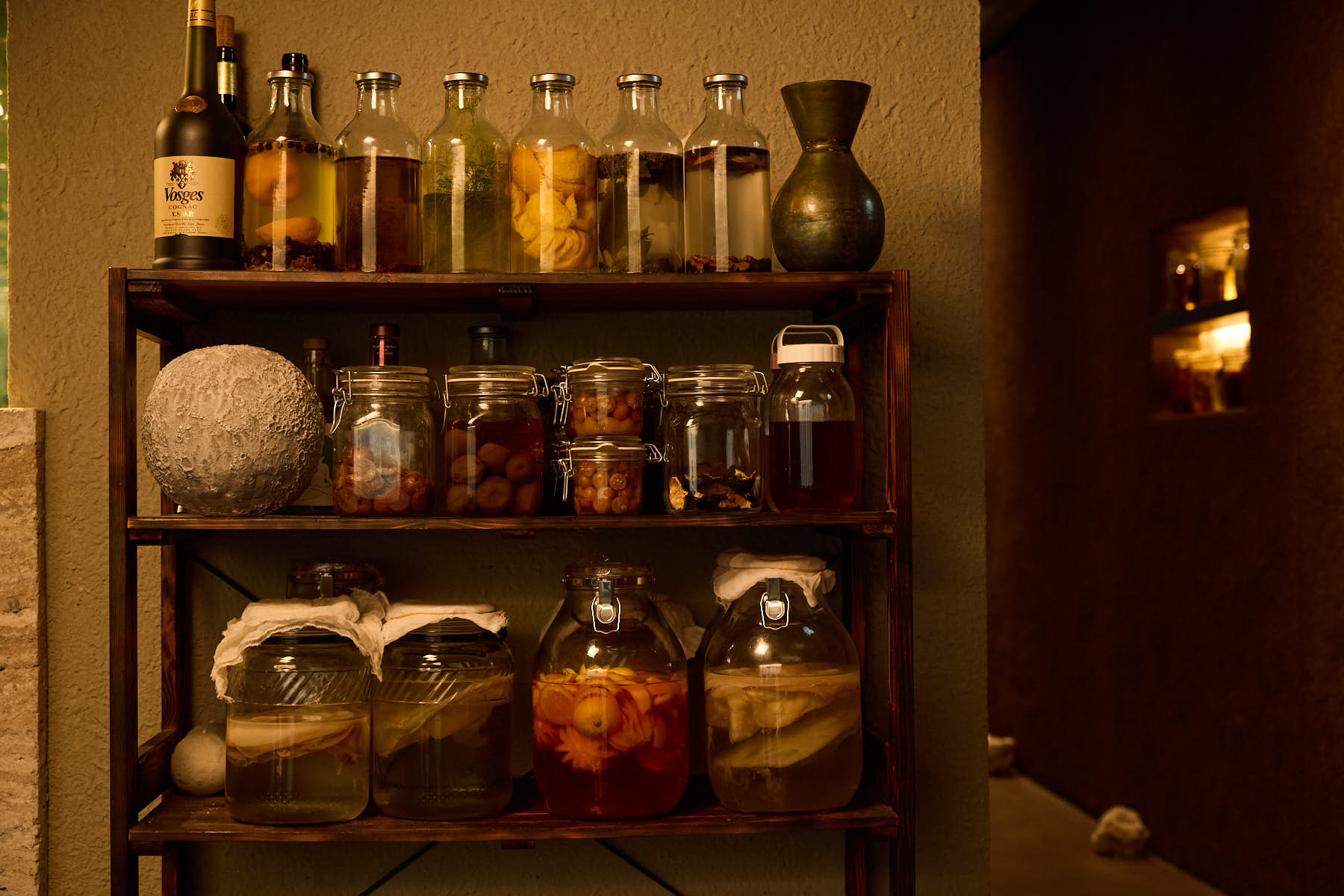
The non-alcoholic kombucha is made in-house in flavors that reflect the season — lavender and peach leaf, dill and chervil, hassaku orange and shiranui. The alcoholic selection centers on mellow wines, with the occasional sake and original cocktails rounding out the list.
Course
- The price includes our booking fee of ¥8,000
- The price includes our booking fee of ¥8,000
- The price includes our booking fee of ¥8,000
- The price includes our booking fee of ¥8,000
Tokyo
John
ジョン



- GENRE
- Dessert Dining, Ikejiri Ohashi
- ADDRESS
-
MINOWA IKEJIRI 2F, 3-18-4 Ikejiri, Setagaya-ku, Tokyo, Japan

- OPEN
- Thu - Sat 6PM - 7PM start / Sun 6PM
- CLOSED
- Mondays, Tuesdays and Wedesdays
- URL
- NA
- PHONE
- NA


