

Tokyo
Mærge
マージ
A new voice in Tokyo is redefining the language of French cuisine. Opened in June 2025, mærge is the latest creation by Hideyuki Shibata, whose previous restaurant La Clairière held a star for six straight years. Within months, mærge has drawn global attention with its exquisite menu. Signature dishes such as Carré de Beurre, a golden croissant served with caviar and smoked duck, and Wood-Fired Rubeshibe Beef express classical French technique through a distinctly Japanese sensibility. “I want this to be a place where guests can come to experience Japan’s charm,” Shibata says. “Our rival, in that sense, is Sensō-ji Temple.”
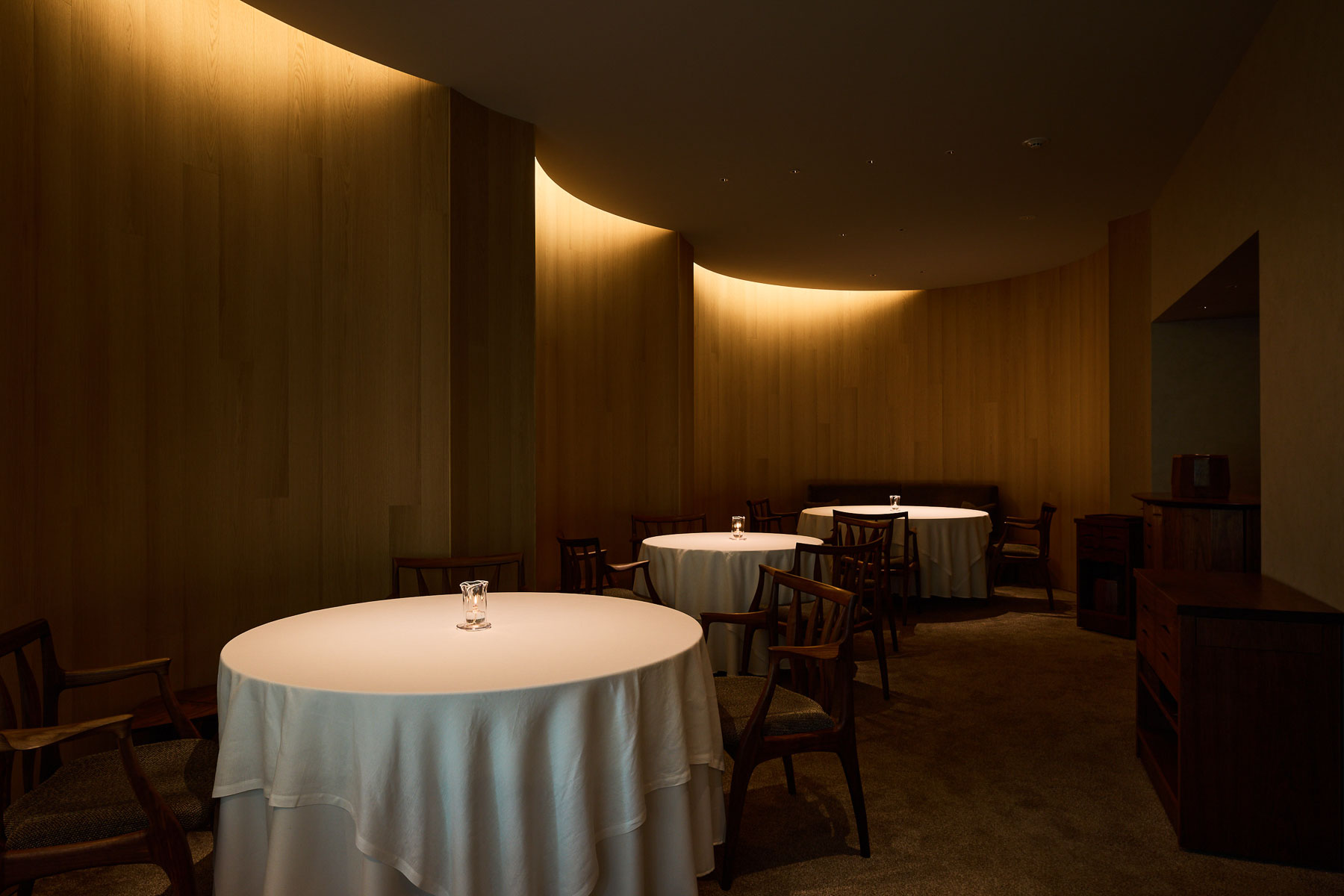
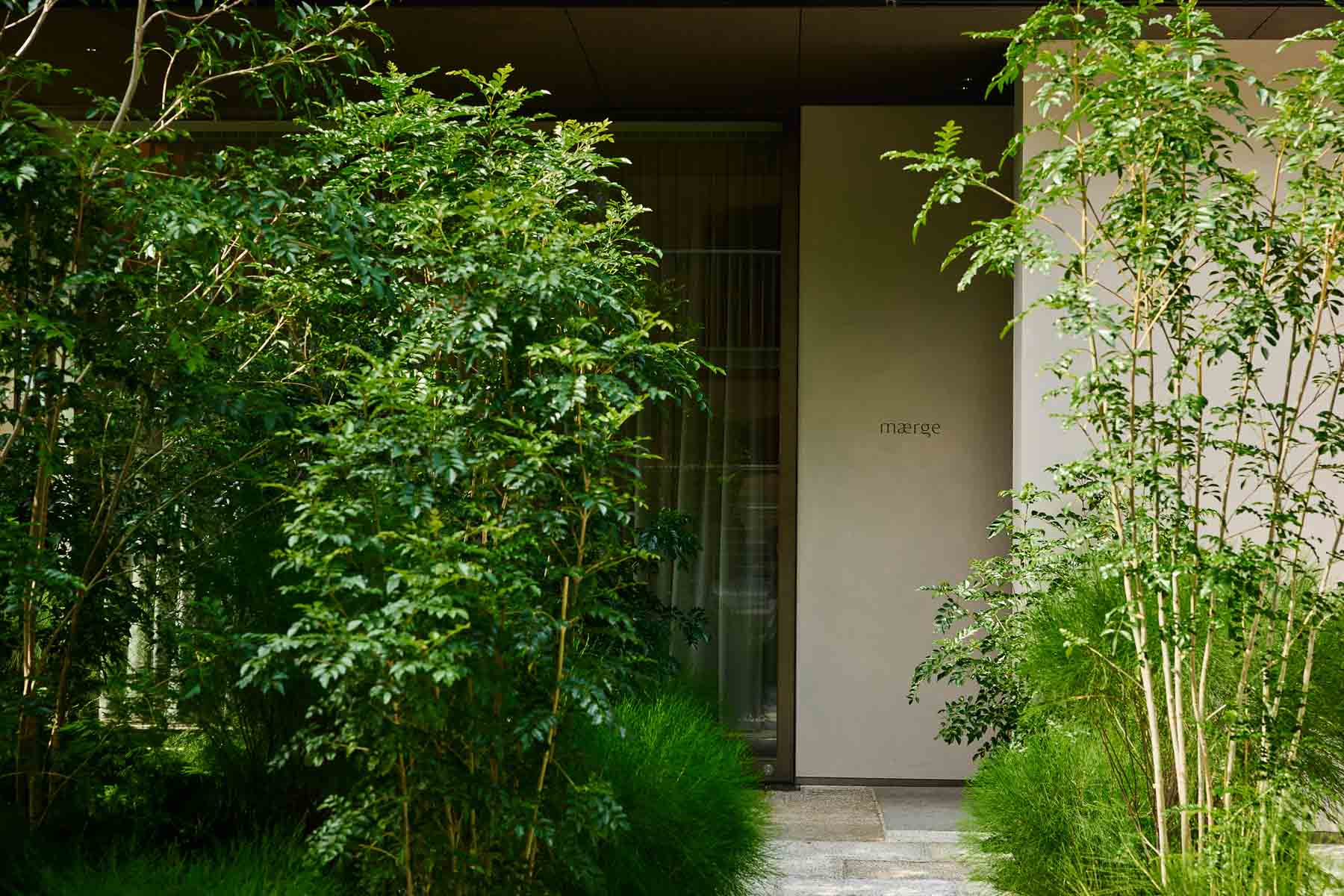
Located on a quiet street in Minami Aoyama, mærge welcomes guests through a serene garden—an escape from the busy city. Stepping through heavy doors, they enter a sculptural interior, inspired by the ancient Chinese philosophy of the Five Elements. At the entrance, the stone floor is inlaid with Datekanmuriishi, a rare stone found only in Mt. Okura in Miyagi Prefecture.
Within the main room, walls and floors flow in gentle, irregular lines. Round tables sit like islands of light amid the shadows, centered by a single glass lamp—made by Satoshi Sugie of Kyotango. White Arita porcelain, Christofle cutlery and knives by a traditional swordmaker complete the table setting. The custom chairs, designed by woodworker Shigeki Matsuoka of KOMA, are also available for purchase, allowing guests to bring a piece of the experience home.
Beyond the dining area lies a private room called Sedona, tiled in Italian stone from Marazzi, evoking the texture of carved rock. At the chef’s table, diners look onto the open kitchen, where dishes are cooked over a wood-fired kiln and finished on Spanish marble counters.
The wine list is curated by Yasuhide Tobita, recipient of the Gault & Millau Best Sommelier Award. His selection focuses on rare French vintages chosen to harmonize with Shibata’s cuisine, highlighting balance and depth rather than opulence.
“La Clairière in Shirokane was a restaurant. Mærge is a maison,” Shibata remarks. “To create the dishes I imagine, I needed this kitchen, this staff and this space.” Every element here is presented with intention, setting the stage for a grand culinary experience.
CUISINE
In the space between ingredient and encounter
Shibata’s cuisine explores the harmony between flavor, texture and form. The name mærge was born out of the French word for marge (“white space” or “frame”) and the English merge (“fusion”). Together, they express the restaurant’s philosophy: to frame even the most unassuming ingredient and discover new relationships between the food and those who encounter it.
Centered around seasonal bounties, Arama Chicken and Porcini Mushroom Tart offers the rich aroma of autumn. A slender tart shell shatters softly beneath the fork, filled with a custard of porcini and roasted chicken essence. A glaze of chicken jus adds depth, while slivers of truffle and a scattering of herbs lift the dish into a rustic experience.
Cauliflower Velouté - Harvest of Mt. Fuji, is a dish that seems to glow from within. Silky-smooth cauliflower purée is poured at the table around a small mound of turnip, chestnuts and mushroom, arranged to mimic the slopes of Mt. Fuji. A whisper of nutmeg and browned butter adds warmth, while a translucent foam of dashi hovers above.
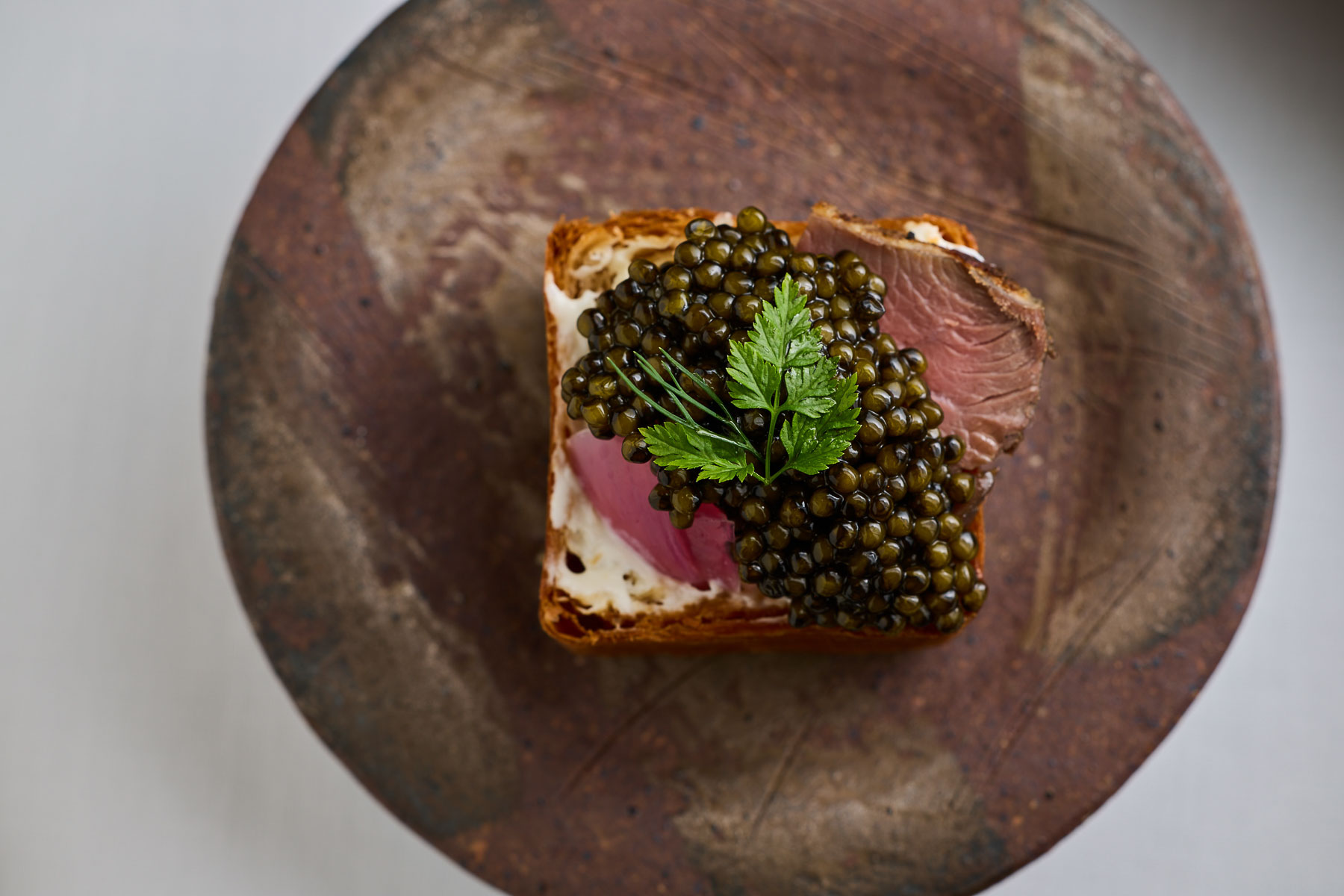
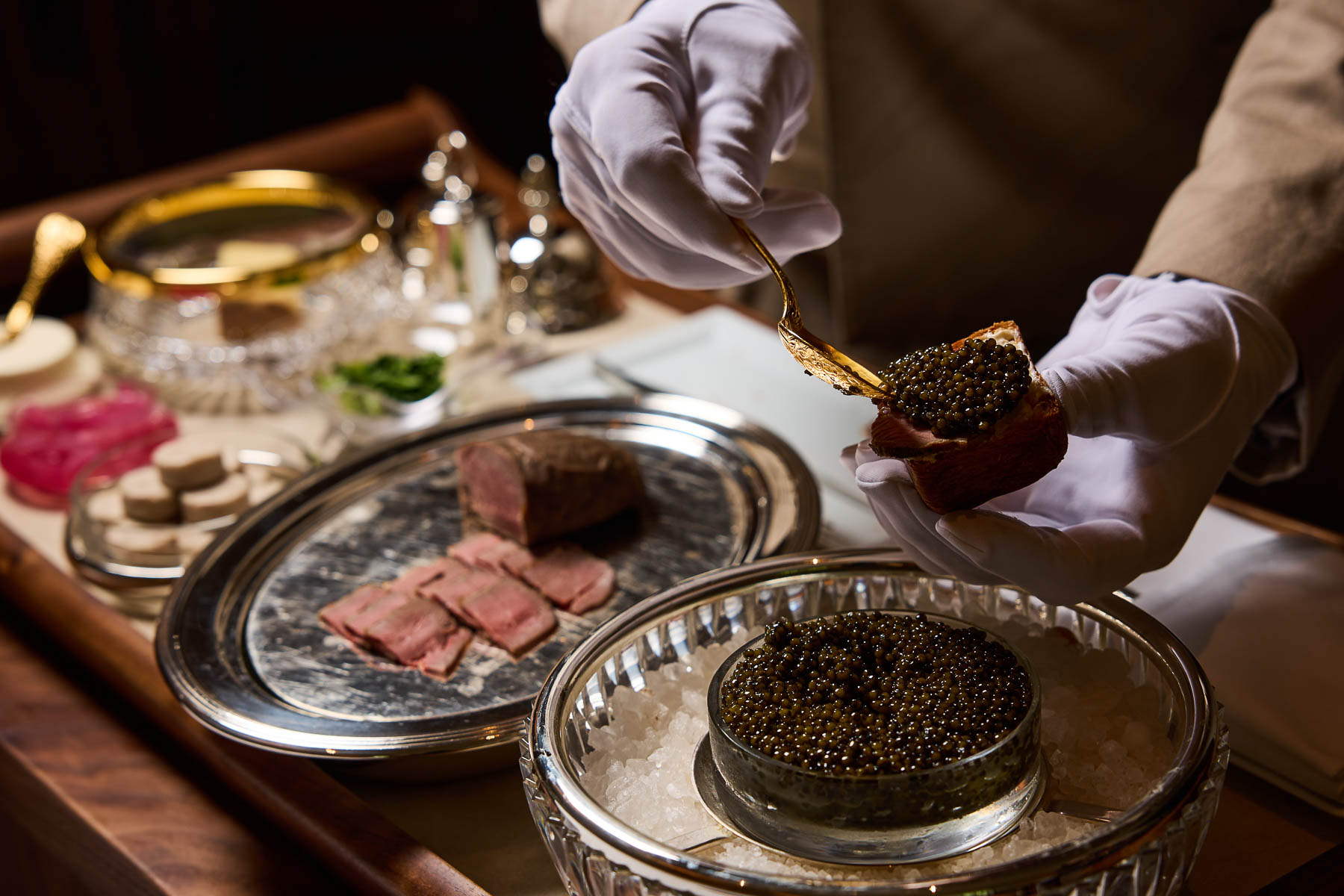
Carré de Beurre is one of mærge’s most theatrical moments. A croissant, baked to a burnished gold, is sliced open on the table, releasing a rush of butter-scented steam. Guests choose from a platter of accompaniments — Oscietra caviar, smoked duck, pork rillettes, ricotta cream, pickled red onion, Comté cheese and herbs — creating their own moment of indulgence.
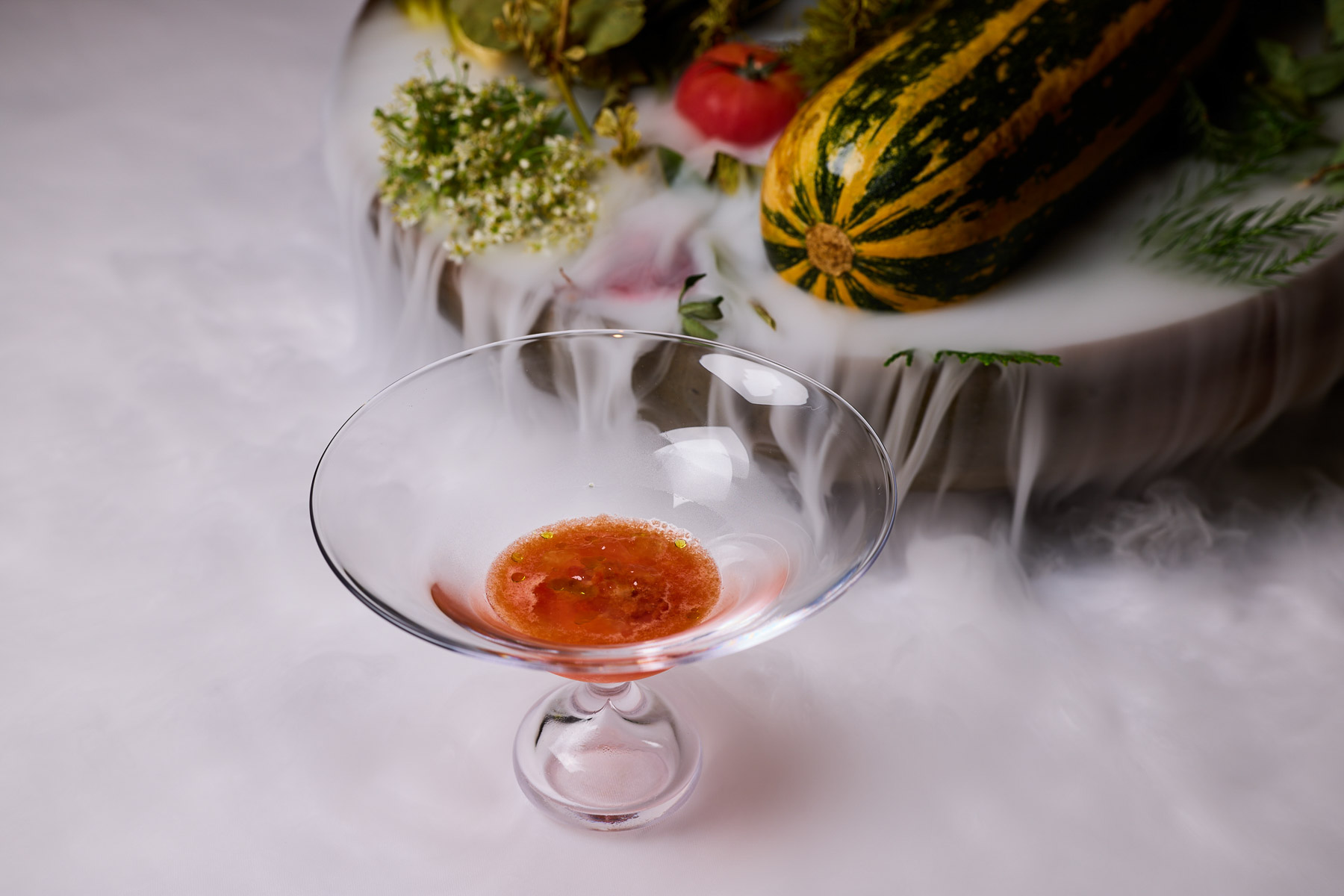
The soup dish, Blessings of the Motherland, emerges from a cloud of dry ice. Olive oil infused with cedar, fir and black ginger is drizzled over the surface. The presentation is spellbinding, with the dish first introduced through sound, sight and fragrance.
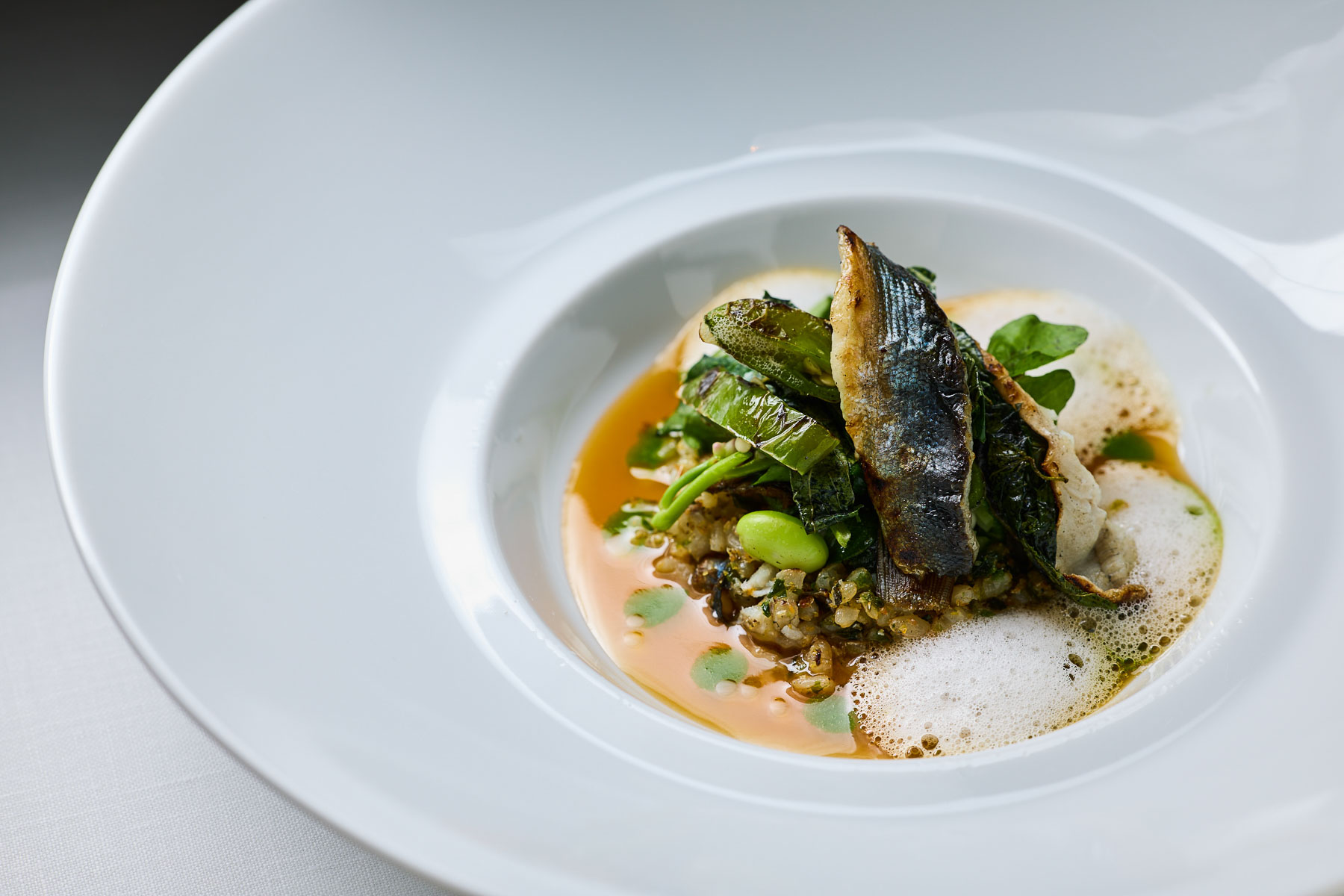
Grilled Haya (minnow) ʻSeiryuʼ Style begins with the fish swimming before the guests. The fish is then grilled over wood fire, wrapped in leaves and steamed beside the table. When unwrapped, the fragrance of smoke and leaf mingles with a green sauce of Japanese spicebush and a lime foam. The fish is served with brown rice pilaf and fried liver, bone and head.
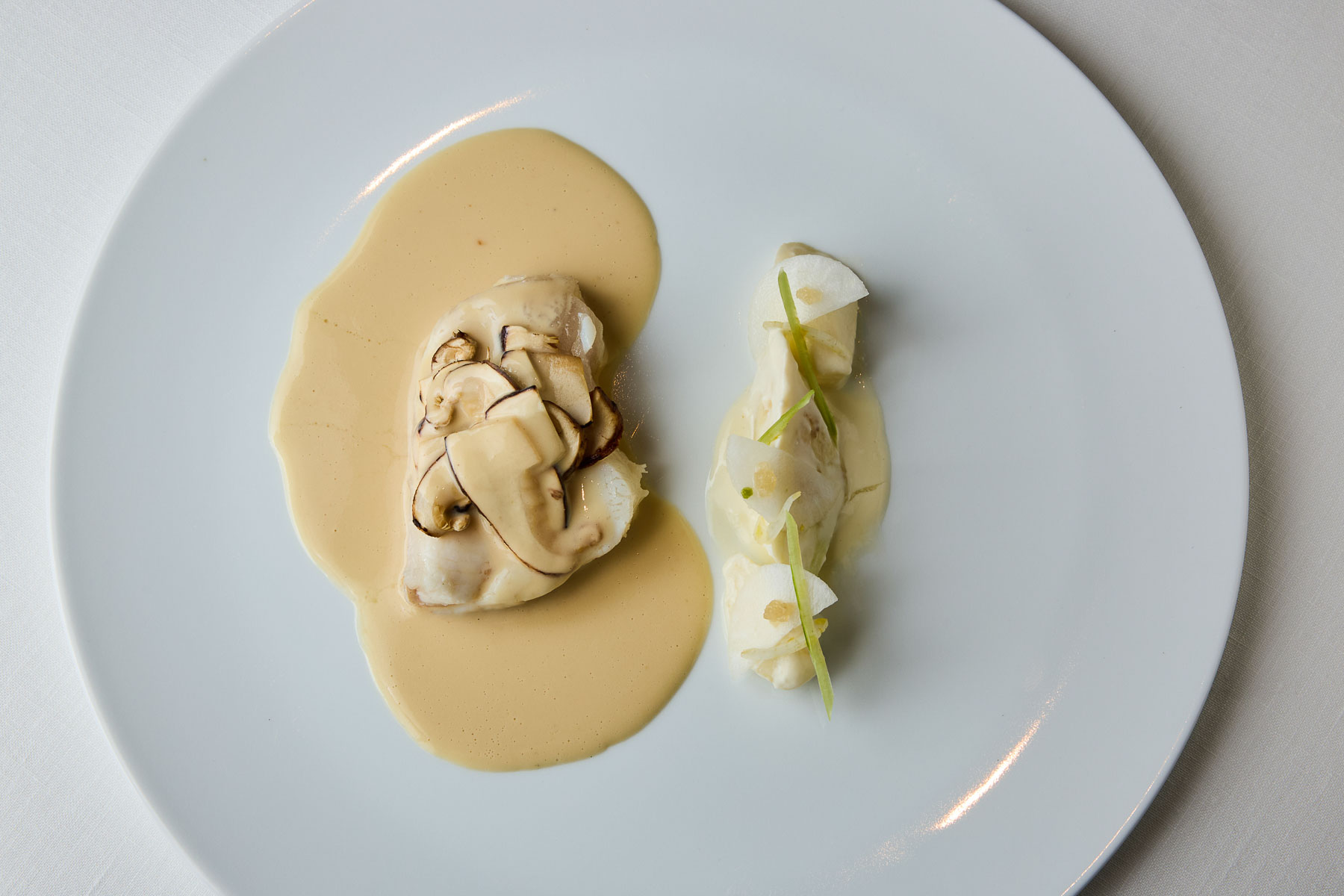
Braised Longtooth Grouper (kue) returns to classic French technique with a pristine fillet glazed with white-wine sauce made from its own stock. The fish is served with mizunasu eggplant, turnip and matsutake mushrooms.
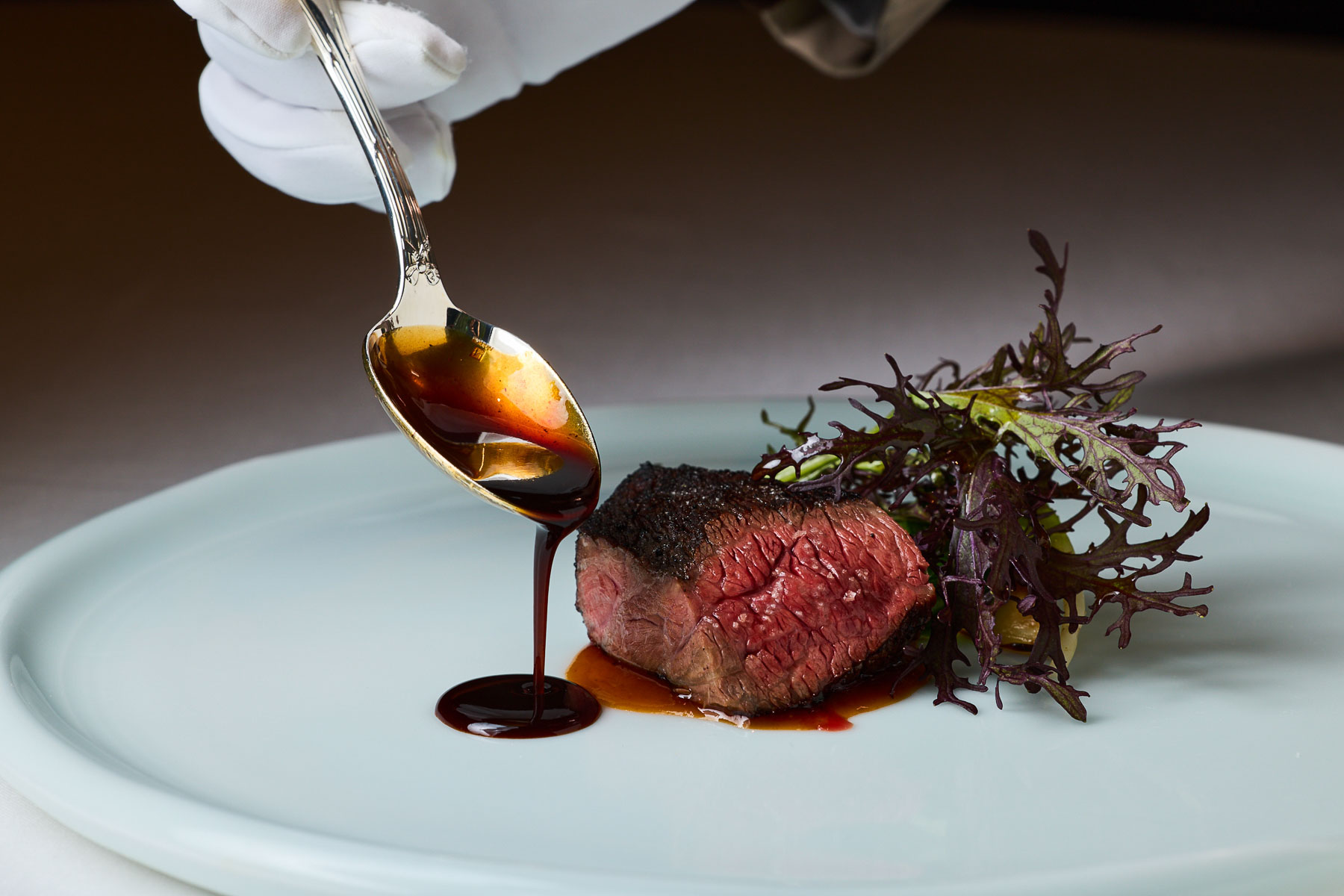
The centerpiece, Grilled Rubeshibe Beef over Wood Fire, embodies Shibata’s culinary devotion. Hokkaido Jersey cattle, raised by his brother-in-law, are aged for three weeks, dusted with koji powder and grilled over wood fire until the surface gleams with caramelization.
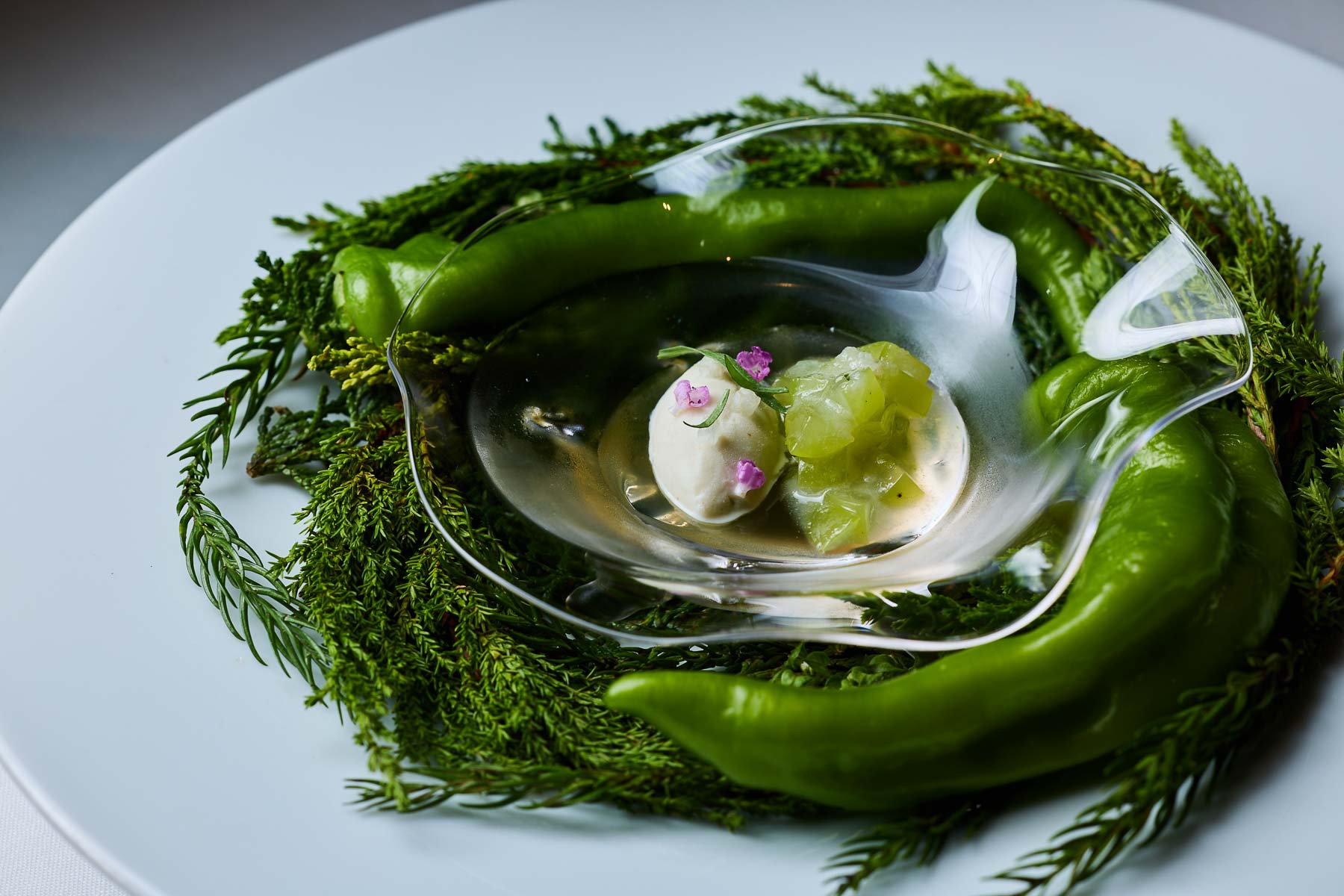
The meal closes with Emerald, a serene composition of seasonal fruit. In the photo, Shine Muscat grapes are dressed in a translucent sauce, served in a rippling glass bowl that catches the light like water.
INGREDIENTS
Shibata’s ideology begins in dialogue with producers. He seeks ingredients that producers themselves believe in, not simply what suits his menu. “I adapt to the fields, the seas and the mountains,” he says. Through these relationships, mærge becomes a cross section between craft and cuisine.
For most produce, he favors native breeds and fixed varieties. The top-grade Rubeshibe beef comes from his brother-in-law in Hokkaido. Minnow from Karuizawa brings the smoke-tinged fragrance from Japanese rivers. For rice, he often selects Asahimai from Okayama Prefecture. The koji powder comes from a soy sauce and miso maker in Kanazawa. The salt is a blend of three origins: Sasagawa Nagare salt of Niigata, sun-dried Dama Blanca from Cádiz, and Guérande salt from France.
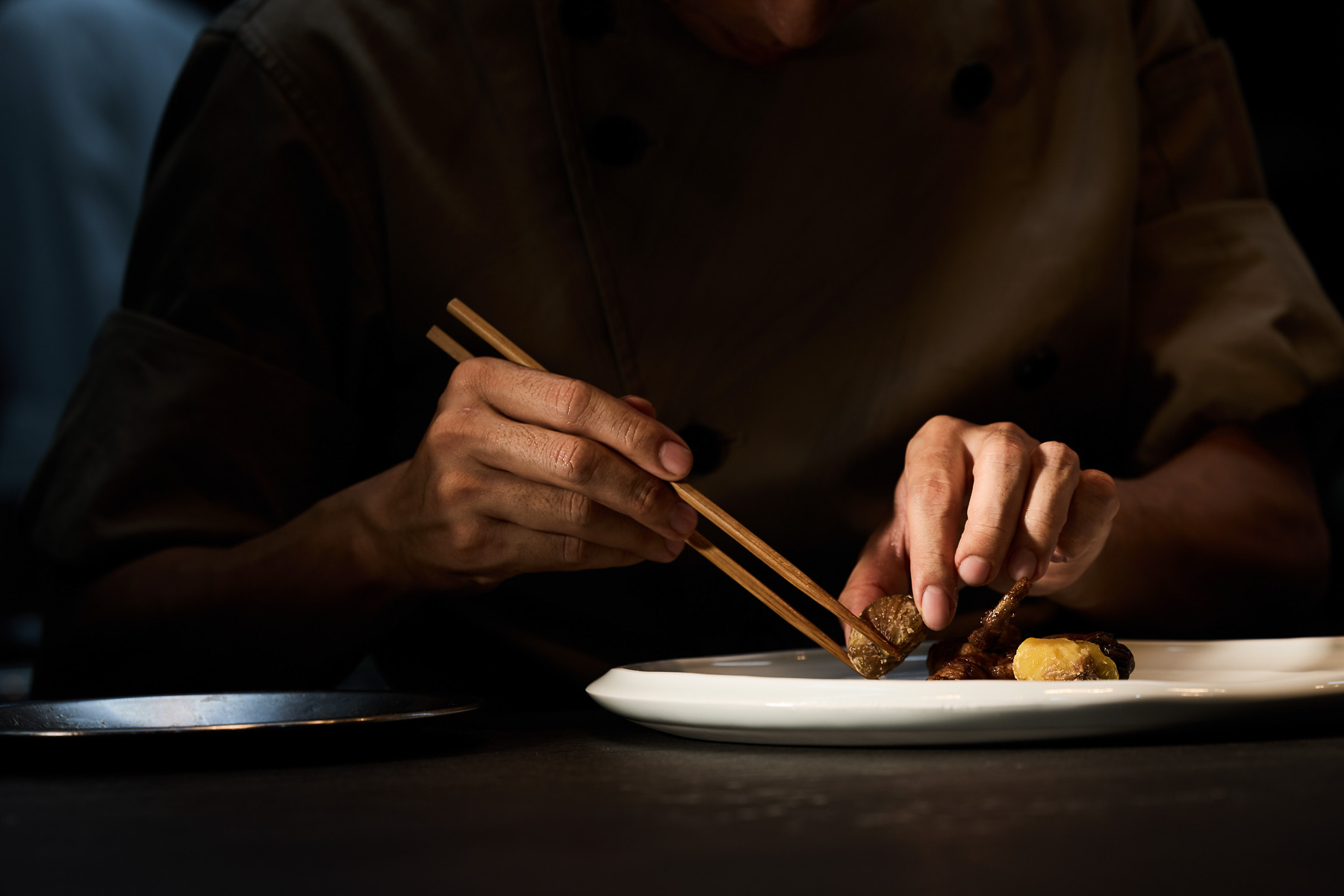
CHEF
Hideyuki Shibata
Knives
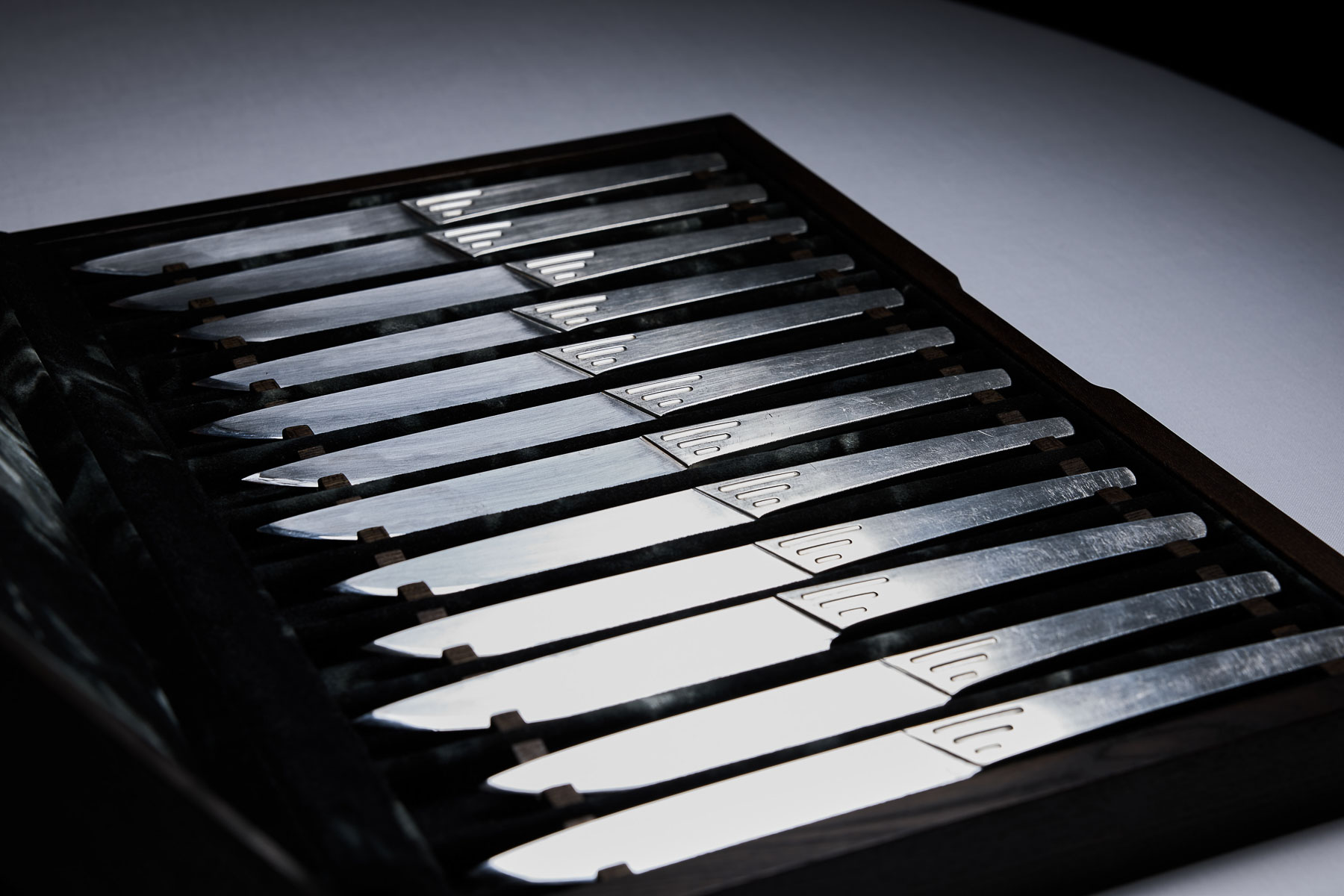
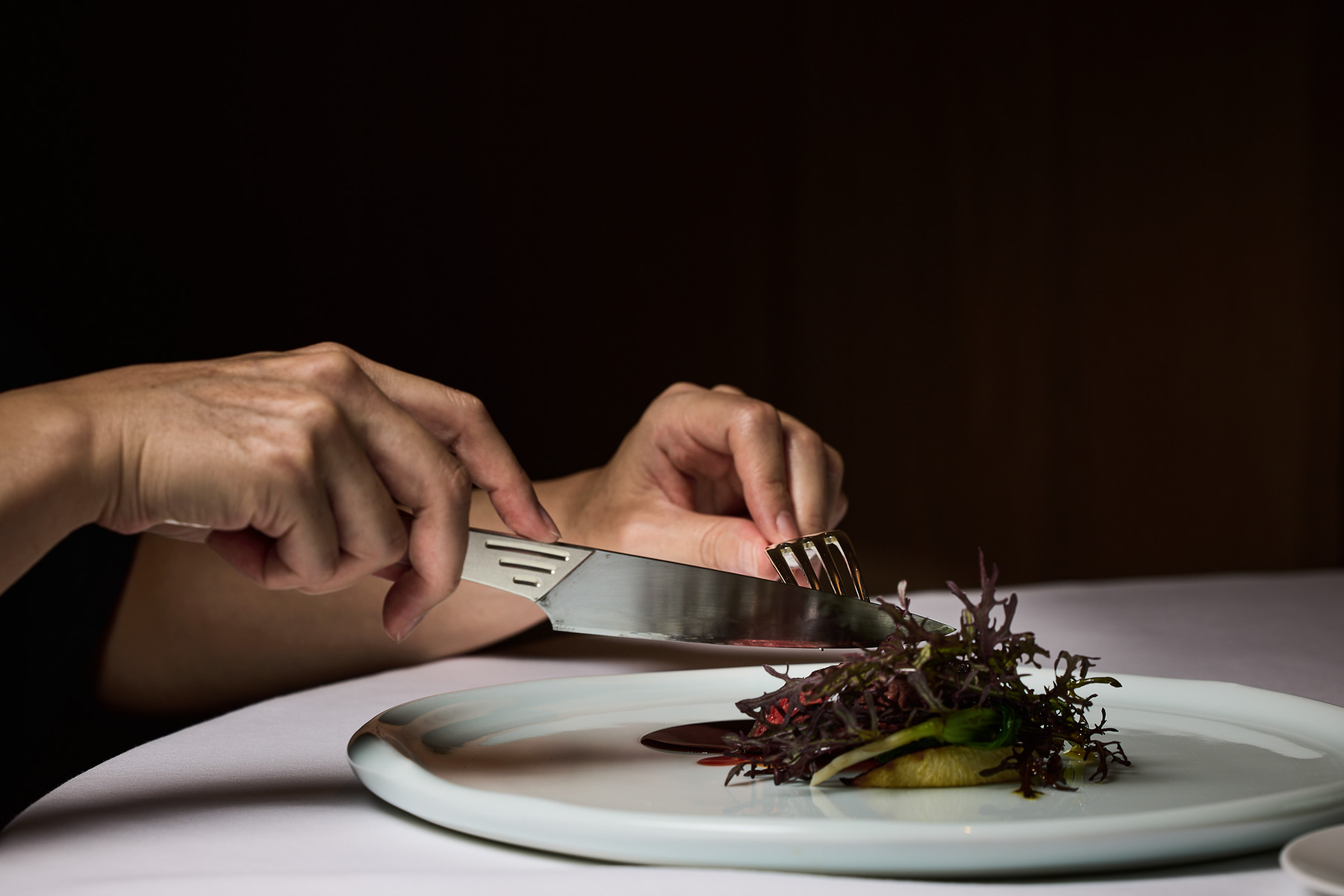
A highlight of the meat course at mærge is the arrival of knives presented in handcrafted wooden boxes. These exquisite pieces were custom-made by Kyoto’s Nihon Genshosha, a renowned maker of Japanese swords. The collaboration began when sommelier Yasuhide Tobita introduced the craftsman to Shibata—marking the first time the swordsmith had ever created a knife for dining.
Each knife is forged from tamahagane, a high-grade steel with low carbon content, produced using traditional tatara steelmaking method. Because the bare metal can leave a faint iron scent on the hands, the blades are plated in pure silver by Suwao Plating in Tsubame-Sanjo in Niigata. Although adding zinc or other metals to the plating could prevent rust, Shibata chose to use only silver, allowing the knives to develop natural patina and require periodic maintenance—a process that sustains the craft and creates continued work for artisans.
When the meat course is served, the knives are presented to the guests in a wooden box, inviting them to appreciate the design and weight before the first cut. Guests may also purchase their own; each knife is made to order by the craftsman and delivered six months to a year later. Shibata believes that keeping such handmade tools in circulation helps preserve Japan’s living traditions of craftsmanship.
Course
- The price includes our booking fee of ¥8,000
- The price includes our booking fee of ¥8,000
- The price includes our booking fee of ¥8,000
- The price includes our booking fee of ¥8,000
- The price includes our booking fee of ¥8,000
- The price includes our booking fee of ¥8,000
- The price includes our booking fee of ¥8,000
- The price includes our booking fee of ¥8,000
- The price includes our booking fee of ¥8,000
- The price includes our booking fee of ¥8,000
- The price includes our booking fee of ¥8,000
- The price includes our booking fee of ¥8,000
- The price includes our booking fee of ¥8,000
- The price includes our booking fee of ¥8,000
- The price includes our booking fee of ¥8,000
- The price includes our booking fee of ¥8,000
Tokyo
Mærge
マージ


- GENRE
- French, Aoyama
- ADDRESS
-
VORT Minami-Aoyama III 1F, 3-8-14, Minami-Aoyama, Minato-ku, Tokyo

- OPEN
- 12PM / 6PM - 8PM start
- CLOSED
- Sunday and Monday
- URL
- NA
- PHONE
- NA


