

Tokyo
Nihonryori Otora
日本料理 お寅
At Nihonryori Otora, Japanese cuisine begins not in the kitchen but at the moment an ingredient reaches its peak. Chef Toranosuke Ohama calls this shunkan (旬間)—the fleeting instant when seasonality, ripeness and flavor converge. Bamboo shoots arrive with their roots intact, preserving their natural sweetness. The signature soft-shelled turtle bun is served just as the crust turns crisp and the filling turns molten. Each ingredient is presented at the instant the chef believes it tastes best.
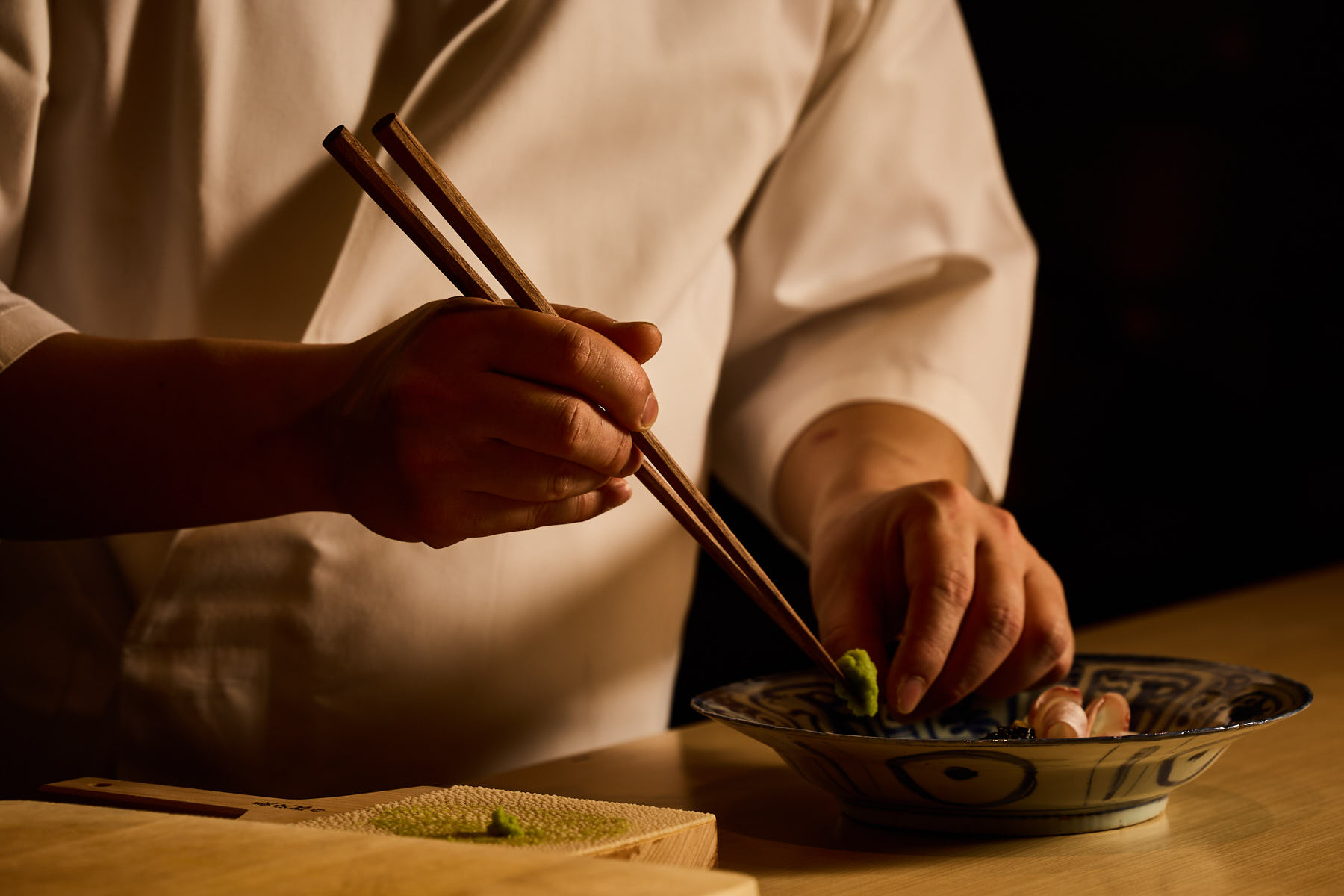
Despite his young age, 28-year-old Ohama stands confidently behind his own counter after spending seven years at Makimura, one of Japan’s most acclaimed restaurants. The techniques he absorbed there form the foundation of his cooking today, though the dishes he now serves express a distinctly personal sensibility.
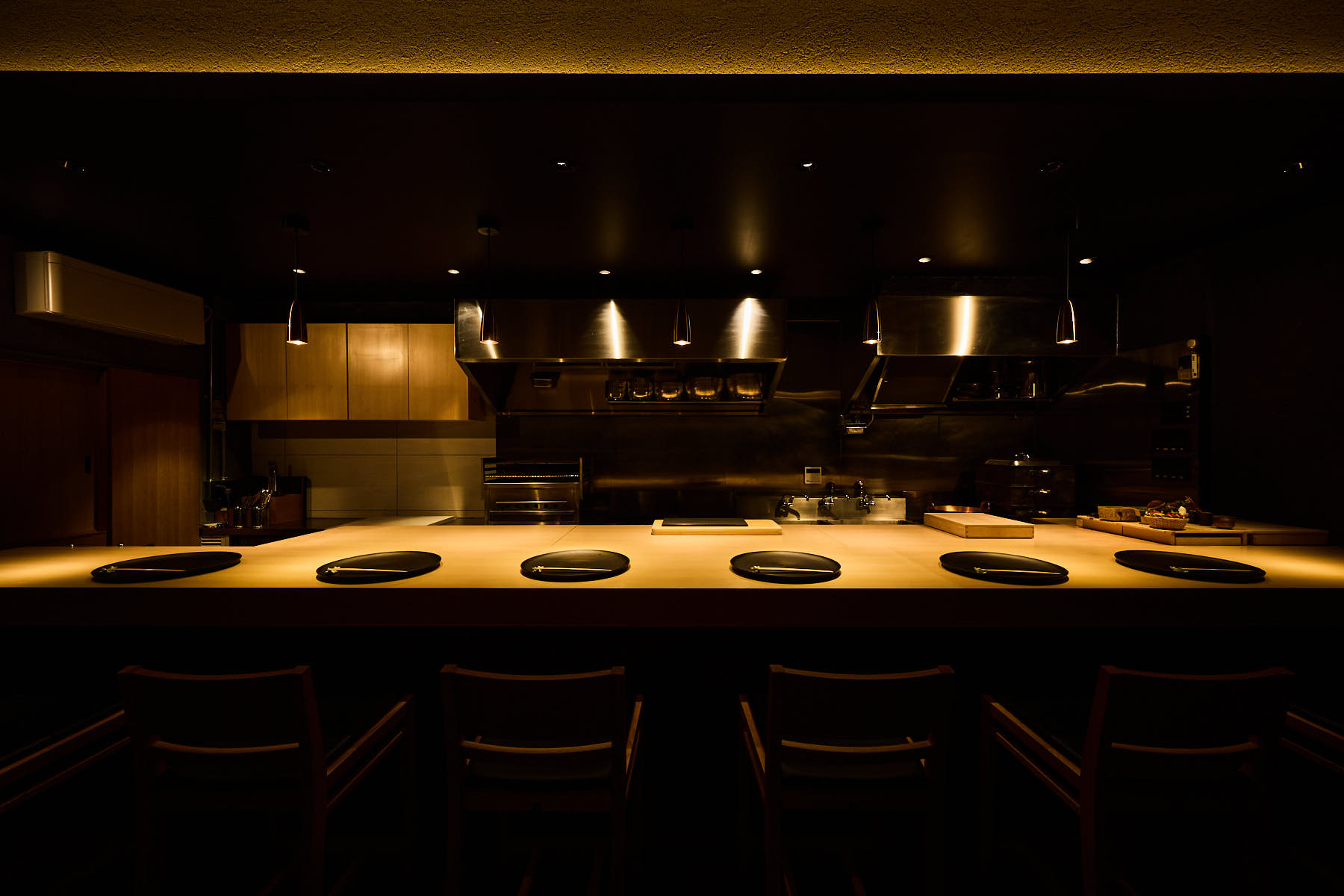
Opened in November 2025, Nihonryori Otora sits in the refined gourmet district of Nishi-Azabu. Its jet-black exterior walls blend into the neighborhood after dark. Inside, the atmosphere softens. Pendant lights cast a gentle glow over a broad hinoki counter where seven seats line up in a single row. The setting serves almost as a stage, where guests watch each course take shape only a few steps away.
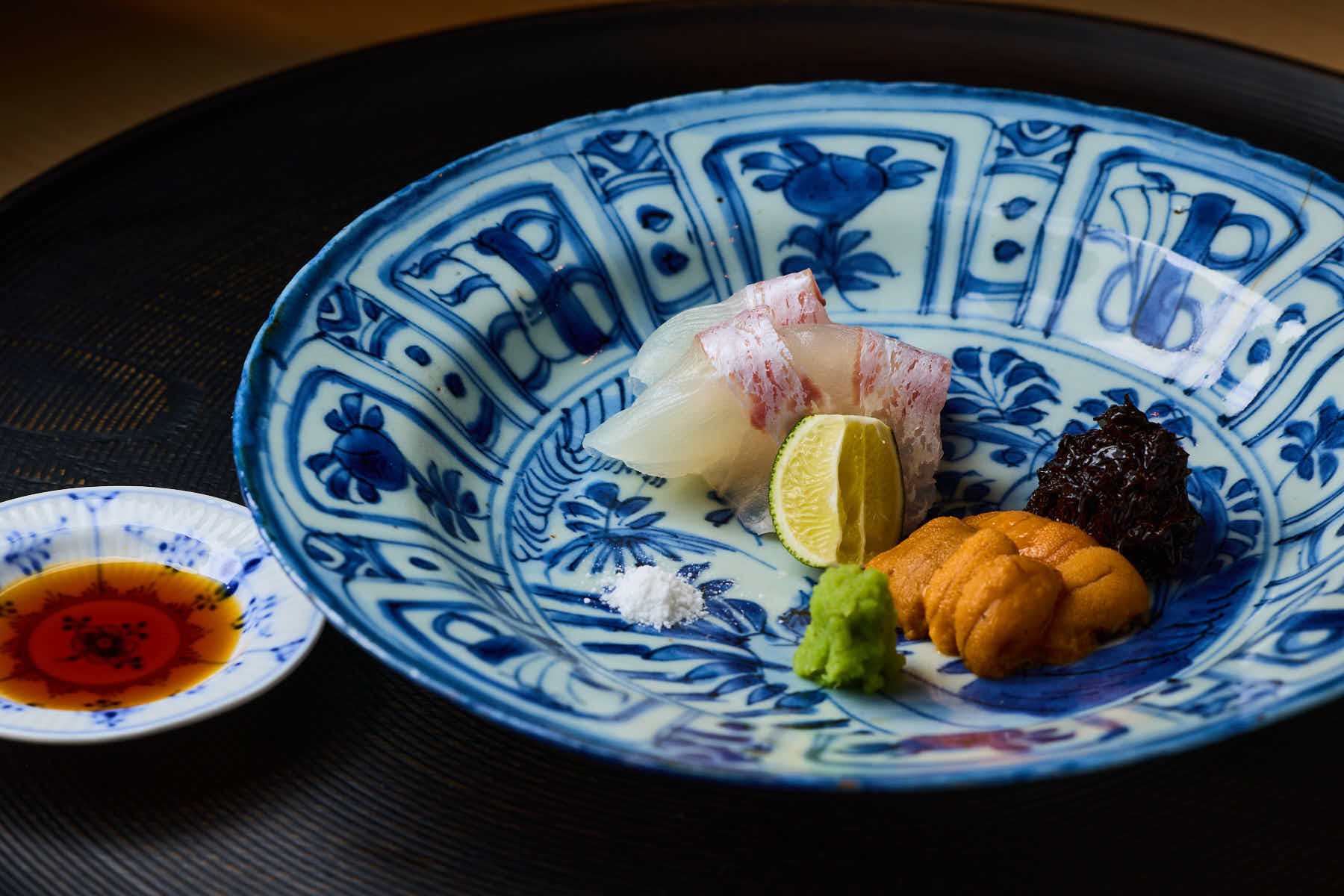
The tableware used throughout the meal comes from Ohama’s personal collection. An avid admirer of antiques, he often favors pieces from the late Edo period. He also incorporates pieces from abroad that sit naturally within the Japanese aesthetics, such as a small dish from Copenhagen used for soy sauce. The sake list, selected by the chef himself, includes both renowned labels and favorites from his home prefecture of Yamaguchi.
CUISINE
Peak Season. Peak Flavour.
Ohama selects seasonal produce from across Japan with a careful and practiced eye. Delivered to be enjoyed at their peak, they are prepared directly at the counter and served at the precise moment they taste their best.
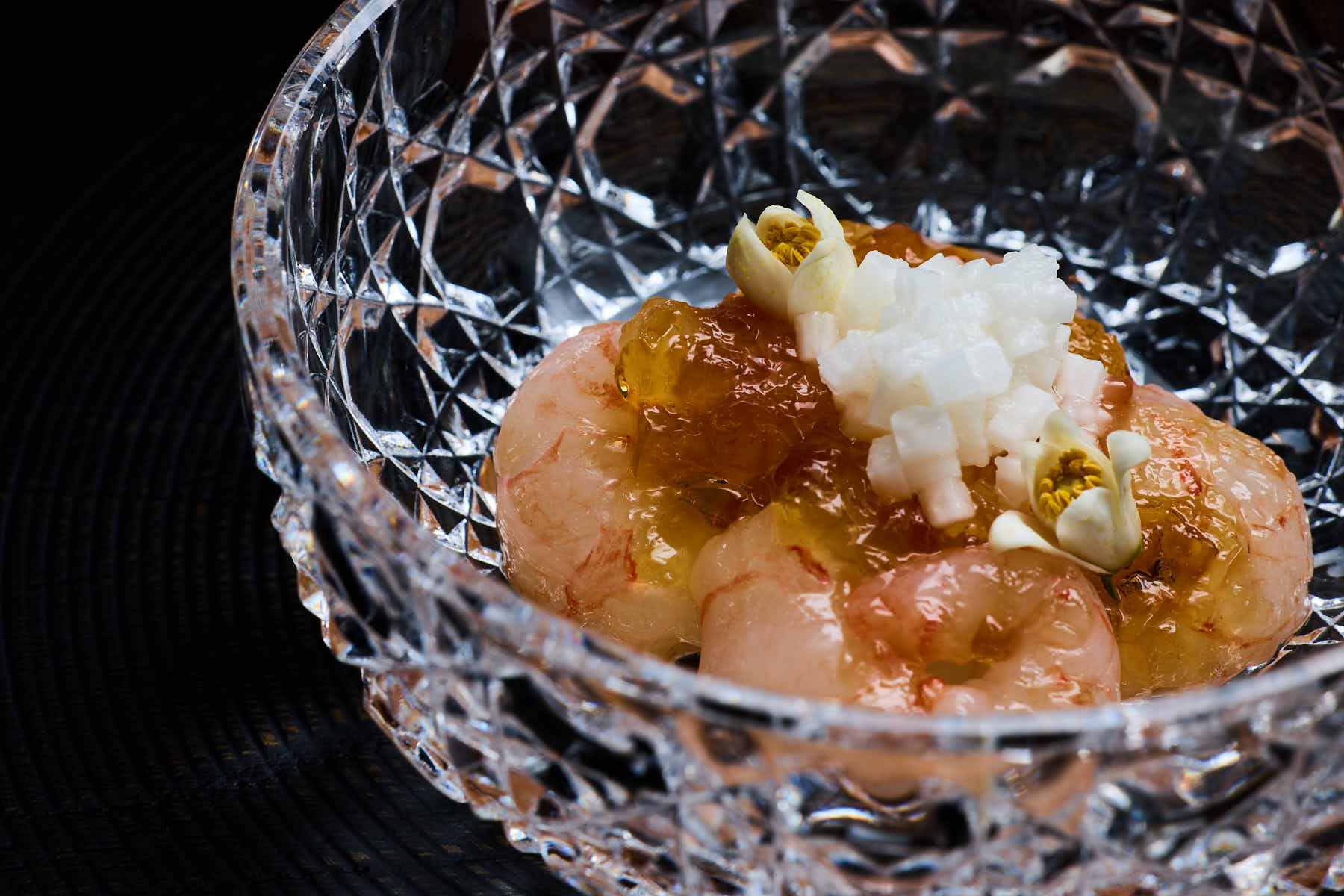
The omakase opens with delicate seasonal flavors. Hokkaido botan-ebi, or spot prawns, arrive glossy and sweet, their creamy texture accented with plum paste, a light dashi jelly, yuzu blossoms and finely grated mountain yam.
The restaurant’s signature suppon-pan is a small pastry inspired by curry bread. Beneath its crisp shell lies a velvety filling of slow-cooked soft-shelled turtle, rich and savory, a playful dish that often surprises guests.
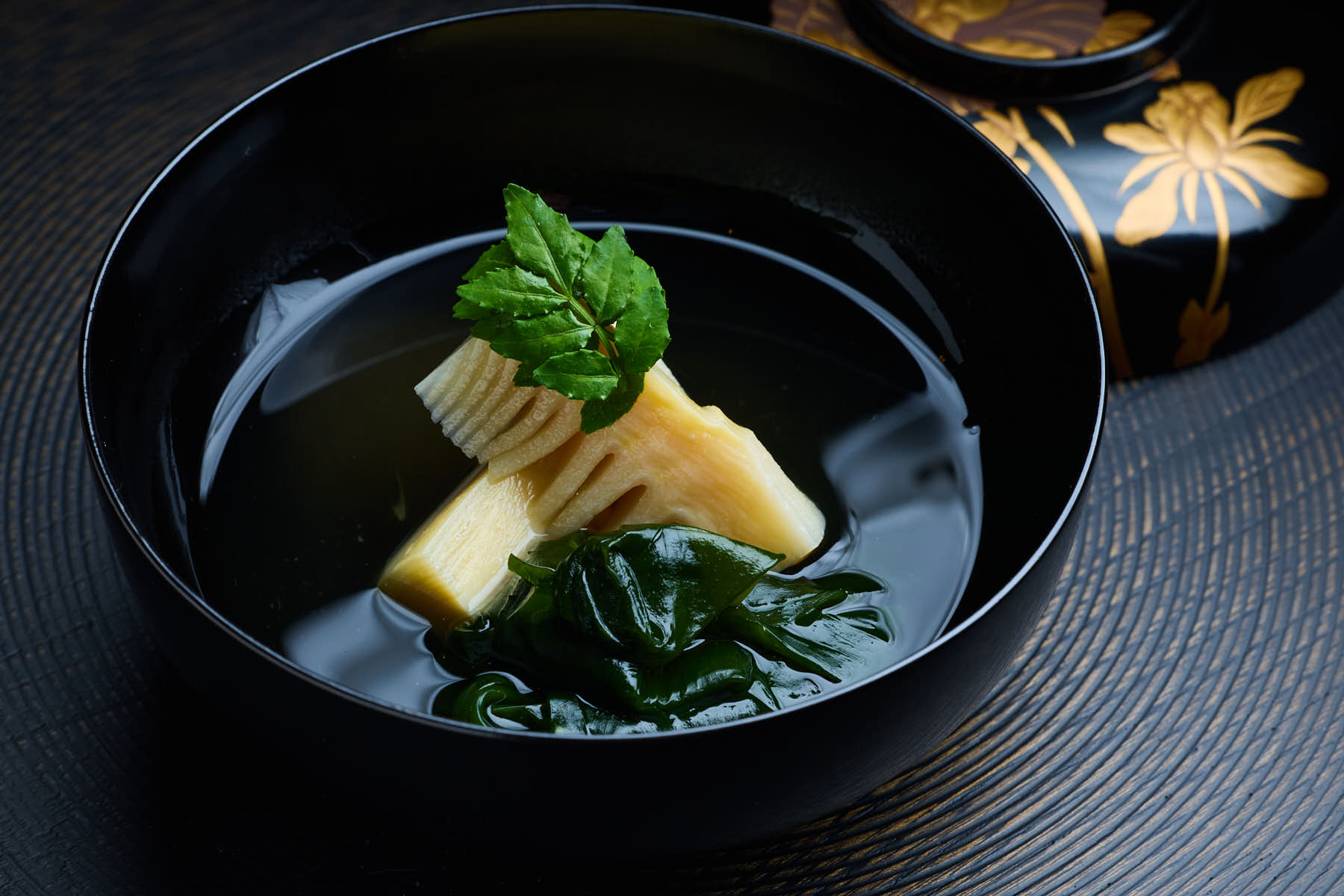
A spring soup pairs bamboo shoots from Yamaguchi Prefecture with Naruto wakame seaweed. The dashi making begins the night before, when ma-kombu is soaked in water, then gently heated for several hours the next morning before honkarebushi bonito flakes are added. The result is a broth delicate yet aromatic, its umami lingering long after the first sip.
Wild sea bream sashimi is rested briefly to deepen its flavor and served alongside Hokkaido sea urchin. Instead of soy sauce, the fish may be dipped in a house-blended salt made from Hiroshima seaweed salt, powdered scallop adductor muscle and dried shiitake.
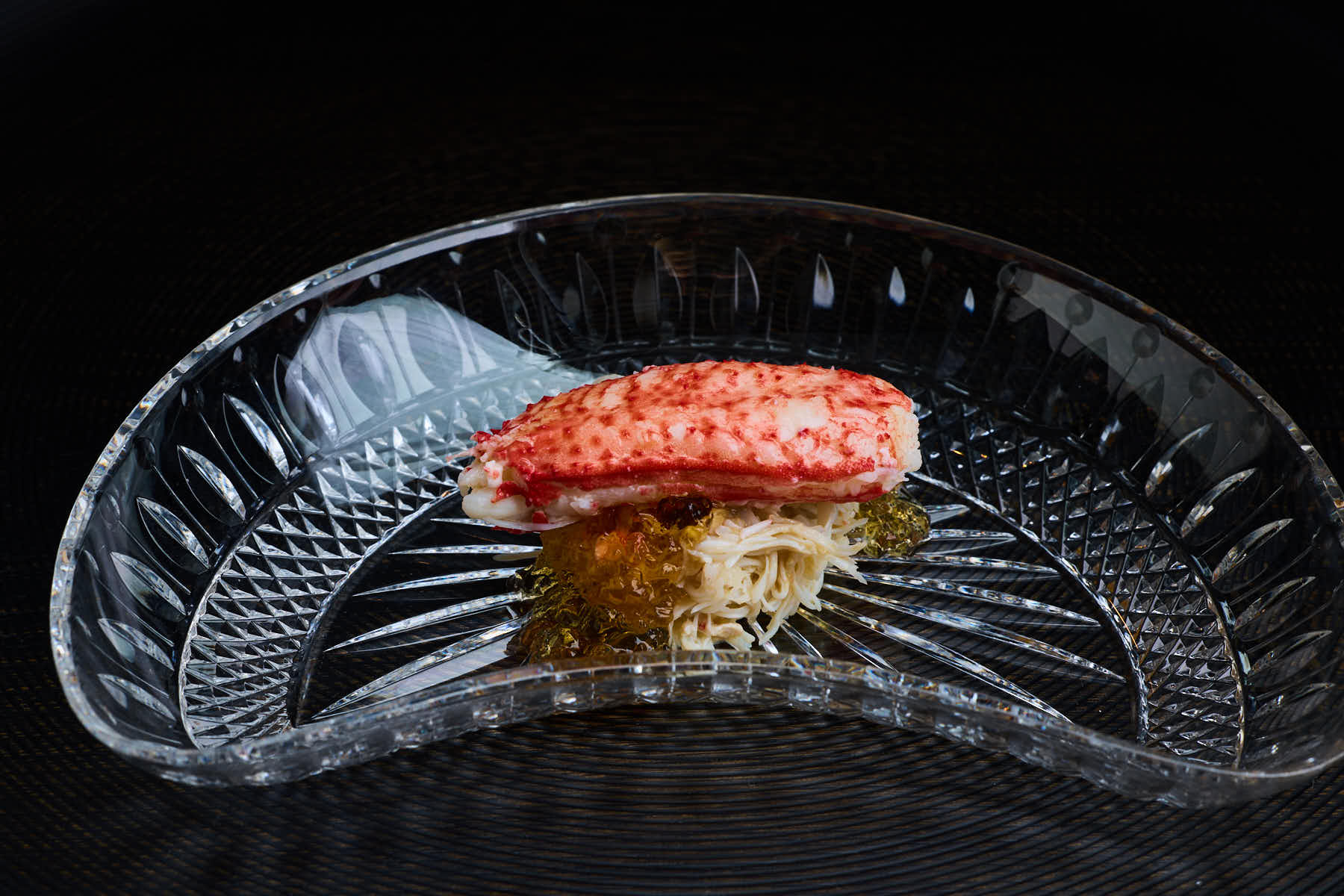
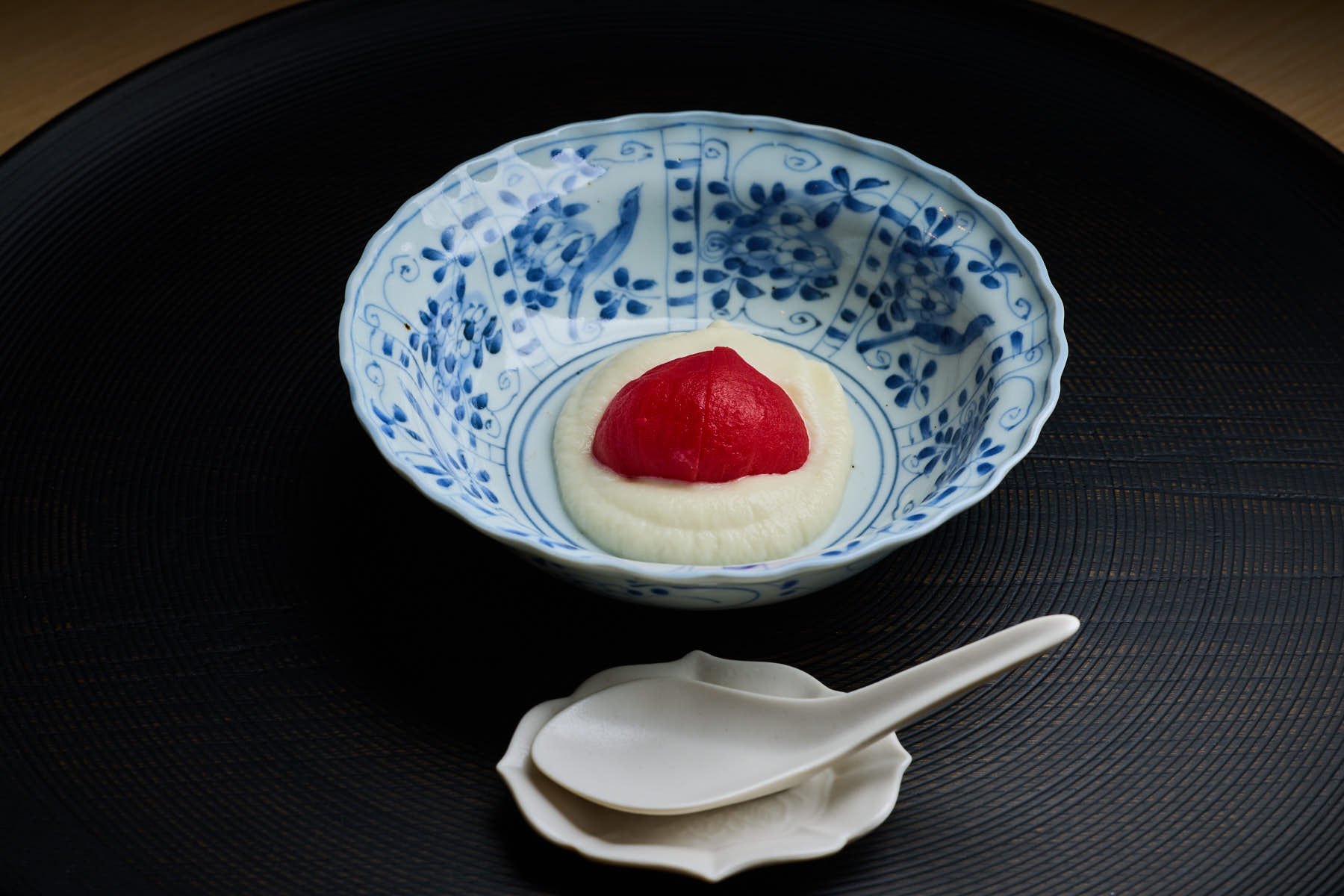
A silky cauliflower surinagashi, or a purée soup, is served with wild tomatoes from Kochi Prefecture. Its gentle acidity refreshes the palate. In another course, crab meat is paired with a light vinegar jelly and presented in a cut-glass dish whose facets catch the light.
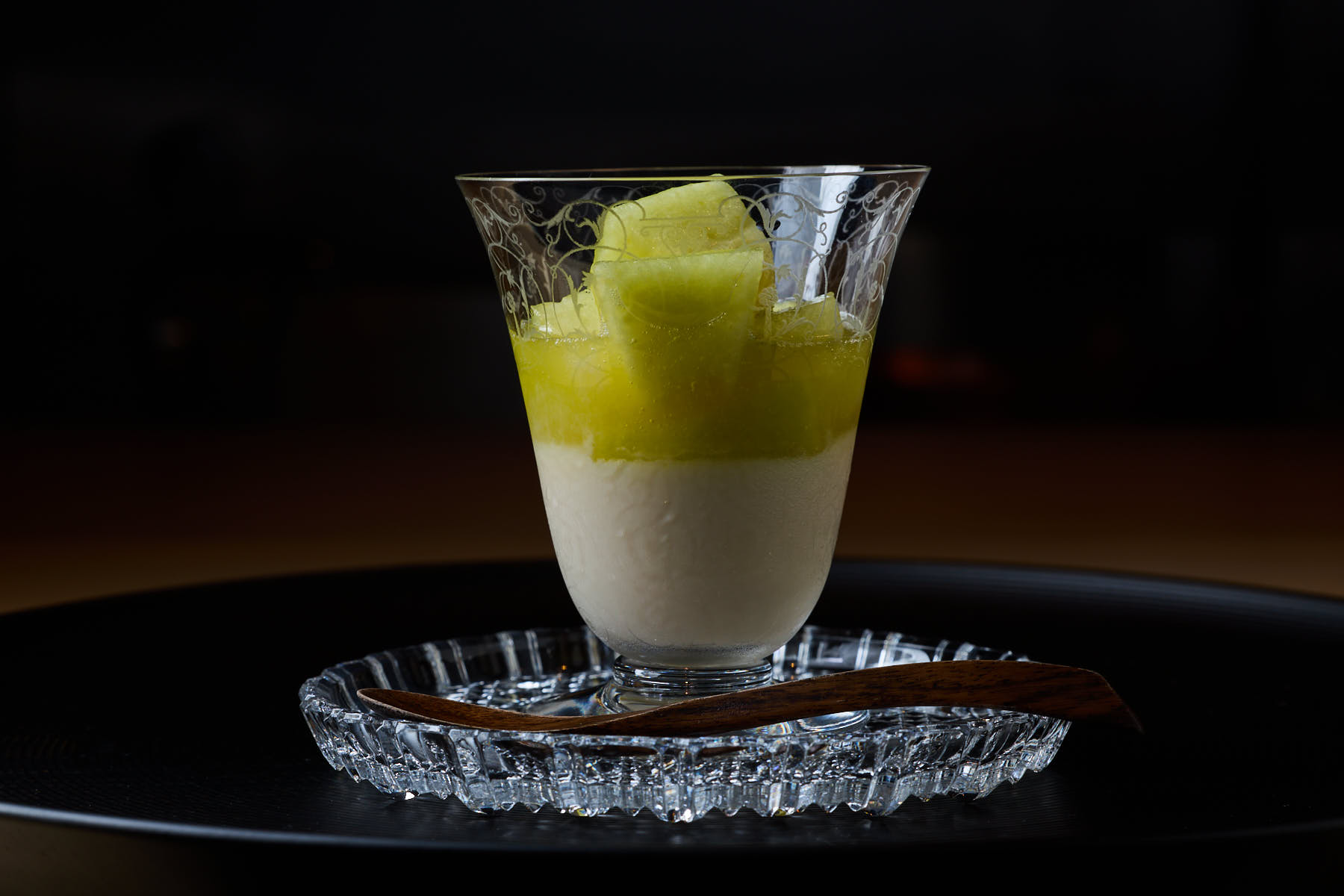
Ohama, who also holds formal qualifications in confectionery, likes to center his desserts around seasonal fruits. Musk melon slices are layered over fresh melon juice and a delicate almond milk pudding, and served in an etched glass.
INGREDIENTS
Ohama approaches sourcing with the same precision he applies to cooking. Many of the ingredients that arrive in his kitchen come directly from producers with whom he has built long relationships.
From Yamaguchi Prefecture, where he spent part of his childhood, bamboo shoots arrive each spring with their roots still attached. They are delivered in what he calls their “living state,” just as they were when lifted from the earth before trimming.
From the same region he also sources seafood such as Japanese tilefish and squid. Even the pufferfish served here carries a regional connection. The fish, known as “Koufuku,” are farmed using sake lees from Dassai, a renowned sake produced in Yamaguchi.
The meat course features Tankuro-gyu from Fukushima Prefecture, a rare cross between Japanese Black and Japanese Shorthorn (Tankaku) cattle. Raised without pesticides or vaccinations, only two or three head are produced each month, accounting for roughly 0.01 percent of domestic beef production.
For rice, the chef selects an heirloom strain of Koshihikari from the Minami-Uonuma region of Niigata Prefecture. Cultivated at an altitude of around 640 meters using mountain meltwater, it represents a traditional style of rice farming. Each year he travels to the fields himself to participate in both planting and harvest.
The wakame seaweed served here is the well-known Naruto Wakame from the currents of the Naruto Strait in Tokushima Prefecture, prized for its firm texture and deep flavor. The salt served with the sashimi blends Hiroshima seaweed salt with powdered scallops and dried shiitake. Fresh wasabi arrives from Gotemba in Shizuoka Prefecture.
While domestic ingredients are central to the menu, Ohama also incorporates outstanding products from abroad. The seaweed served with the sashimi is a premium variety from Korea. The caviar is Russian, harvested by gently massaging the sturgeon to extract the eggs without hurting the fish.
“Eating is ultimately the act of receiving a life,” he says. “For that reason, I try to source ingredients from producers who show genuine care and respect for the animals and environments they cultivate.”
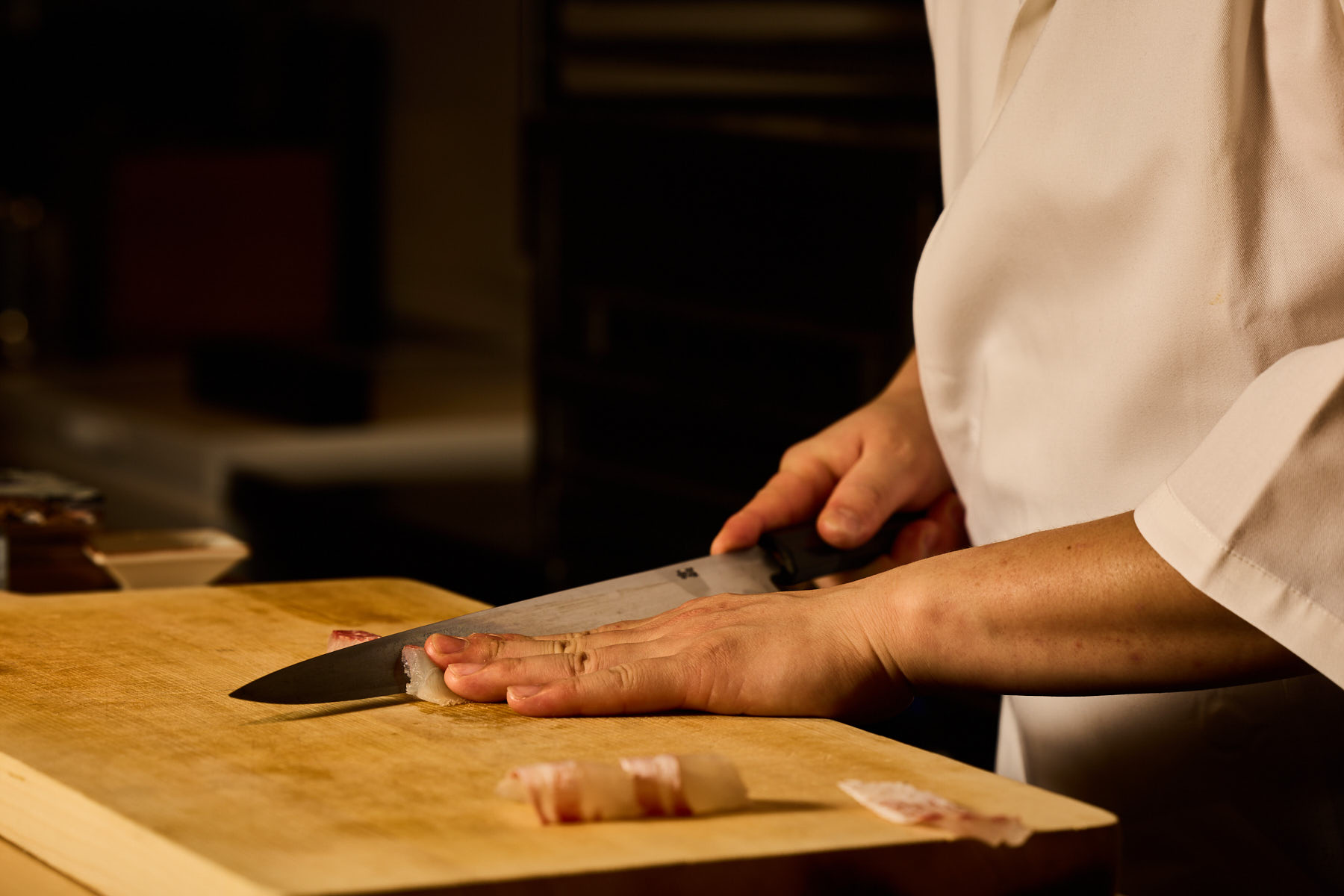
CHEF
Toranosuke Ohama
SAKE
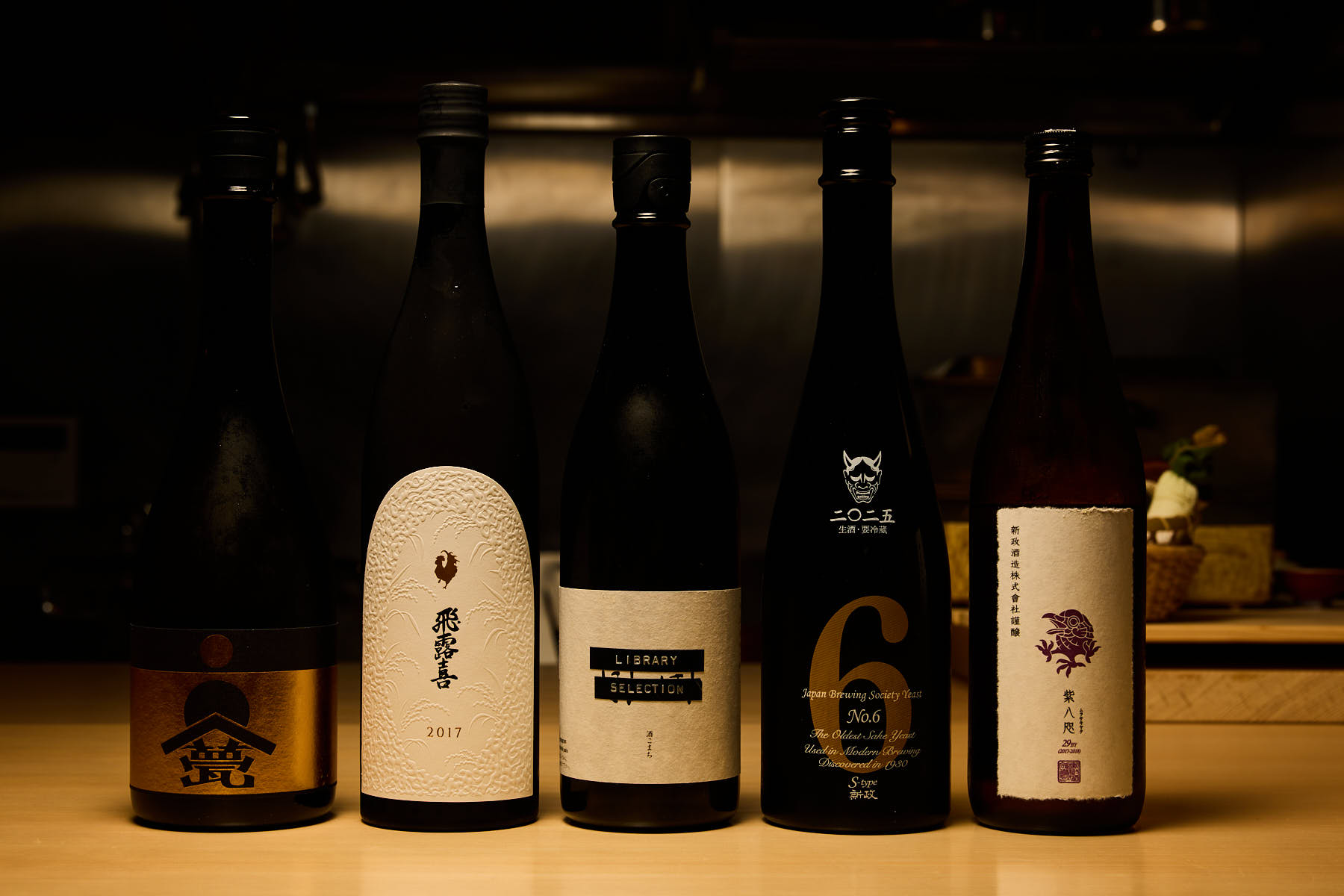
The sake menu is overseen by Ohama himself, who holds the SAKE DIPLOMA certification from the Japan Sommelier Association. The selection includes well-known labels such as Hiroki, Jikon and Aramasa. Among them, he is particularly fond of Ohmine, a sake produced in his home prefecture of Yamaguchi. Because the list includes several rare bottles, guests are encouraged to consult the staff when choosing a pairing.
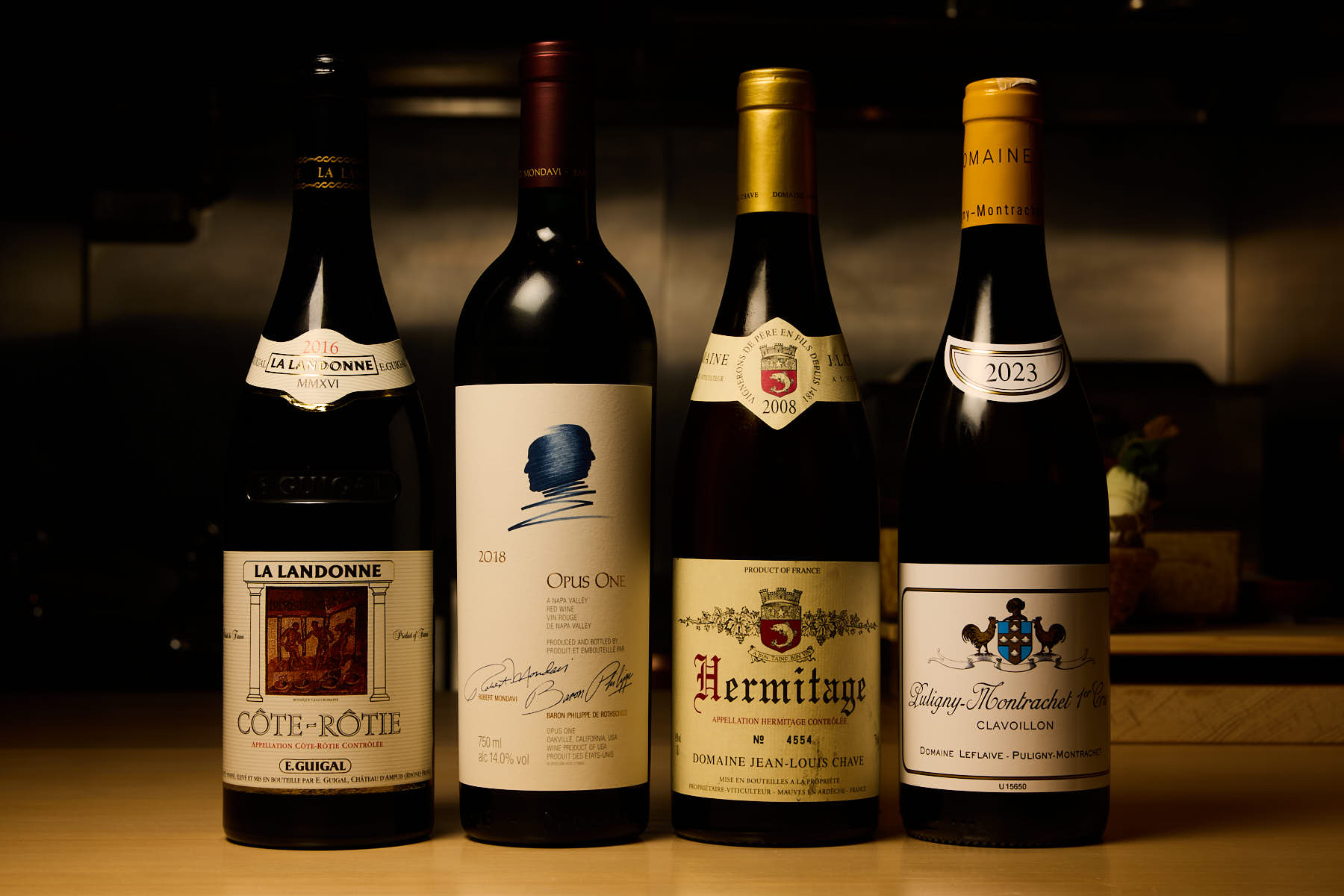
The wine list is curated with the guidance of his brother and sister, who have extensive knowledge of wine. While French wines form the foundation, the list also includes selections from Japan, Italy, South Africa and other regions. The guiding principle is simply to choose wines that taste excellent, regardless of origin.
Course
- The price includes our booking fee of ¥8,000
- The price includes our booking fee of ¥8,000
Tokyo
Nihonryori Otora
日本料理 お寅


- GENRE
- Kaiseki, Hiroo
- ADDRESS
-
Shibuya Reiki Building 1F, 4-5-4 Nishiazabu, Minato-ku Tokyo, Japan

- OPEN
- 6PM - 8PM start
- CLOSED
- Sundays
- URL
- NA
- PHONE
- NA


