

Nara
Hoshino
ほしの
In a century-old townhouse, Chef Keisuke Hoshino serves an intimate omakase that draws on local produce, sake and rituals. Seasonal matsutake mushrooms are bathed in fragrant kombu dashi, large abalone served in its shell with dried mullet roe, and Yamato Haibara beef paired with local figs, burdock and chrysanthemum petals. His refined expression of Nara’s cultural traditions has quickly drawn attention, earning the restaurant its first coveted star just eight months after opening.
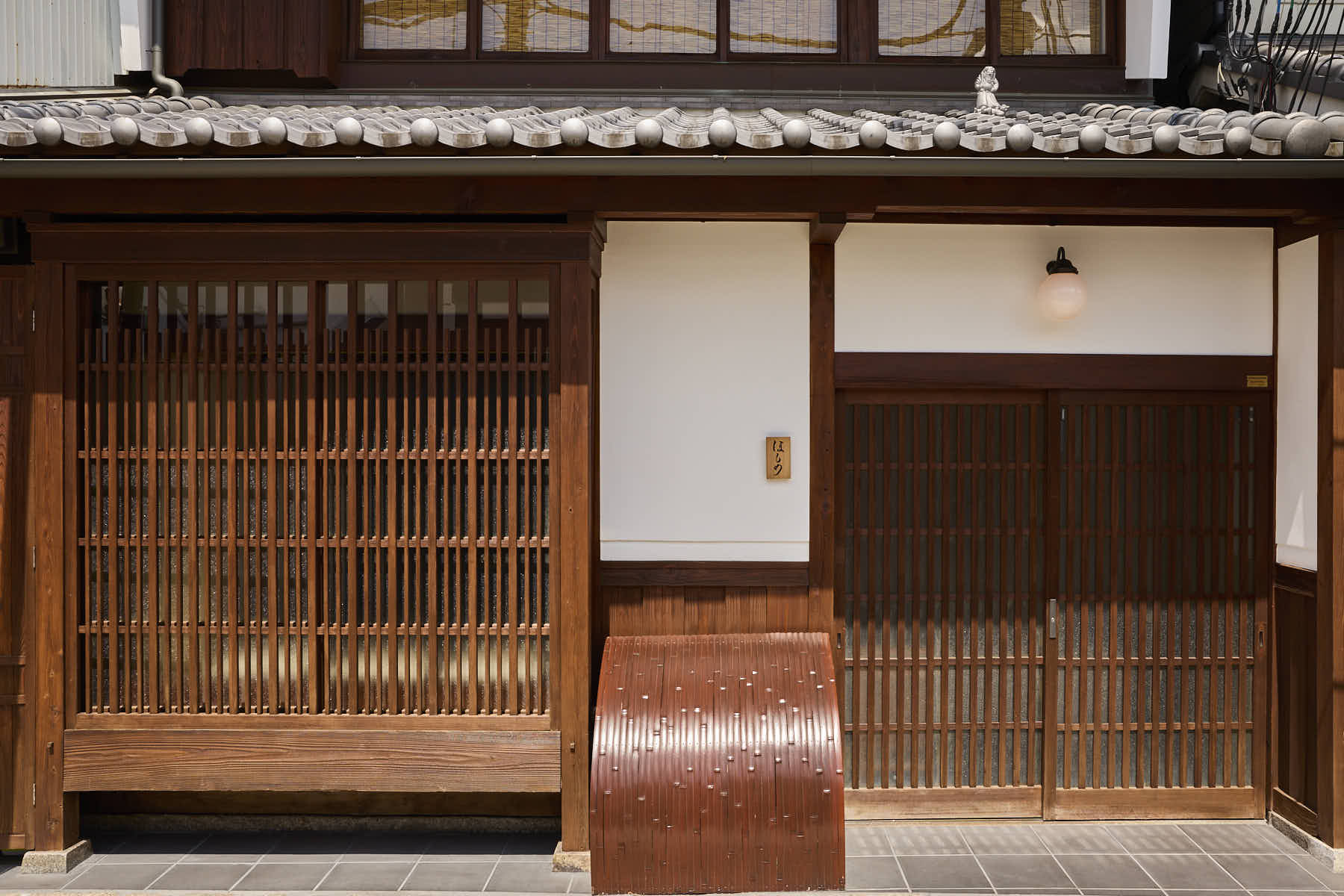
Hoshino opened in September 2025 in Fukuchiin-cho, a historic neighborhood just a short drive from Nara Station. The restaurant occupies a traditional machiya townhouse, recognized by the city for its architectural importance. Directly across the street is Imanishi Seibei Shoten, the brewery behind Harushika, placing one of the region’s best-known sake makers at the restaurant’s doorstep.
The sense of history continues inside. A folding screen depicting cranes greets guests at the entrance, created by Kousyo Shimizu, the former head priest of Todai-ji Temple who oversaw the Showa-era Great Repair of its Great Buddha Hall. The soft scent of incense accompanies arrivals and departures.
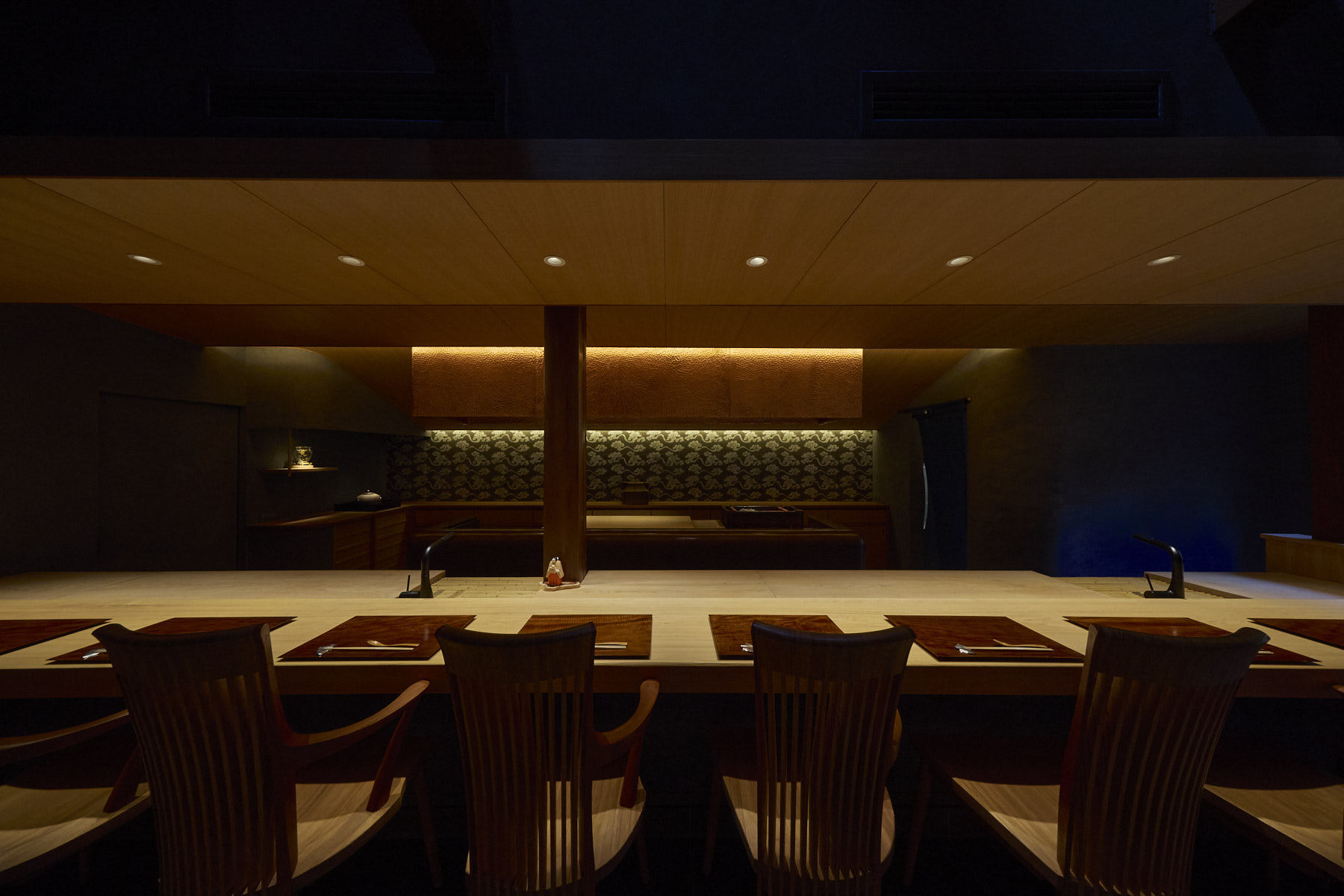
A ten-seat cypress counter overlooks the open kitchen and a rear cooking area designed to mimic a traditional Japanese hearth. The tiles feature the Tenpyo Ogumo by Karacho, a centuries-old Kyoto decorative-paper atelier, with the cloud motif symbolizing abundance and good fortune. Beyond the counter, a small garden of maple trees and moss reflects the changing seasons.
The sake menu offers another way to experience Nara's local culture. Regarded as the birthplace of Japanese sake, the region has a brewing tradition that developed around its temples centuries ago. Hoshino draws extensively from local producers, including Houshuku, Harushika, Mimurosugi, Shinomine and Kazenomori, with bottles selected to complement the seasonal menu.
CUISINE
The seasons, Captured on the Plate
With more than 30 years of experience at top Japanese restaurants including Ryoriya Uemura in Kobe and Iida in Kyoto, Hoshino brings extensive knowledge of traditional cuisine. His omakase changes monthly, featuring approximately 12 seasonal dishes. The plates are presented with elegance, while allowing the natural flavors and umami of the ingredients to remain at the forefront.
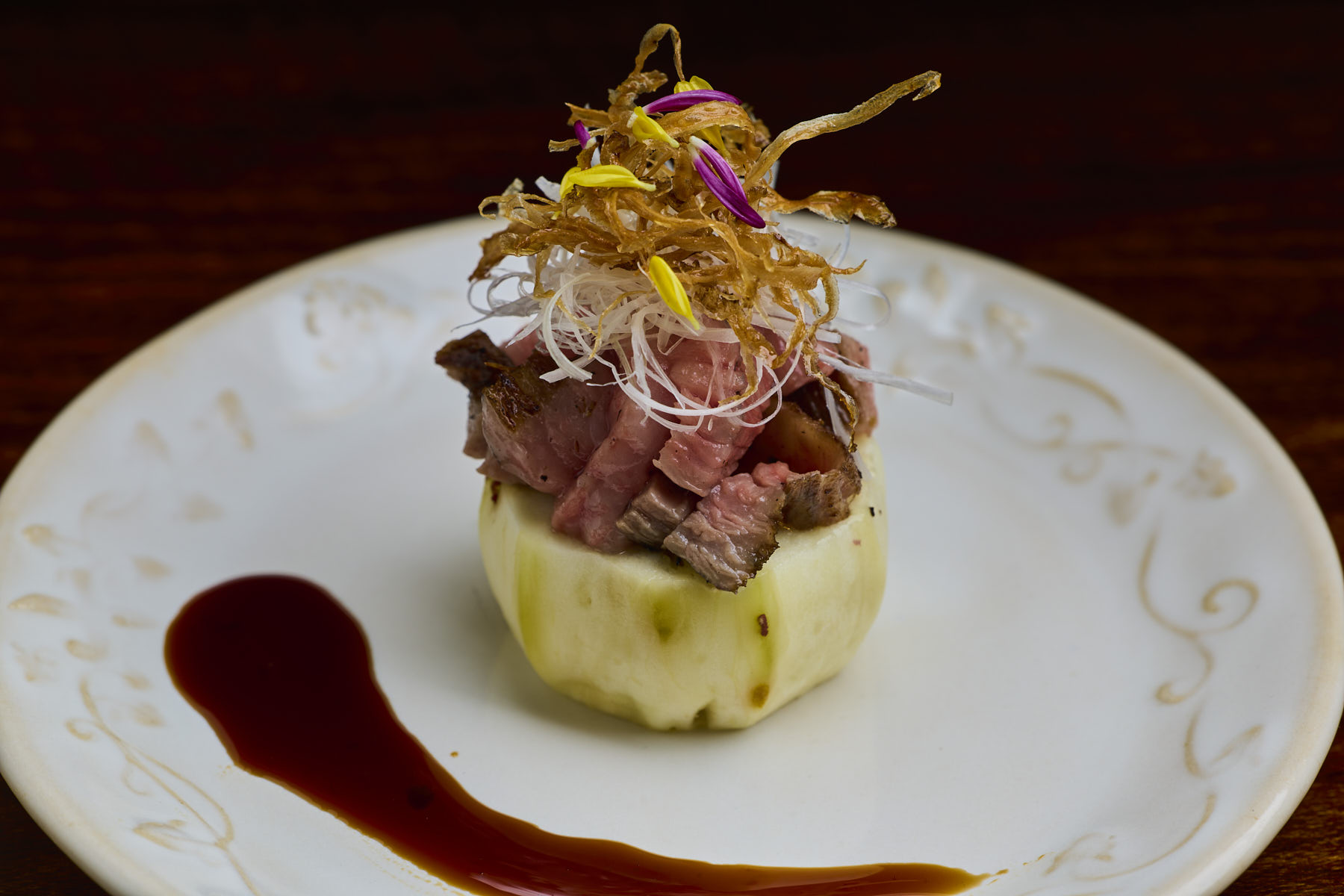
The meal begins with a welcome drink, such as lemon liqueur, vinegar mixed with soda or chilled ginger-infused amasake in summer, with warm options in winter. A seasonal oshinogi, or light palate cleanser, pairs Nara-grown figs with tataki-style Yamato Haibara beef, fried burdock root, finely shredded leeks and chrysanthemum petals, finished with a reduced cassis sauce.
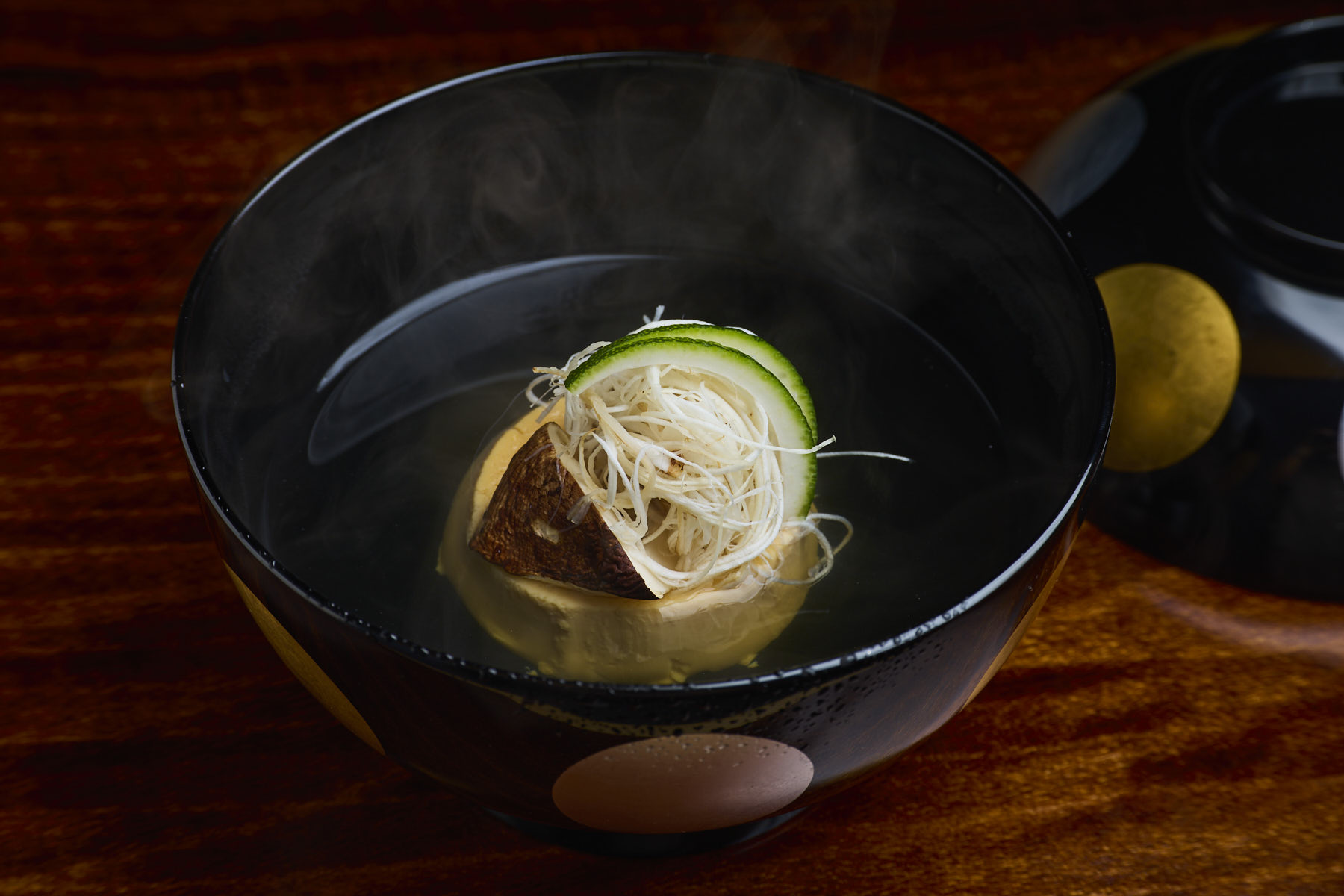
The soup is made with a primarily kombu-based dashi and only a brief addition of bonito. During September’s moon-viewing season, a bowl of “full-moon” tofu and matsutake mushrooms is served in a Nichigetsu-wan, a traditional lacquer bowl decorated with sun and moon motifs. A touch of yuzu complements the aroma and texture of the matsutake.
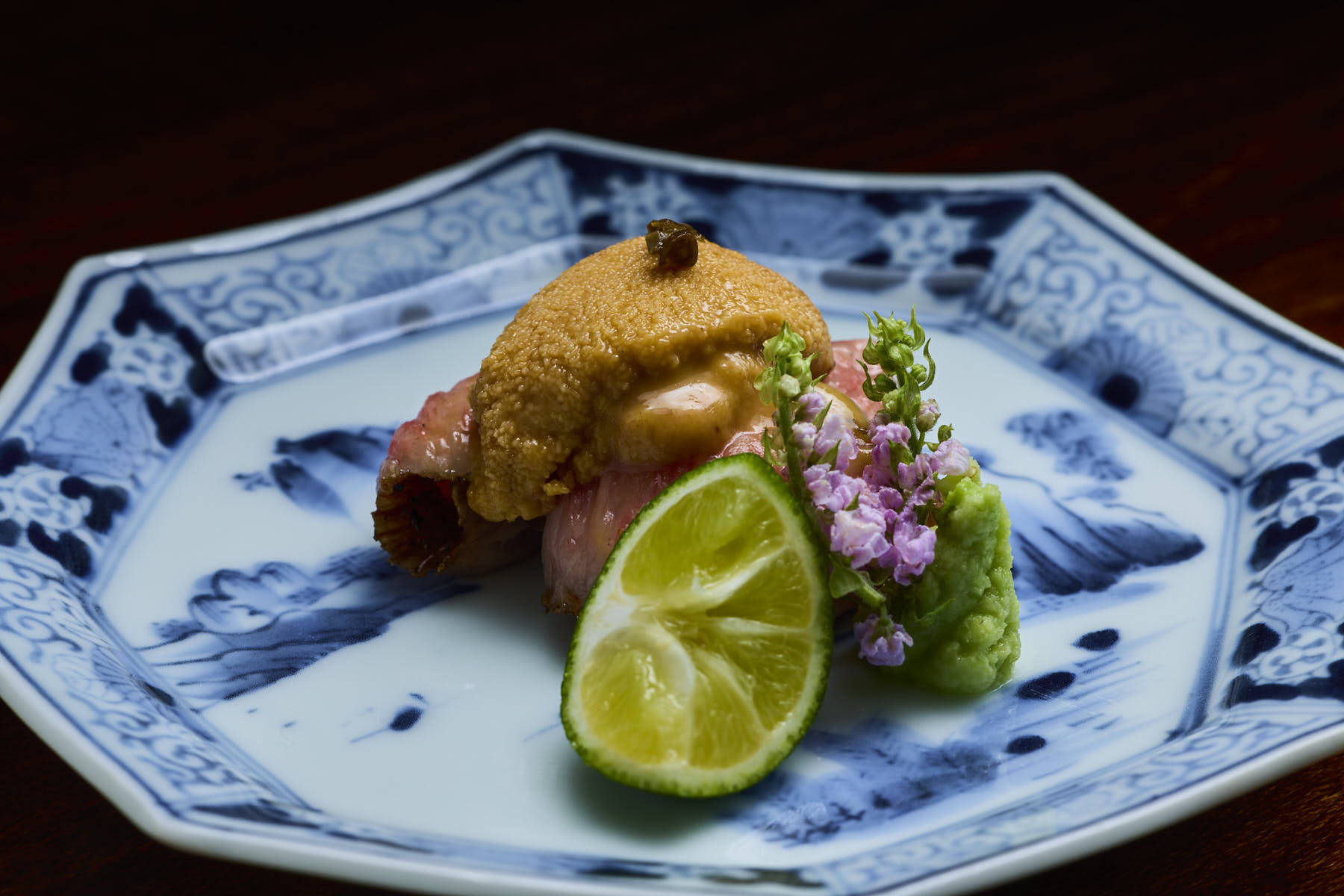
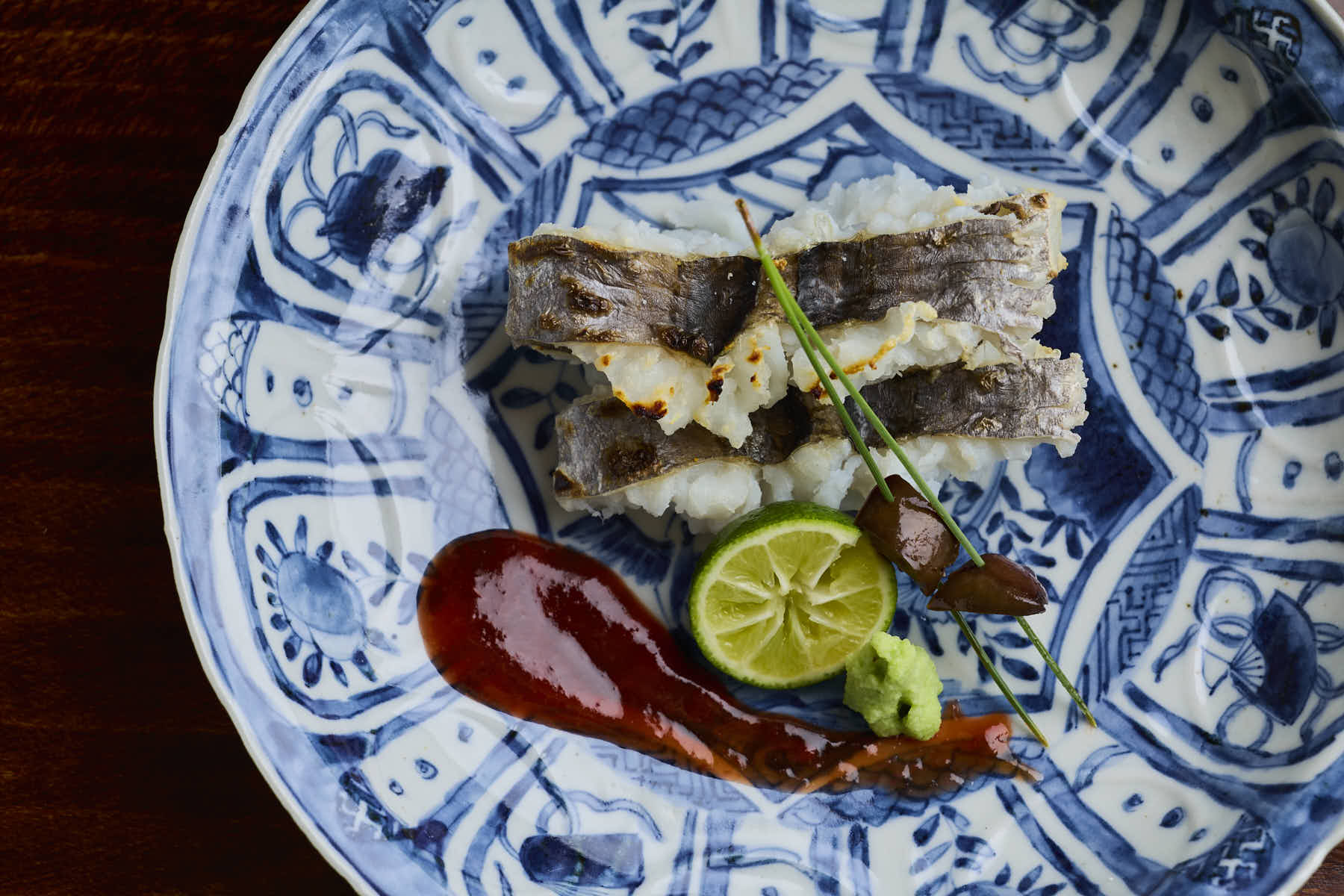
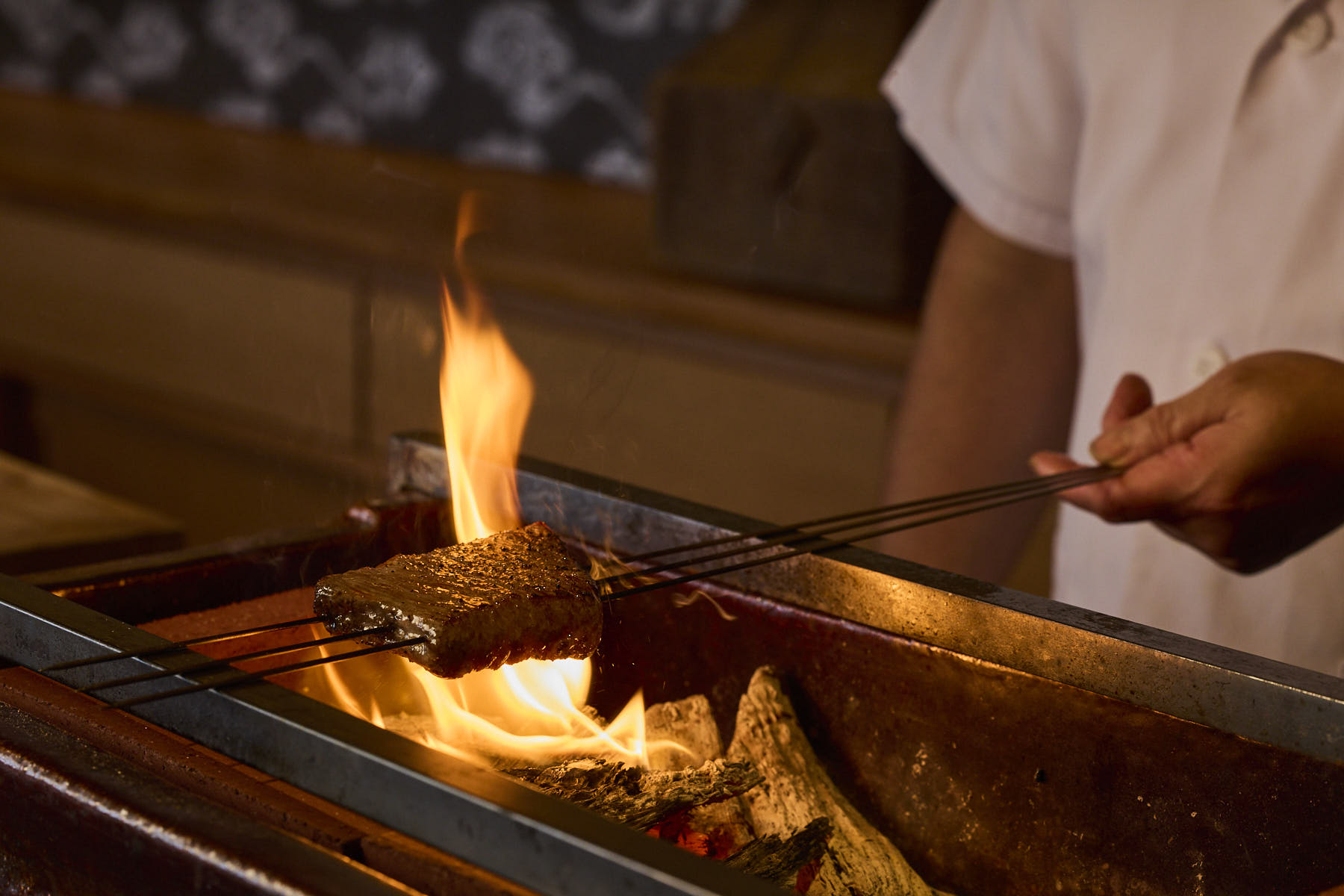
Charcoal grilling is another important element of Hoshino’s cooking. Yamato Haibara beef is finished over charcoal and served with a generous portion of sea urchin. Pike conger is scored with fine incisions to soften its many small bones, then grilled over charcoal until the skin turns crisp. It is accompanied by the fish’s liver, glazed with teriyaki and skewered on a pine needle, with a sauce of plum, dashi and soy brushed across the plate.
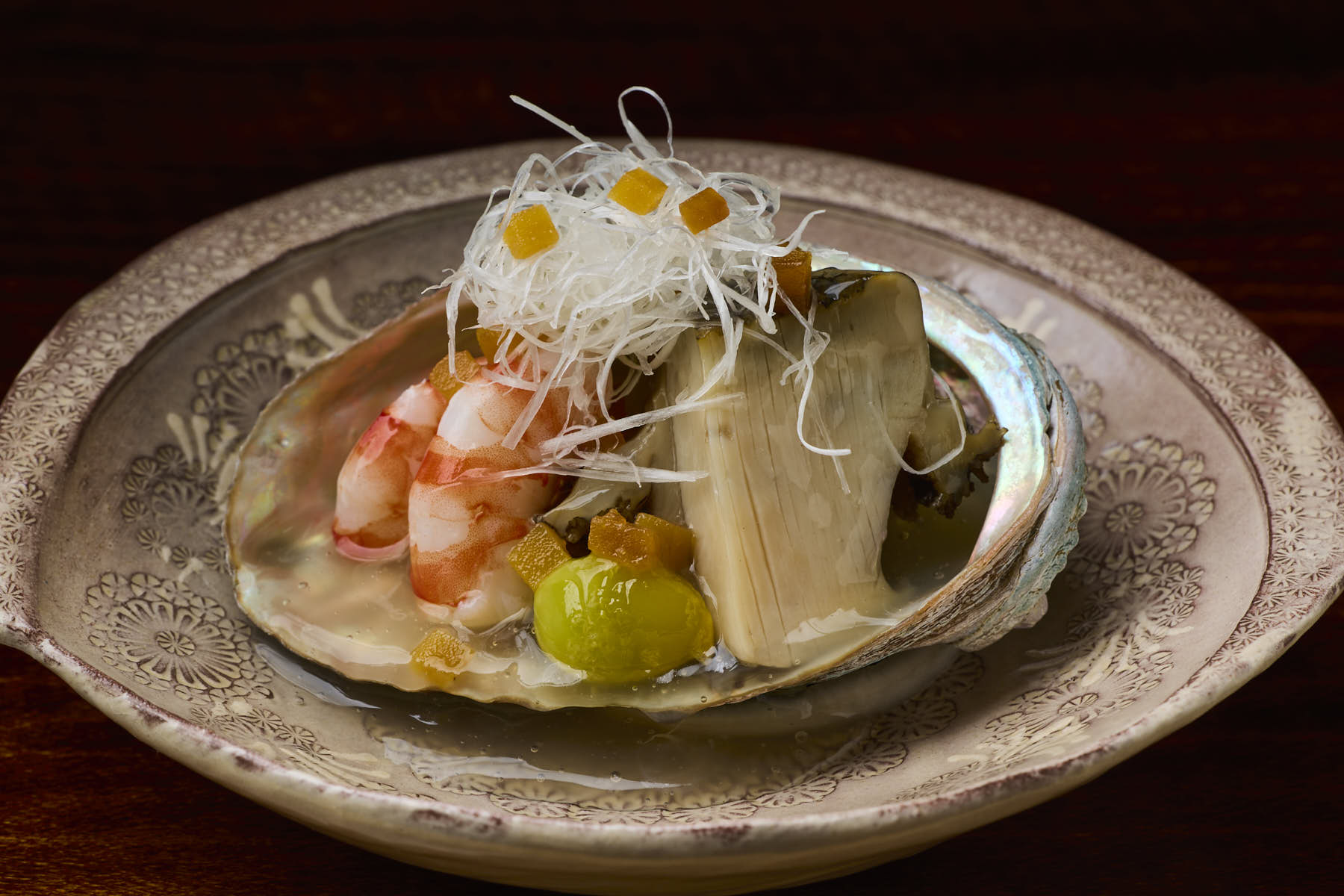
The abalone course is a highlight of the evening. Selecting only those weighing between 400 and 500 grams, the shellfish is served with eggplant and shrimp, each cooked separately according to the method best suited for the ingredient. The dish is finished with gin-an, a clear, lightly thickened dashi sauce, and finely chopped dried mullet roe.
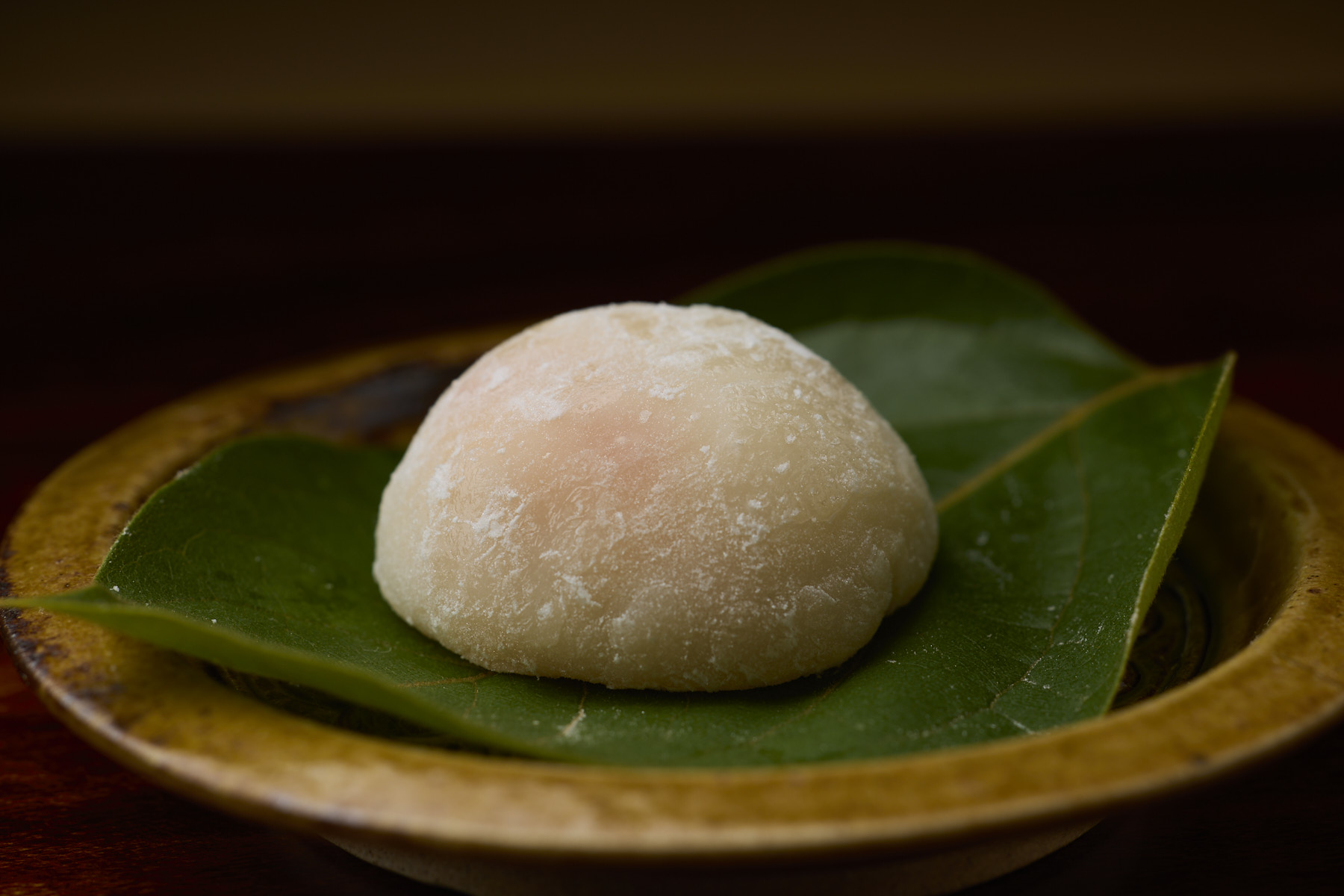
Rice is served with a range of sides such as grated yam, soy-marinated salmon roe or cured Biwa trout. For dessert, local persimmons are combined with cream cheese and white bean paste, balancing the fruit’s sweetness with the richness of the cheese.
INGREDIENTS
Hoshino’s principle is to select ingredients of a quality and scale that provide a satisfying and substantial dining experience. His menu follows the seasons closely, incorporating ingredients such as bamboo shoots, sweetfish, pike conger, matsutake mushrooms, crab and pufferfish throughout the year.
Local Yamato Haibara beef is sourced from Ushigen Honten, a butcher shop in Uda City that has been in business since 1886. Hoshino uses cuts such as hiuchi, a rare cut from the inner thigh, particularly suited to tataki or roast beef.
Seafood comes from Shinmei in Osaka, a supplier known for its discerning eye for quality. The large-sized abalone are sourced from ports including Hamasaka in Hyogo Prefecture and Sakaiminato in Tottori Prefecture.
Hoshino also champions Nara’s traditional vegetables, known as Yamato vegetables. Nanpaku zuiki is a tender taro stalk, revived in 2018 by Kaneyoshi Farm after its production had disappeared. The stalks are wrapped in newspaper or rice sacks to block out light as they grow, giving them their white color and tender texture. The vegetable is in season from late July through early September. Yamato Maru Nasu is a round eggplant available from May to September and often referred to as a “black-purple jewel” for its deep color.
Even the staples are sourced carefully. The rice is Yudai 21, cultivated by Kobayashi in Haibara, Nara Prefecture, while the eggs come from Fuga Farm and are distinguished by their white yolks. Together, these ingredients reflect Hoshino’s preference for sourcing locally where possible.
CHEF
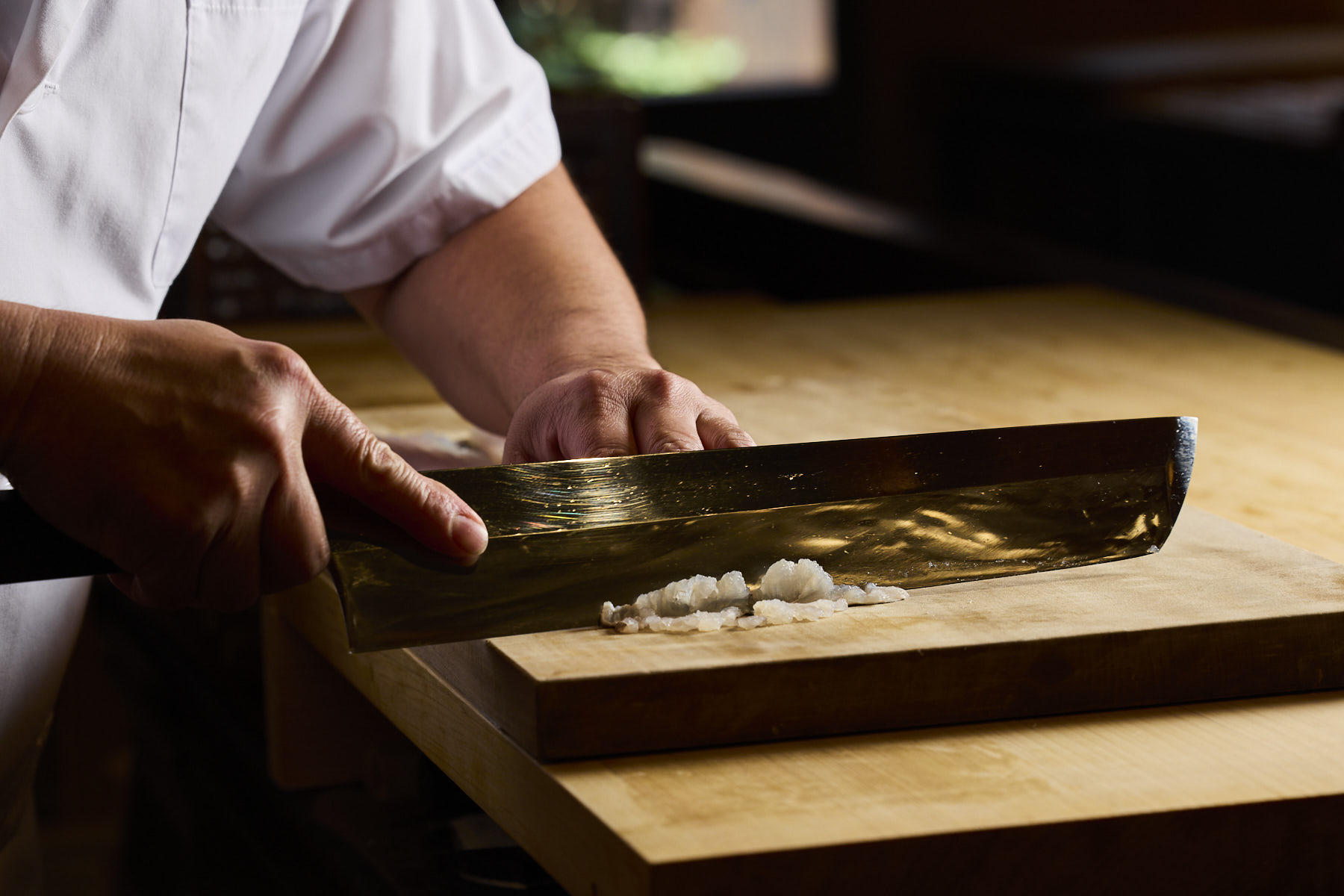
Keisuke Hoshino
Tableware
Kept in a storeroom on the second floor of the machiya, Hoshino’s tableware reflects both the season and the restaurant’s connection to Nara. Each month, the chef takes his time to select vessels from the collection to complement the seasonal menu.
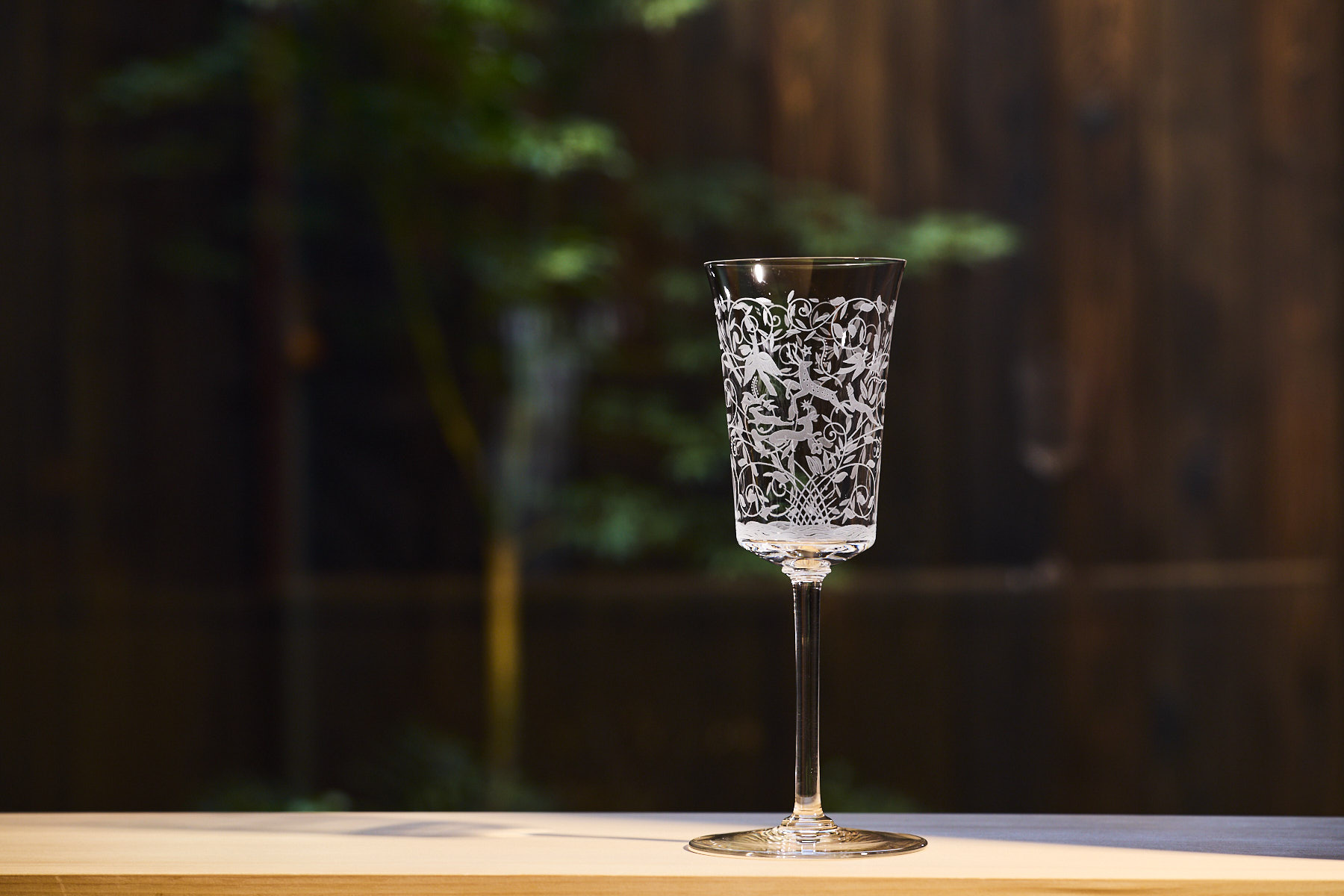
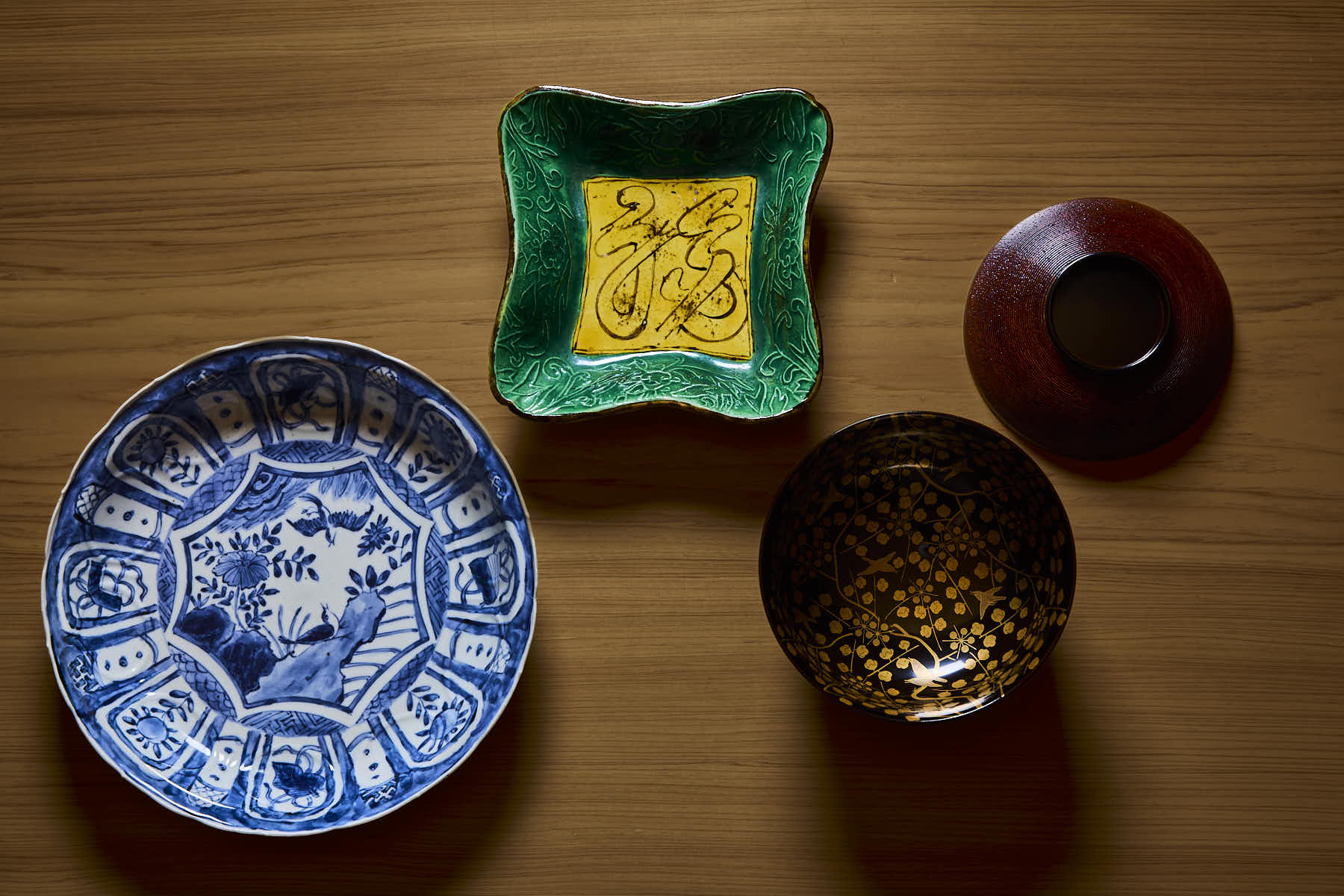
Among his favorite pieces is an Old Baccarat crystal vessel depicting a deer, a familiar symbol of Nara. The collection ranges from kosometsuke, antique blue-and-white porcelain dating back some 400 years, to Akahada-yaki, a style of pottery closely associated with Nara, as well as works by contemporary artists.
Hoshino also uses itome-wan, finely ribbed lacquer bowls from Kaga City in Ishikawa Prefecture. Dating from the early Showa era, the bowls appear restrained from the outside, but lifting the lid reveals a delicate design of plum blossoms and a bush warbler.
The collection also includes vivid green and yellow reproductions of Kitaoji Rosanjin designs: a set of ten square bowls in the Ko-Kutani style, each featuring the character for good fortune.
Course
- The price includes our booking fee of ¥8,000
- The price includes our booking fee of ¥8,000
Nara
Hoshino
ほしの


- GENRE
- Kaiseki, Nara
- ADDRESS
-
1F, 3-1 Fukuchiincho, Nara, Nara, Japan

- OPEN
- 12PM/6PM
- CLOSED
- Wednesdays and Thursdays
- URL
- NA
- PHONE
- NA


