

Osaka
Kentaro Takahashi
高橋謙太郎
At Takahashi Kentaro, the pleasures of sushi unfold slowly, with the chef encouraging his guests to chew each piece thoroughly to appreciate its subtle flavors. Through careful control of moisture, salt and fat, he keeps the salt content of the entire meal to just five grams without sacrificing depth of flavor. His signature karasumi nigiri offers a rich, lingering taste, while the monkfish liver hand roll pairs creamy liver with fried sushi rice for a contrast in textures. Set within an elegant space inspired by traditional architecture, this sought-after Osaka counter reflects the chef's refined approach to sushi and hospitality.
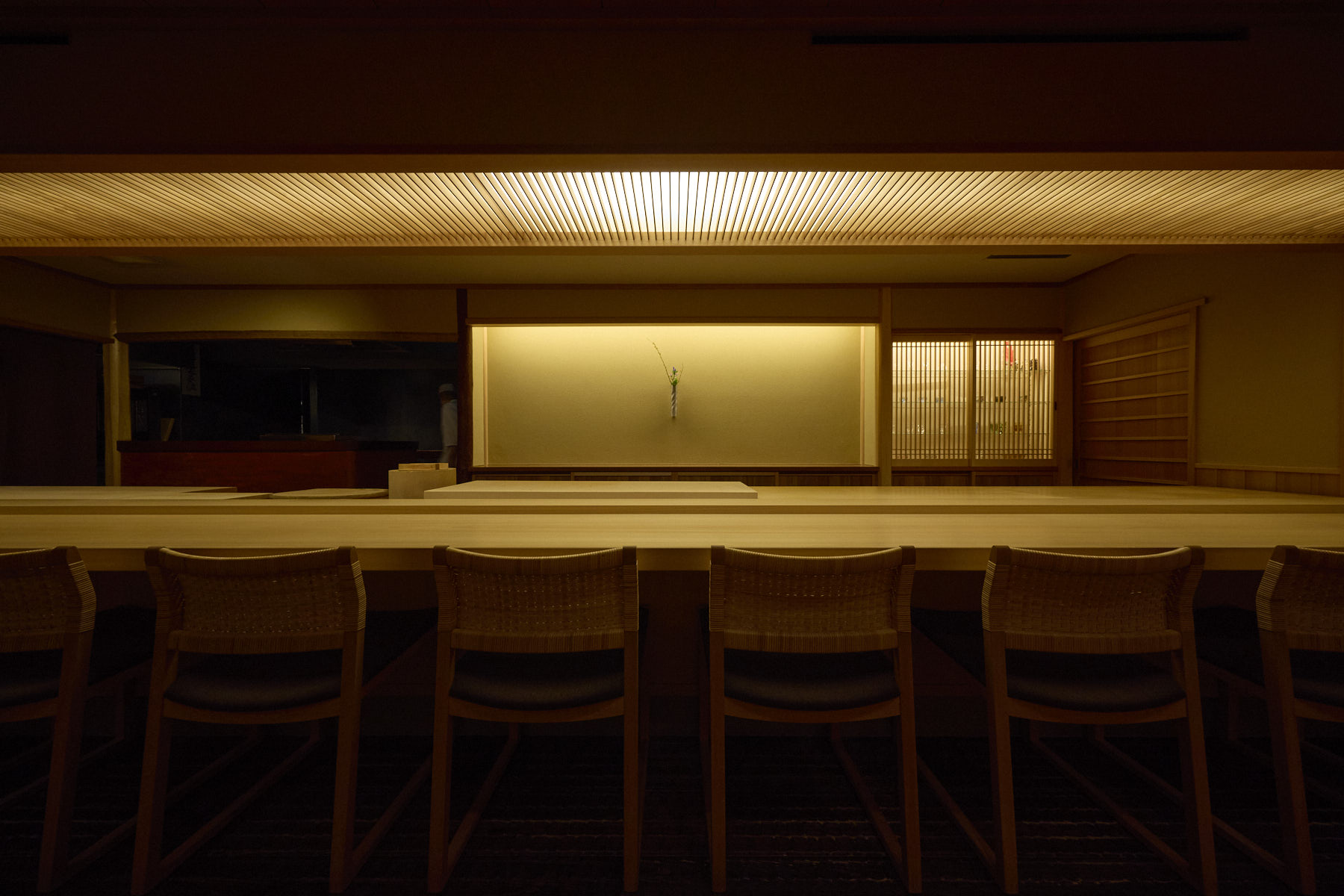
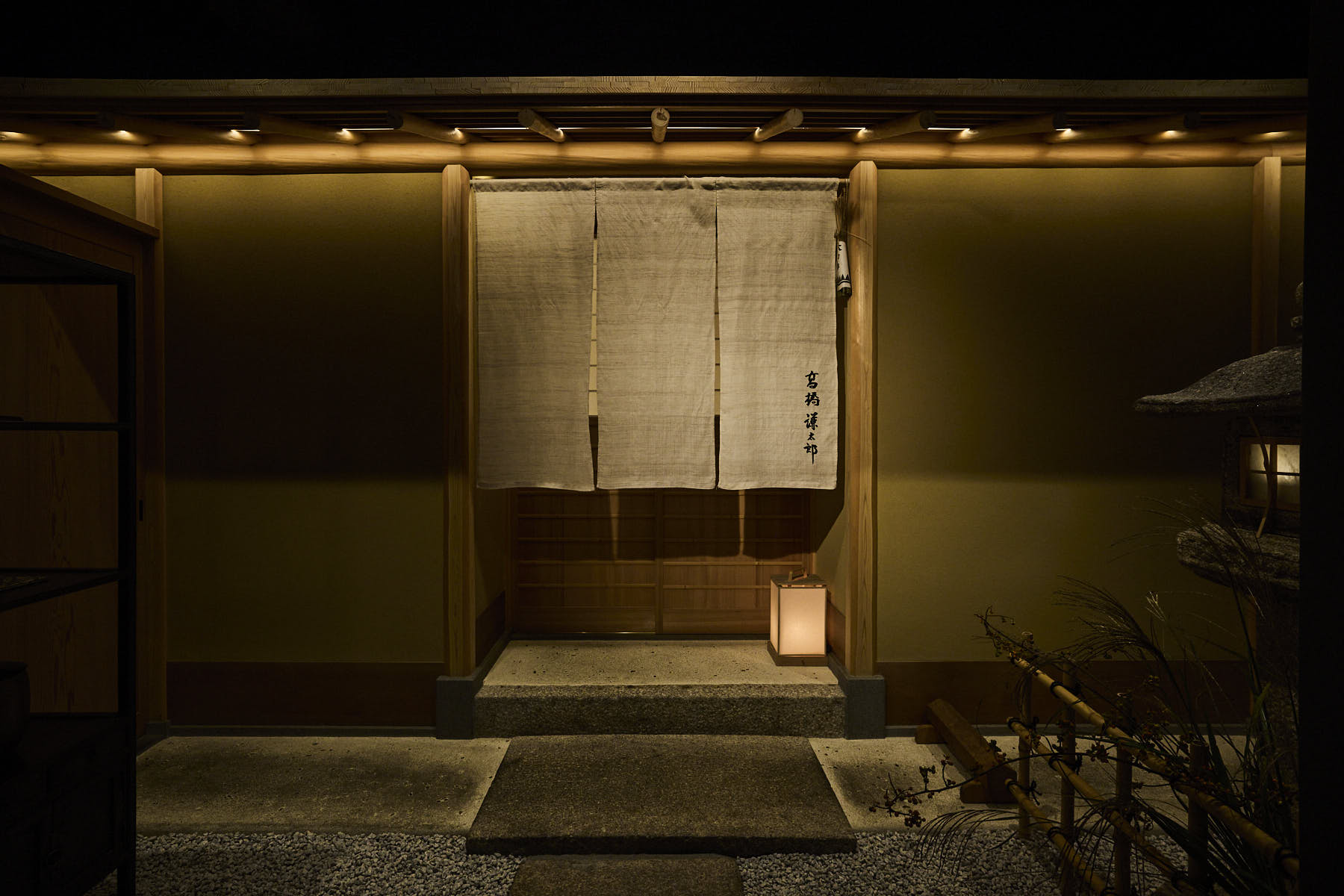
Originally opened in Kitashinchi in 2014, Takahashi Kentaro relocated to Nishi-Tenma in 2024 to mark its tenth anniversary. The entryway evokes a traditional Japanese residence, with a stone-paved path leading to a sheltered entrance. Inside, a ten-seat counter carved from a single slab of 350-year-old Yoshino hinoki cypress stretches across the dining room.
The interior was designed by Sankakuya, specialists in traditional Japanese architecture whose work includes acclaimed restaurants such as Hiransanso, Tempura Niitome and Honkogetsu. The ceiling is lined with finely grained cedar, while the floor features cypress finished using the traditional naguri technique. From the counter, guests can watch Takahashi prepare each piece of sushi and work at the charcoal grill, with five staff members attending to just ten diners.
Much of the tableware is custom-made by contemporary artisans. The collection features works by glass artist Akira Watanabe alongside an extensive selection of lacquerware, with some 15 to 20 varieties of bowls crafted in the Wajima-nuri and Kyoto traditions. The sake menu includes a wide range of labels from Kokuryu in Fukui Prefecture and Aramasa in Akita Prefecture.
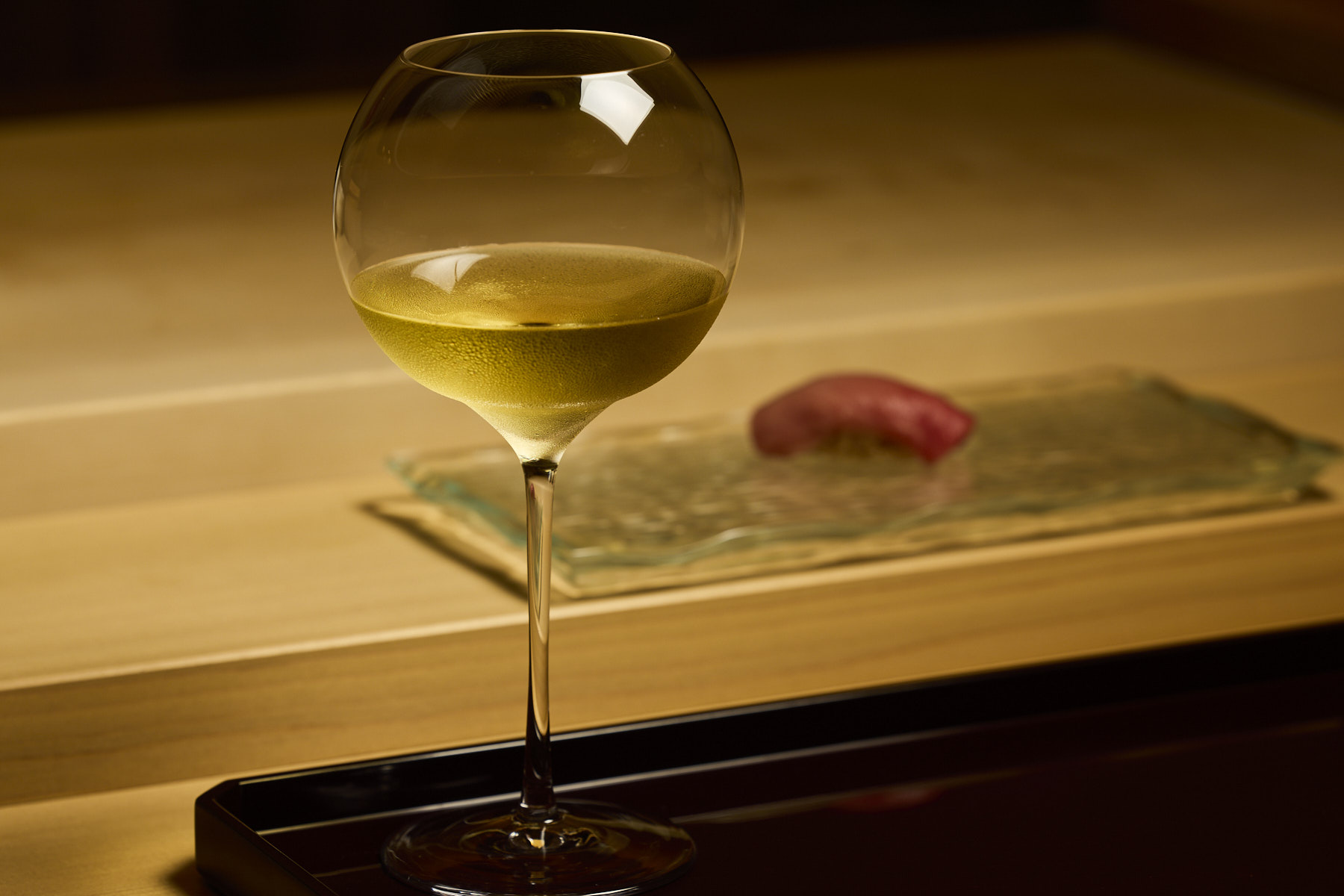
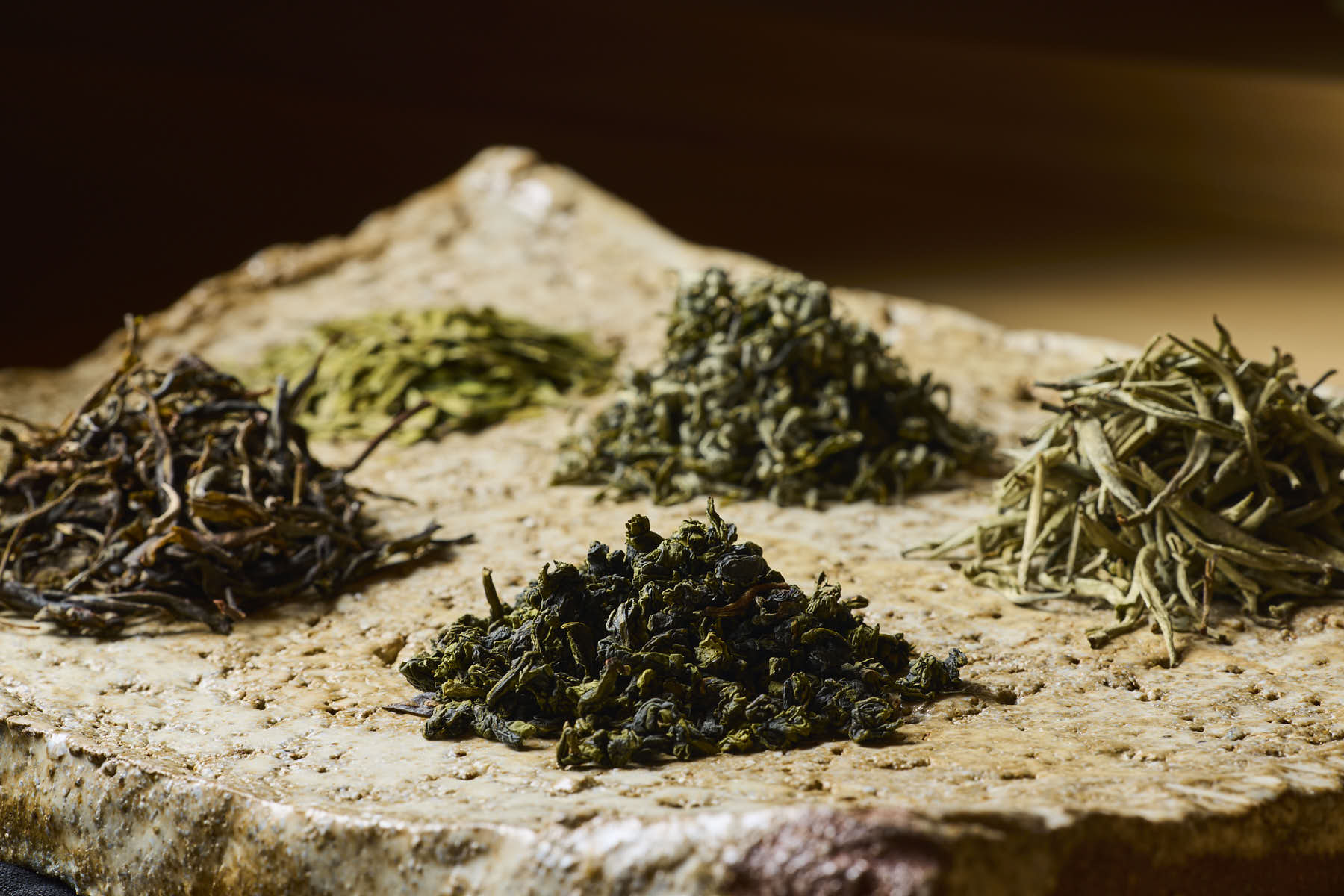
The restaurant also offers a wine list, which focuses on Champagne and Burgundy, as well as Japanese wines that are available by the glass. Non-alcoholic pairing is also very appealing, offering a selection of 11 to 12 Chinese teas that complement the delicate flavors of the cuisine. Guests who enjoy sake or wine are offered Chinese tea with dessert.
Takahashi’s attention to detail extends to the setting, though he approaches the subject with a sense of humor. After a guest wearing Chrome Hearts jewelry once scratched the prized hinoki counter, Takahashi composed a playful haiku (a traditional Japanese three-line poem):
Precious metals (especially Chrome Hearts)
And hinoki cypress
A terrible match
At the restaurant, guests are asked to remove watches and bracelets before taking their seats and leave them on a designated tray in the cloakroom.
Another of his whimsical verses observes how the misfortune of strong perfumes and lingering cigarette odors falls not on the wearer but on the other guests. He writes:
The unlucky one
Isn't you
It's the guest beside you
Guests are therefore asked to refrain from wearing strong fragrances or arriving right after smoking. Far from imposing rigid rules, Takahashi sees these small considerations as a way for everyone at the counter to enjoy the meal to its fullest.
CUISINE
Sushi That Rewards Every Bite
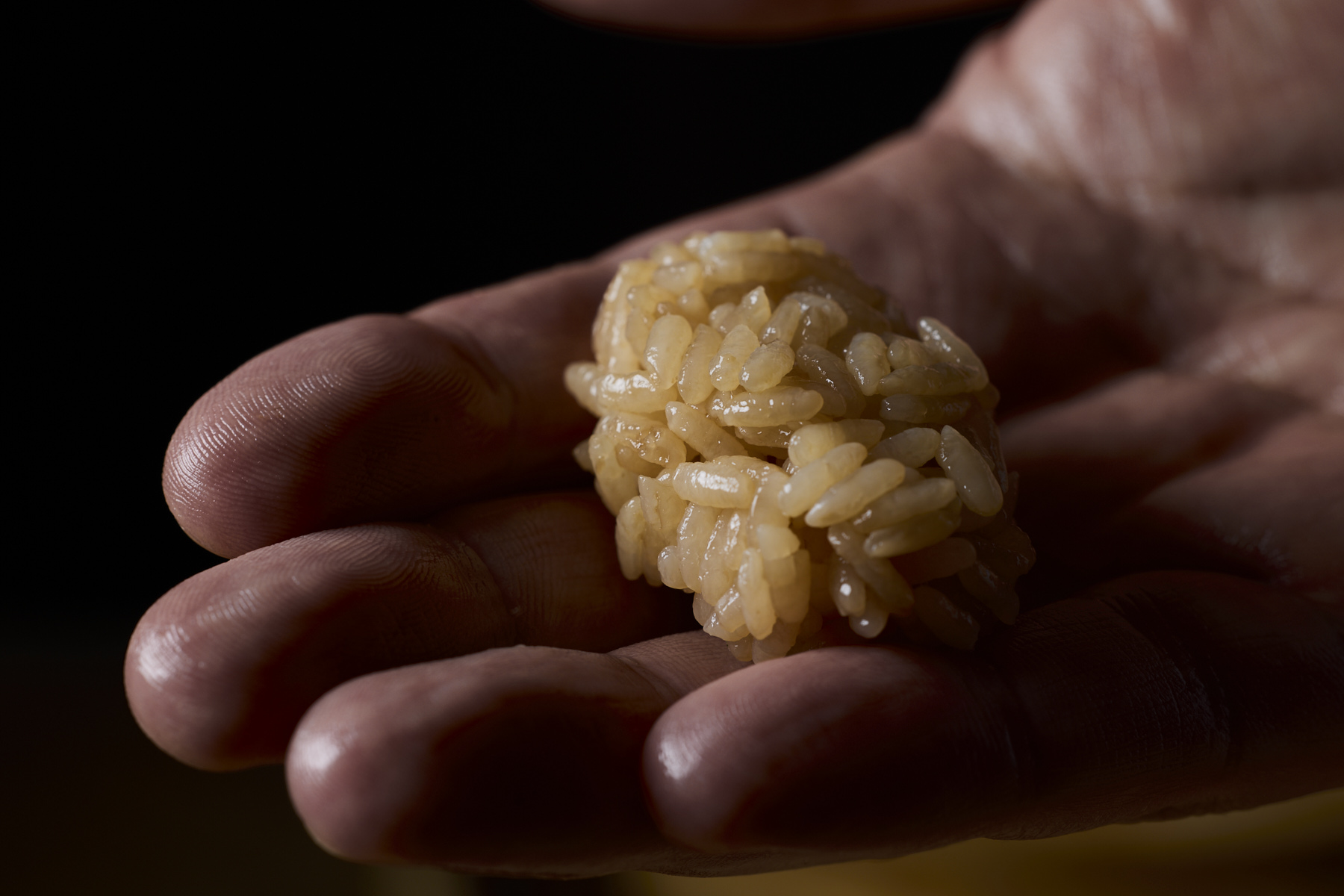
“Rather than delivering instant flavor, I aim to create tastes that gently evolve and unfold with every bite,” says Takahashi. His shari (vinegared rice) is deliberately mild in both salt and acidity, seasoned with a blend of four vinegars, including three varieties of red vinegar.
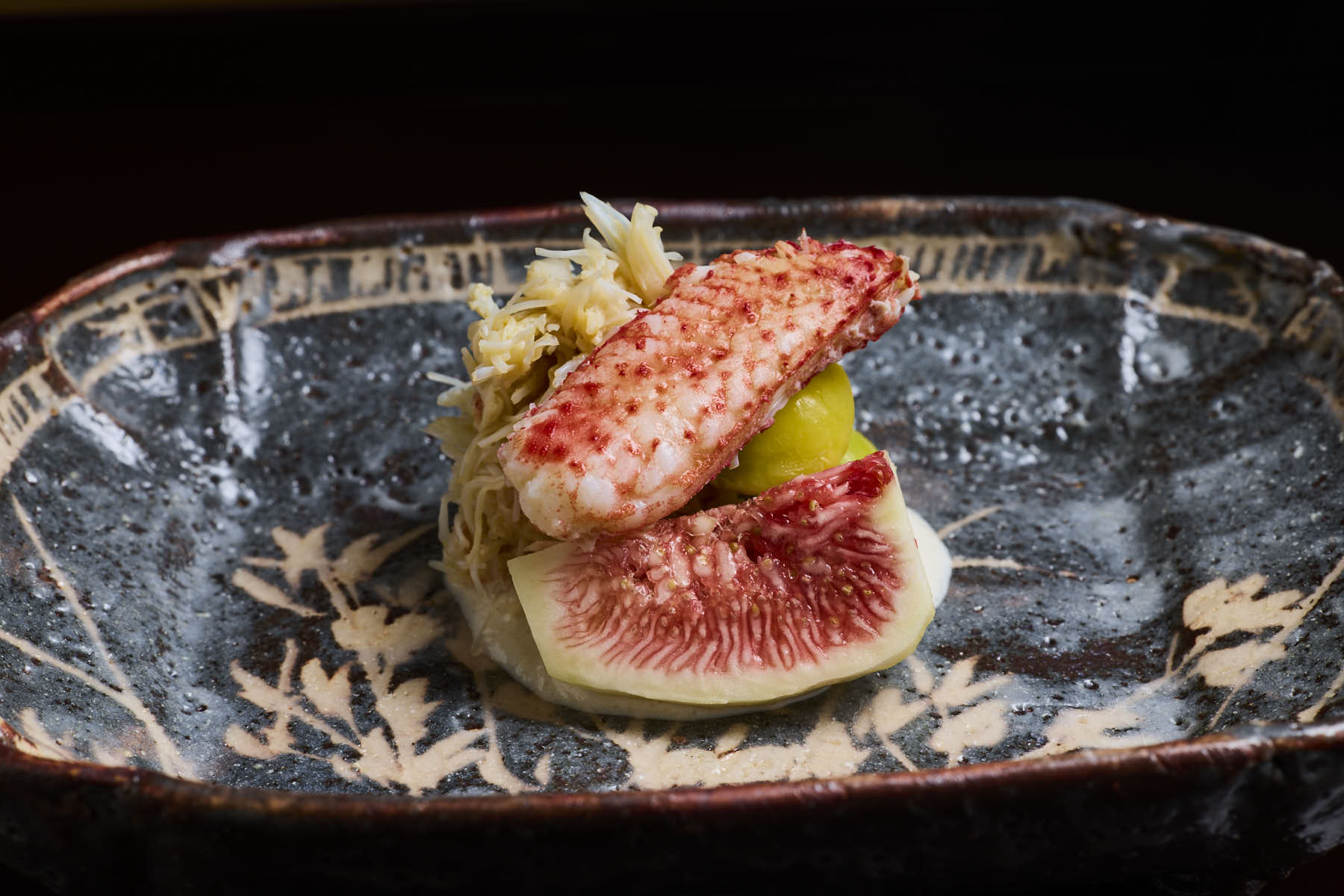
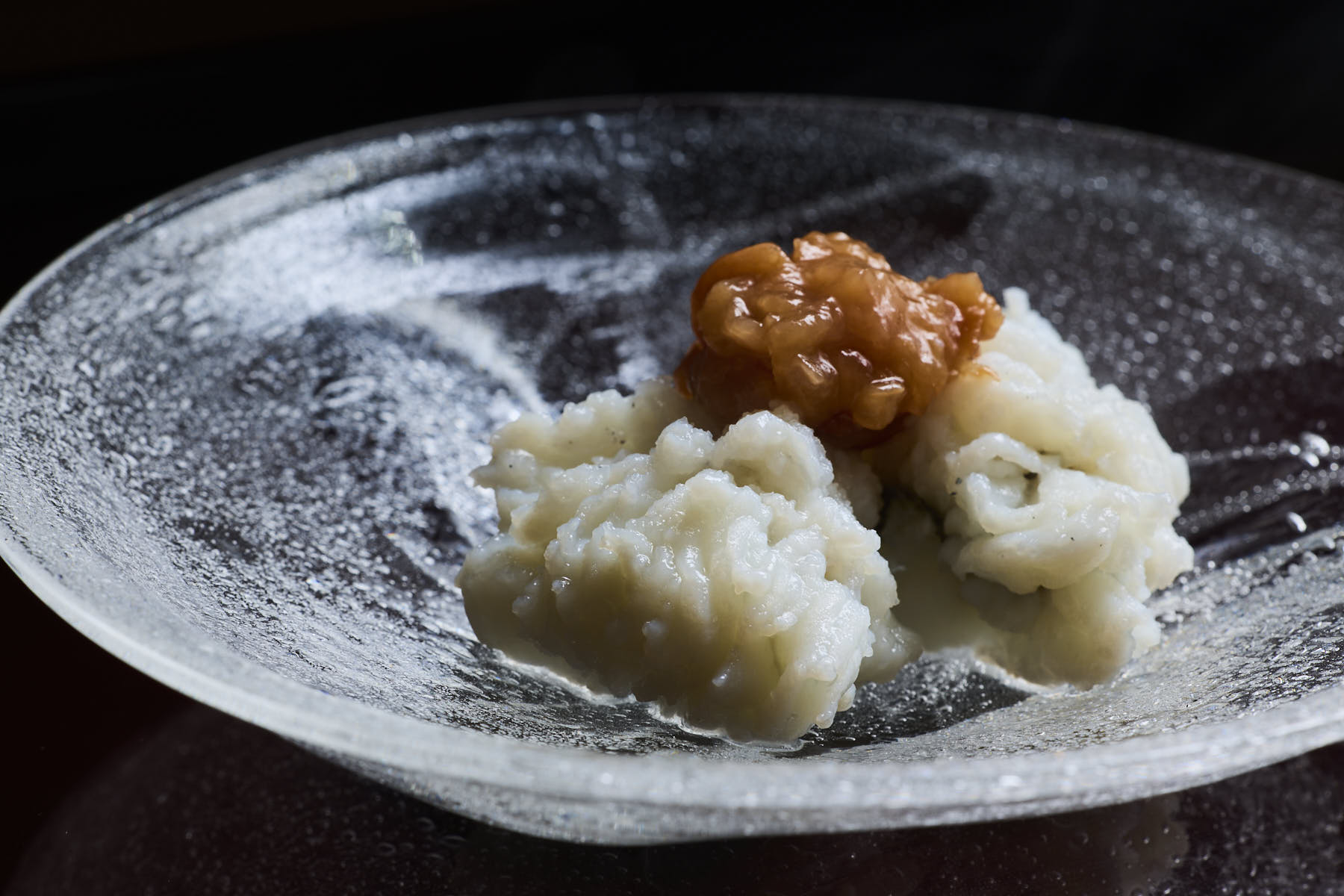
A typical course comprises five tsumami (small appetizers) and as many as 13 to 14 pieces of nigiri. Among the appetizers is horsehair crab, dressed in sesame vinegar, accompanied by ginkgo nuts and figs. A sesame cream made with reduced sake creates the base of the dish, while a touch of Hebesu citrus adds a refreshing accent. Hamo-otoshi, blanched pike conger with pickled plum, is served from late September through November, when the fish is at its peak.
The soup changes monthly and is served early in the meal. Instead of using bonito flakes, Takahashi draws out the natural umami of ingredients such as kombu, white tilefish and maitake mushrooms, creating a broth that requires no additional salt.
The bite-sized blackthroat seaperch bowl is a signature dish offered from July to November. Despite its generous portion, the fish is moist and delicate, giving it a surprisingly light finish. Served from around December to June, the monkfish liver hand roll pairs the richness of the liver with fried vinegared rice, creating an intriguing contrast of textures.
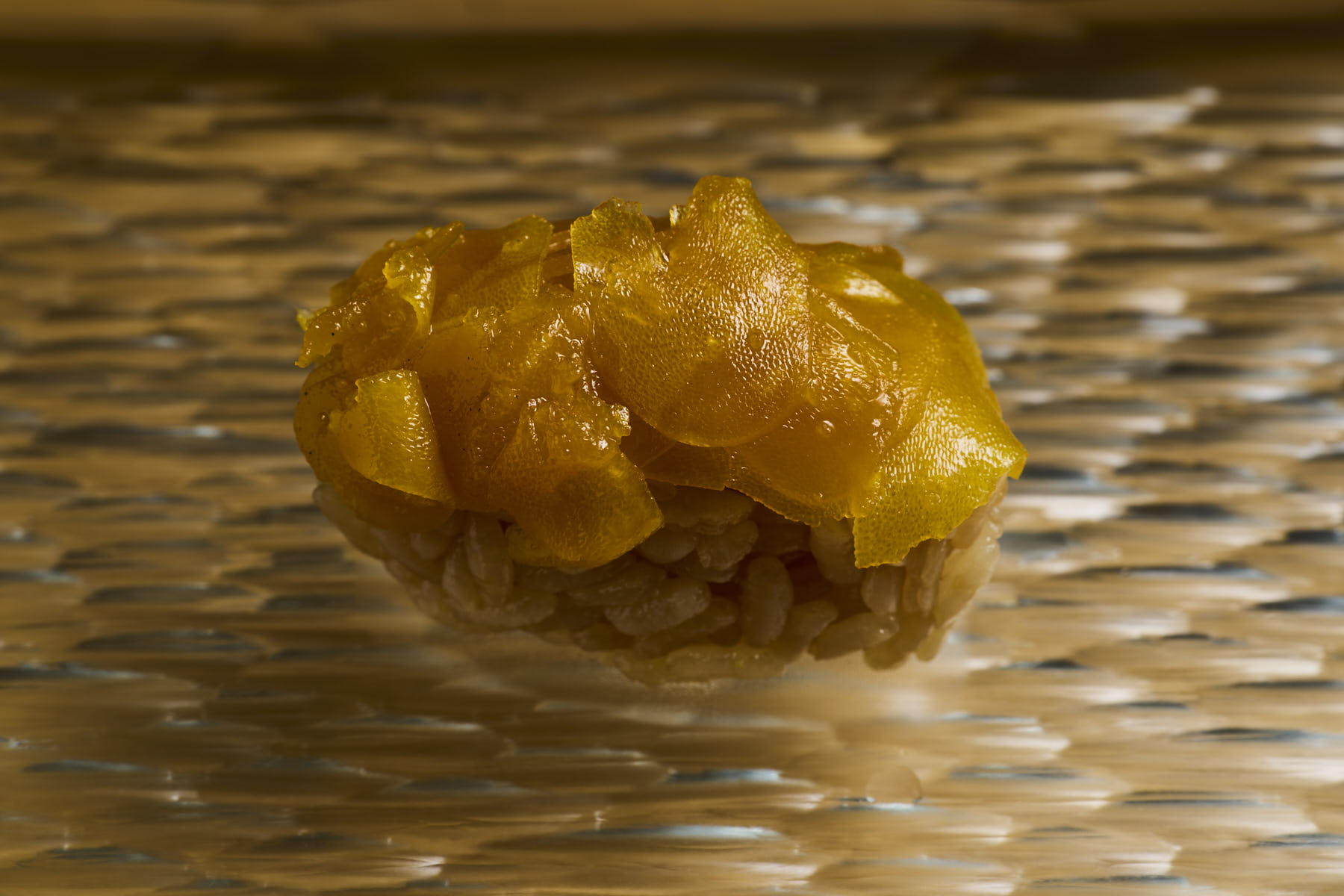
Takahashi frequently reminds guests to chew their sushi thoroughly, believing that its true character emerges gradually rather than in the first instant. The signature karasumi nigiri perhaps best illustrates his philosophy. He selects cured mullet roe with a naturally high oil content, preserving its moist texture even after drying. Steamed together with the rice, the mullet roe takes on a glossy surface and a supple texture, its flavor growing richer with each chew until it develops a cheese-like depth.
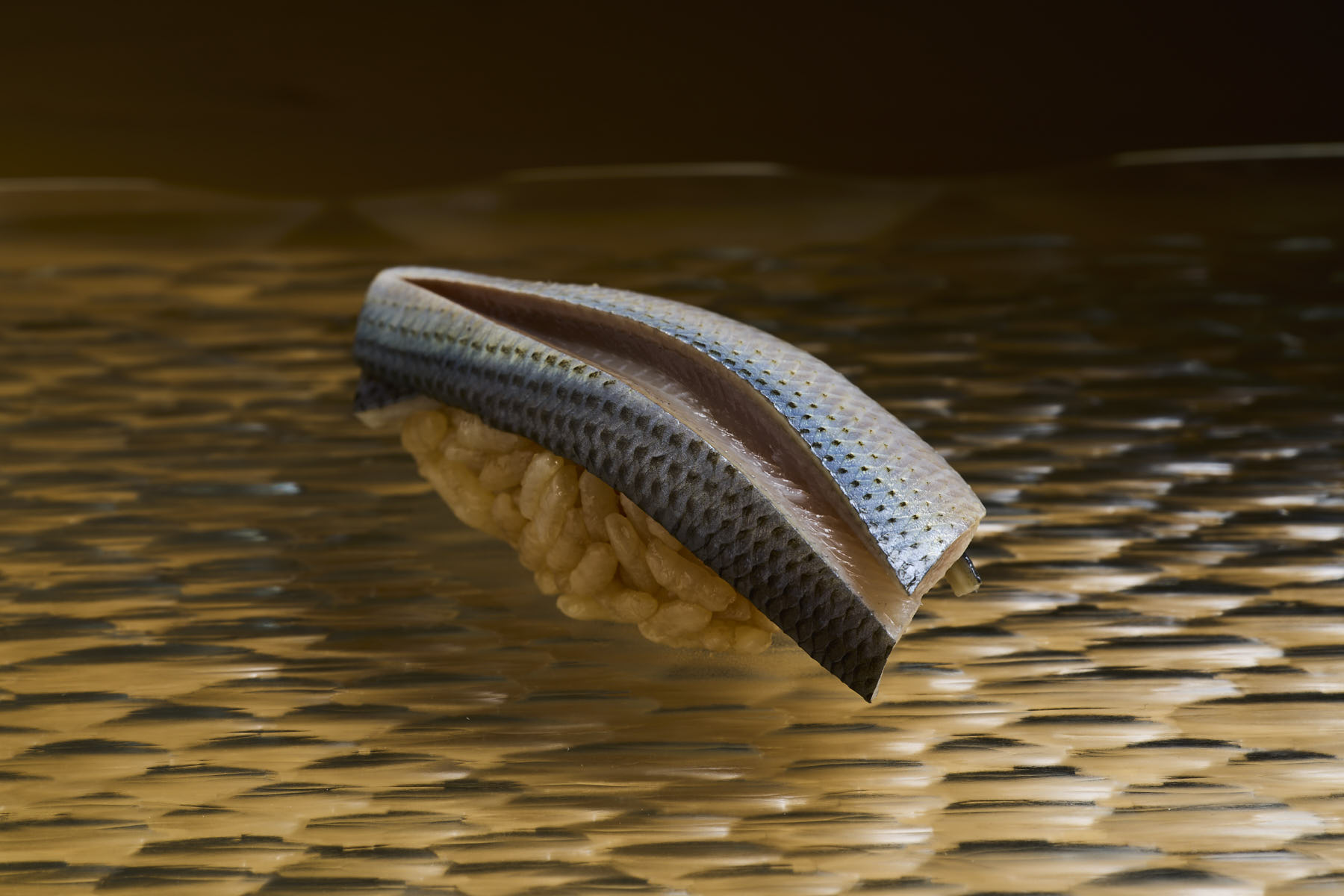
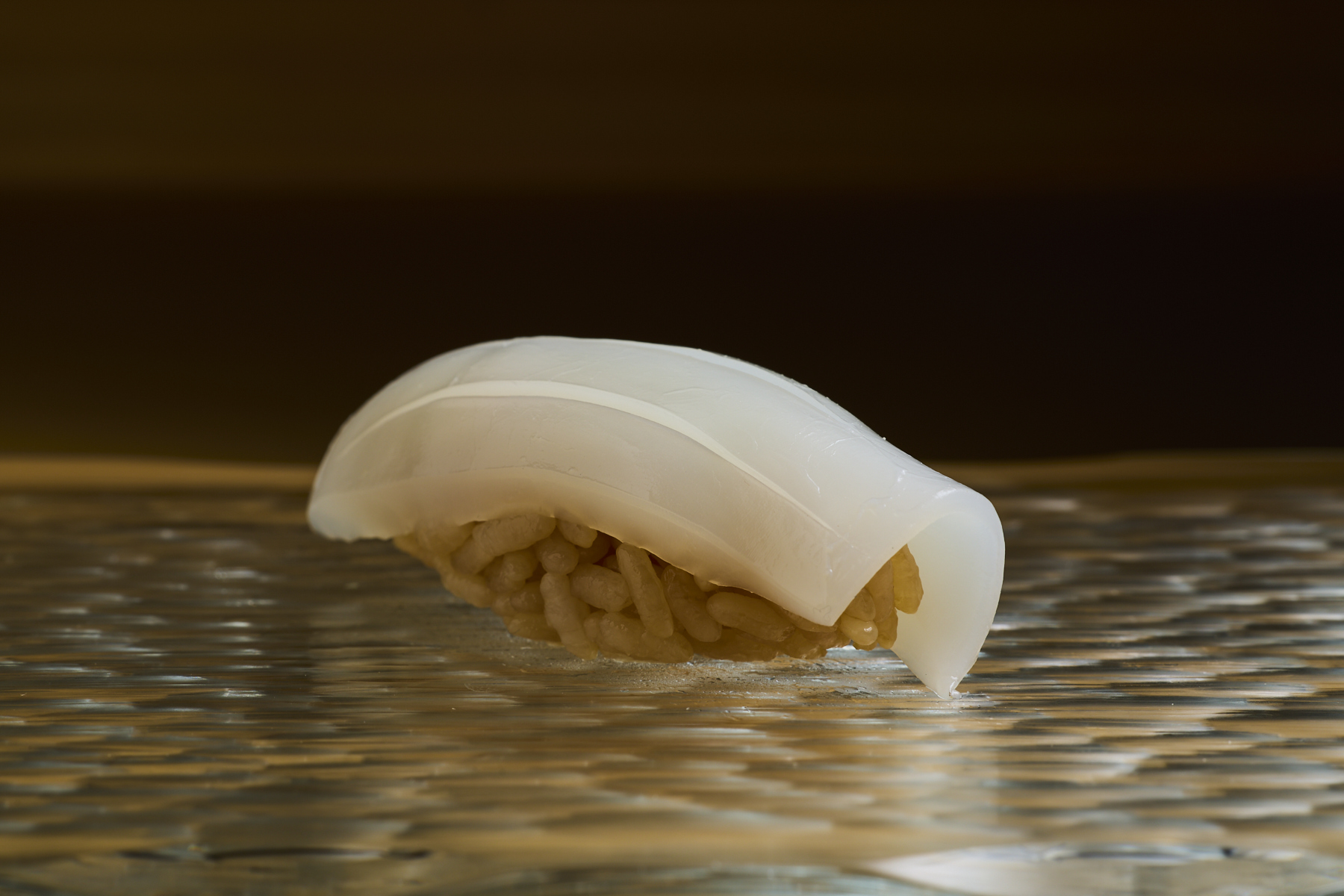
The gizzard shad offers another example of Takahashi's attention to moisture. Prepared to retain its natural moisture, the fish has a freshness more commonly associated with a light vinegar rinse than the firmer texture of traditionally cured kohada. The baby cuttlefish, sourced from the same Akashiura fishmonger as the pike conger, has a delicate flavor and is so small that each cuttlefish yields just one piece of nigiri.
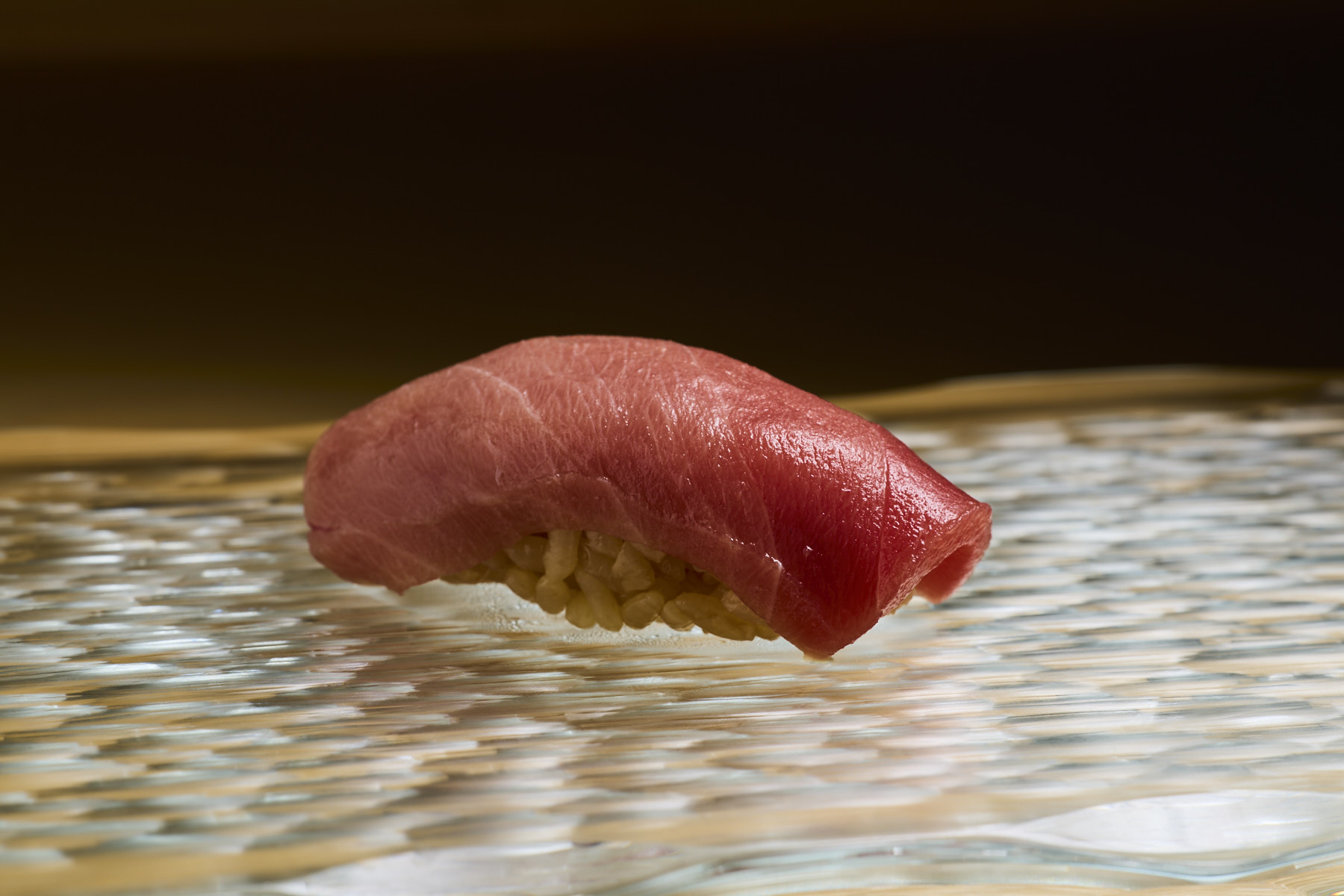
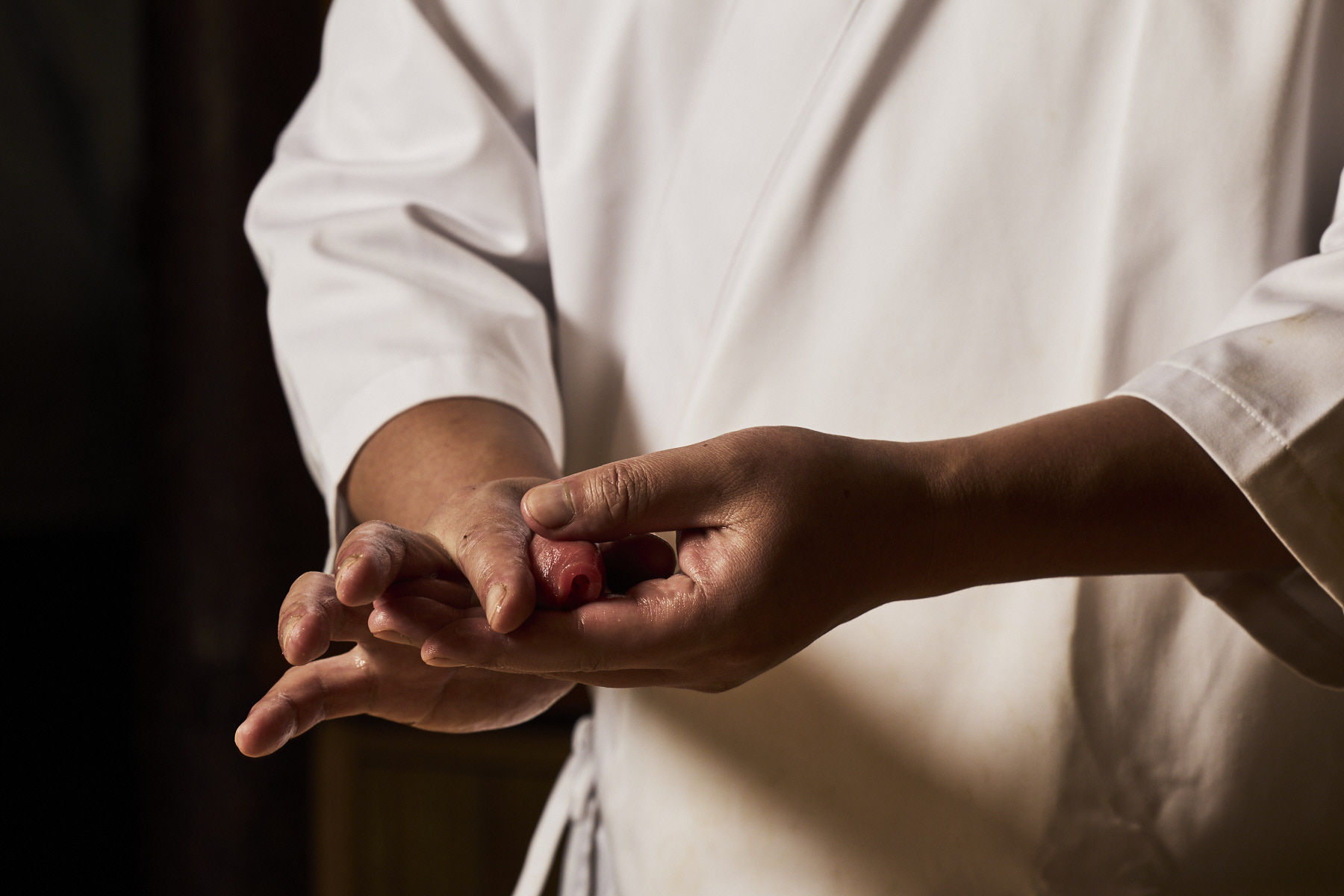
Sourced from Toyosu Market, the tuna is lightly salted after slicing and left to rest for 15 minutes before being shaped into nigiri, allowing the seasoning to integrate with the flesh without overwhelming its flavor. A cut between chutoro and otoro offers a delicate balance of richness and texture, while the otoro is finished with a touch of black pepper. For other nigiri, Takahashi often replaces the customary nikiri (seasoned soy sauce) with a light brushing of a 1.5 percent saline solution to make sure the flavor of the fish stays the central focus.
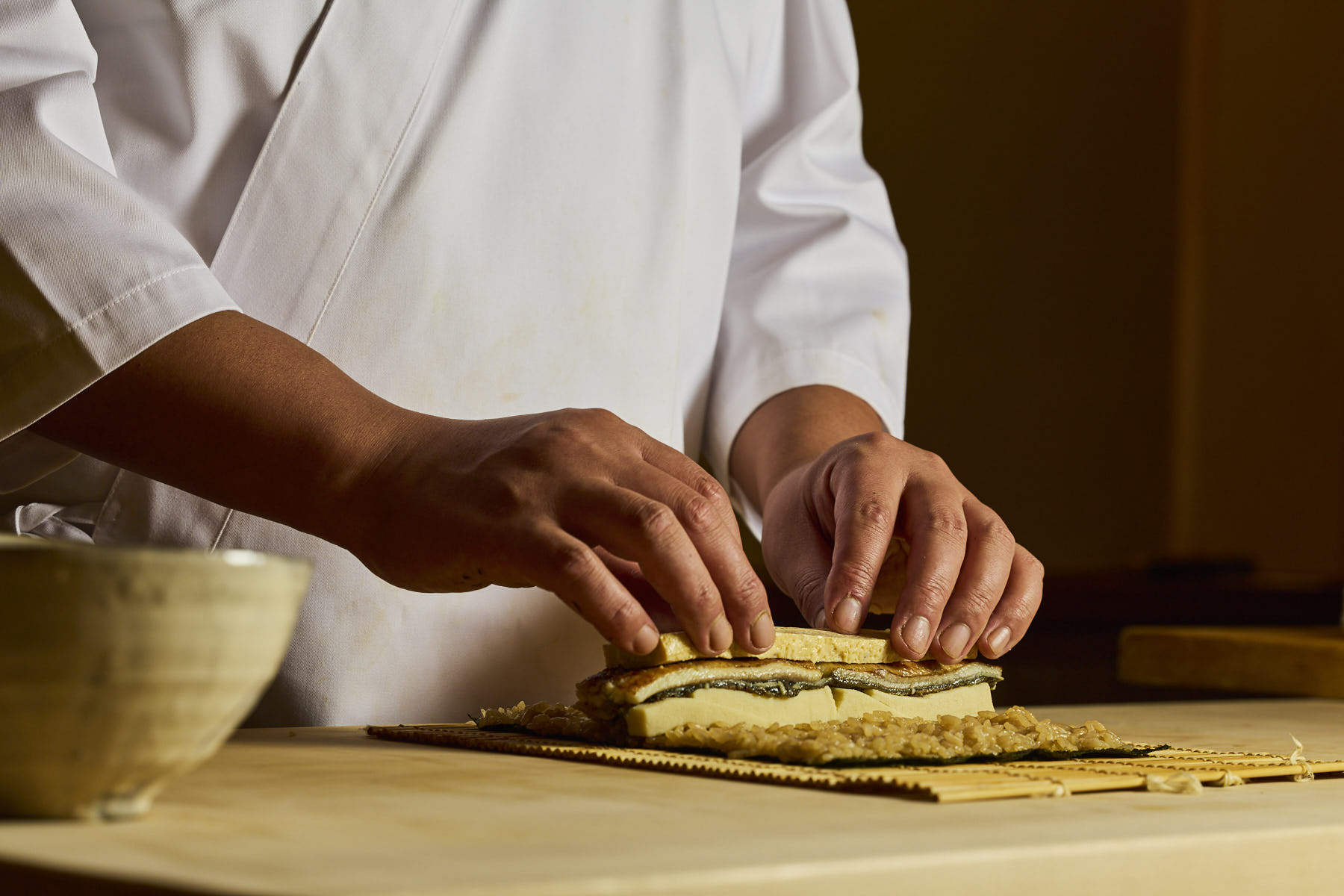
The meal concludes with a futomaki roll filled with egg, dried koya-tofu, eel, dried gourd strips, shiitake mushrooms and Japanese parsley. Before dessert, guests are served tamagoyaki, a slice of Japanese omelet. It is made with minimal sweetness and an airy texture that is reminiscent of castella sponge cake.
INGREDIENTS
Takahashi sources seafood from across Japan, selecting each catch according to the season and the region where it is at its best. He places particular trust in individual fishmongers whose expertise allows him to obtain seafood in precisely the condition he seeks. For pike conger and squid, he works with fishmongers including Masanori Tsurutani of Tsuruichi in Akashiura, Hyogo Prefecture and Yamazaki Sengyo in Kagoshima. Other trusted suppliers include Hondaya in Amakusa, Kumamoto Prefecture and Omori in Miyagi Prefecture. These suppliers employ specialized handling techniques designed to preserve the quality of the fish. Fish are also kept in seawater for a carefully controlled period as part of the handling process, allowing impurities to be expelled and minimizing stress that could affect the texture of the flesh. Tuna is sourced from Daizen at Tokyo’s Toyosu Market.
The shari is made with the original Hatsushimo rice variety from Gifu Prefecture, seasoned with vinegar from Kisaichi Brewing in Chiba and salt from Amakusa. Seasonal vegetables feature prominently in the tsumami, many sourced directly from growers. Bamboo shoots arrive from Kyoto, while turnips and bell peppers come from Higashi Farm in HIda-Takayama in Gifu Prefecture. The soy sauce is made by Kajita Shoten in Ehime Prefecture, a producer known for its naturally-brewed soy sauce.
CHEF
Kentaro Takahashi
The Rice
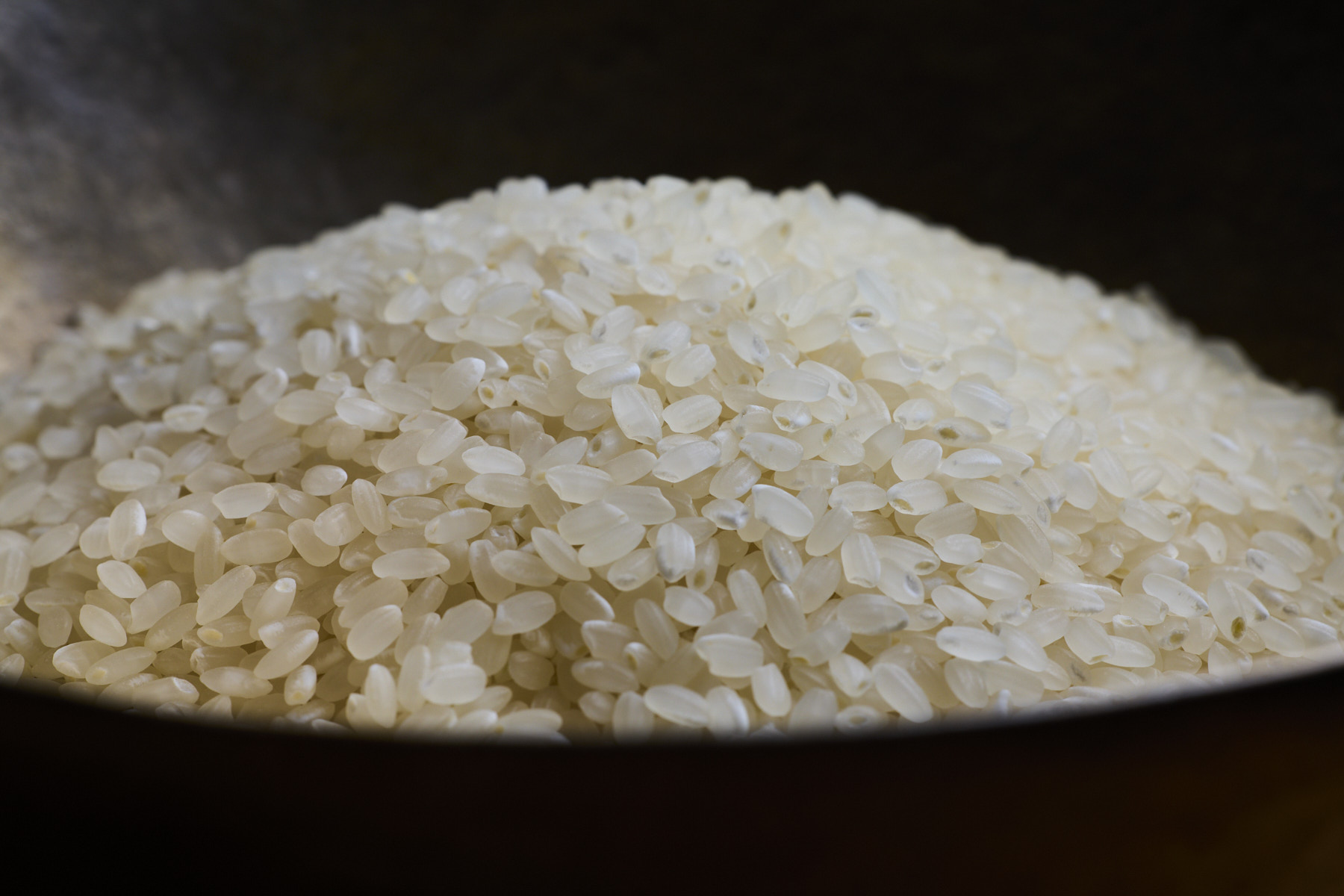
At the heart of Takahashi’s sushi is his shari, made with the original strain of Hatsushimo, a rare rice variety from Gifu Prefecture. Sourced through Rice Station Cosmo, a specialist merchant in Osaka, Hatsushimo is prized for its distinct flavor, free from excessive sweetness or pronounced umami. Each year, Takahashi obtains samples of Hatsushimo from different fields, conducts cooking trials and selects enough rice to supply the restaurant for a year. The rice is then aged for ten months before being milled and delivered in quantities sufficient for five days at a time.
Before reaching the restaurant, the rice undergoes three rounds of sorting. Growers remove oversized grains, while the merchant uses specialized sensors to eliminate those that are discolored, cracked or otherwise imperfect. Only the selected grains are used for the shari.
For the meal, Takahashi cooks just one sho (approximately 1.8 liters) of rice in a pot designed to hold 5.5 sho. The extra space prevents the grains from being compressed and allows them to cook evenly. The rice is seasoned with a blend of four vinegars, including three varieties of red vinegar, and a restrained amount of Amakusa salt. Each grain separates gently in the mouth, its flavor growing more complex with every chew.
Course
- The price includes our booking fee of ¥8,000
- The price includes our booking fee of ¥8,000
Osaka
Kentaro Takahashi
高橋謙太郎


- GENRE
- Sushi, Nishi-Tenma
- ADDRESS
-
2F Sunsystem Gastroplaza, 4-7-7 Nishitenma, Kita-ku, Osaka City, Osaka

- OPEN
- 3PM, 5:45PM, 8:30PM
- CLOSED
- Irregular
- URL
- NA
- PHONE
- NA


