

Nara
Okada
おか田
Nara-born chef Naoki Okada brings warmth and enjoyment to the traditions of kaiseki. His cuisine follows the seasons, drawing on local ingredients, customs and holidays of the Japanese calendar. From cherry blossoms in spring to moon viewing in autumn, his signature hassun platter turns these occasions into intricate compositions of small dishes, colorful vessels, flowers and foliage. Okada and his young team bring lively conversations to the counter, making the evening feel relaxed and welcoming.
After 16 years at the celebrated Kaiseki Ryori Masuda in Osaka, Okada returned to his hometown to open his own restaurant in 2019. Okada sits in central Nara close to Sarusawa Pond in Nara Park. The pond has long been one of the city’s cherished viewpoints, counted among the “Eight Views of Nanto.” The city’s famously unhurried deer are also a familiar sight on the way to the restaurant.
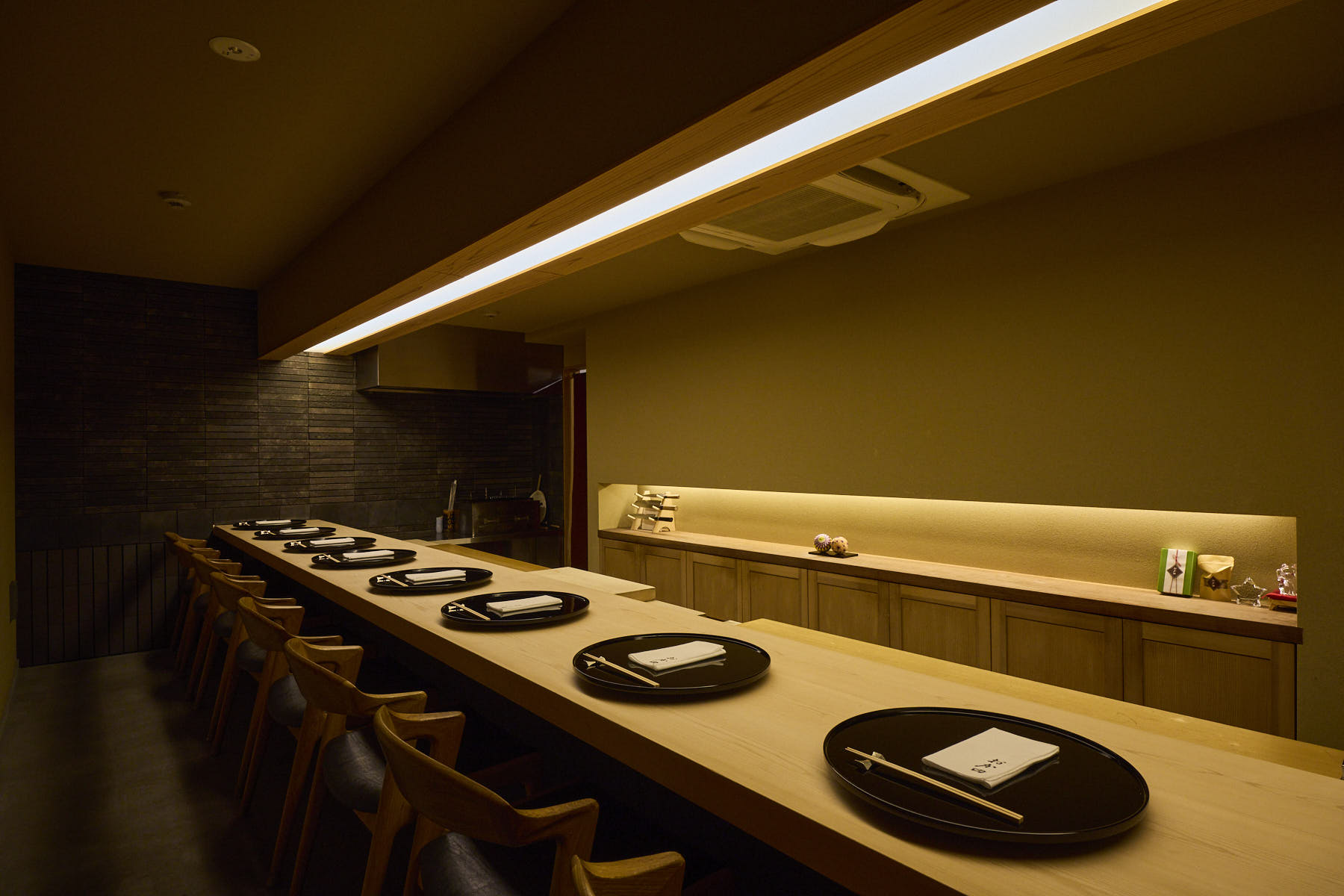
Inside, the dining room is built around a long Yoshino-cypress counter, its clean lines set against dark walls and warm, indirect lighting. Nine seats run along the six-meter slab, giving guests a clear view of the chefs at work. The dining trays are raised on pedestals, a reference to a traditional style once reserved for people of high status and a gesture of respect towards each guest. Private rooms offer a more secluded alternative.
CUISINE
Seasonal kaiseki, where nature meets the art of craft
The omakase menu follows the framework of traditional kaiseki, with sakizuke, soup, sashimi, shinogi, hassun, grilled and simmered dishes, clay-pot rice, dessert and matcha. Within that traditional structure, Okada’s cuisine reflects the seasons, combining high-quality ingredients with techniques refined at Kaiseki Ryori Masuda.
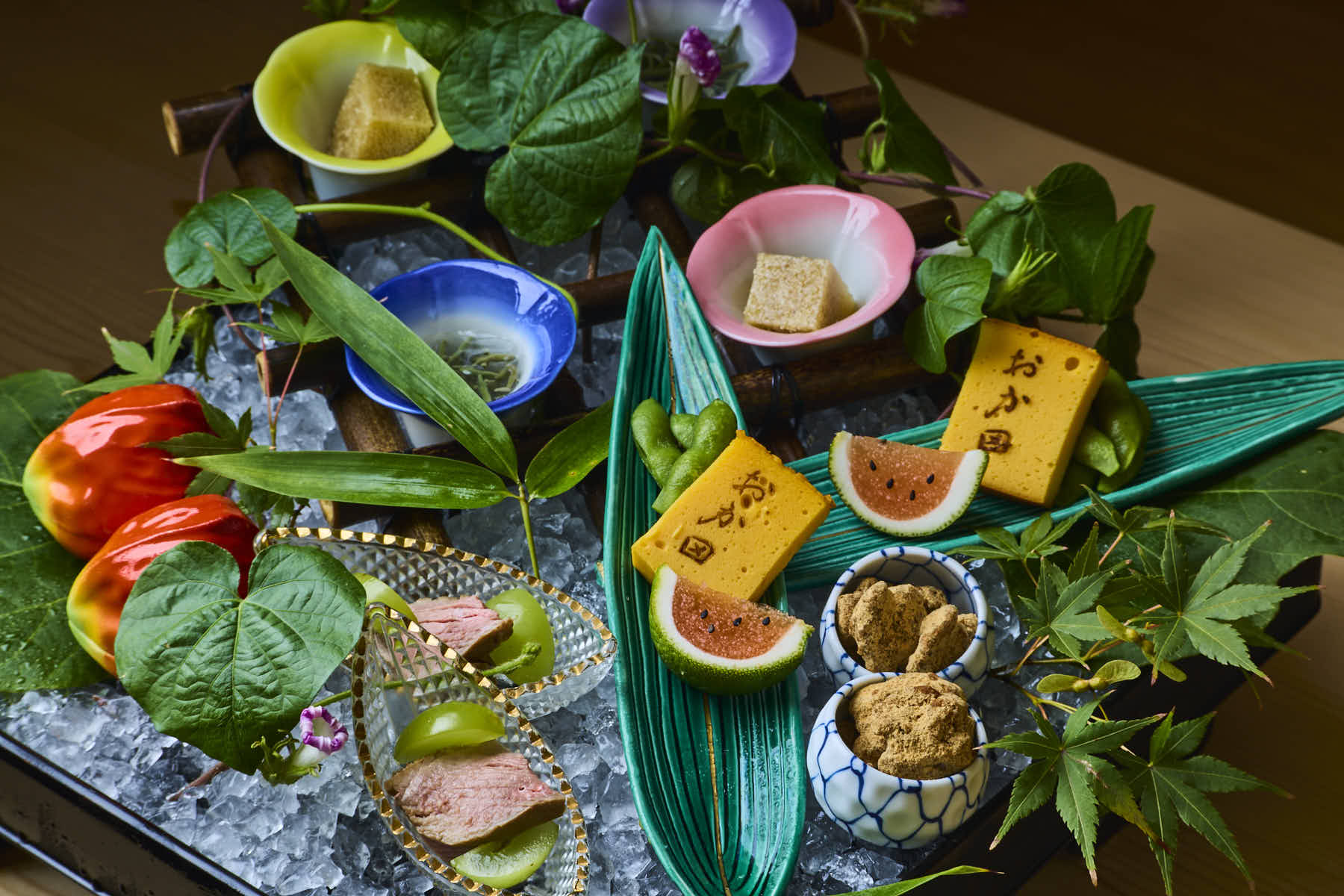
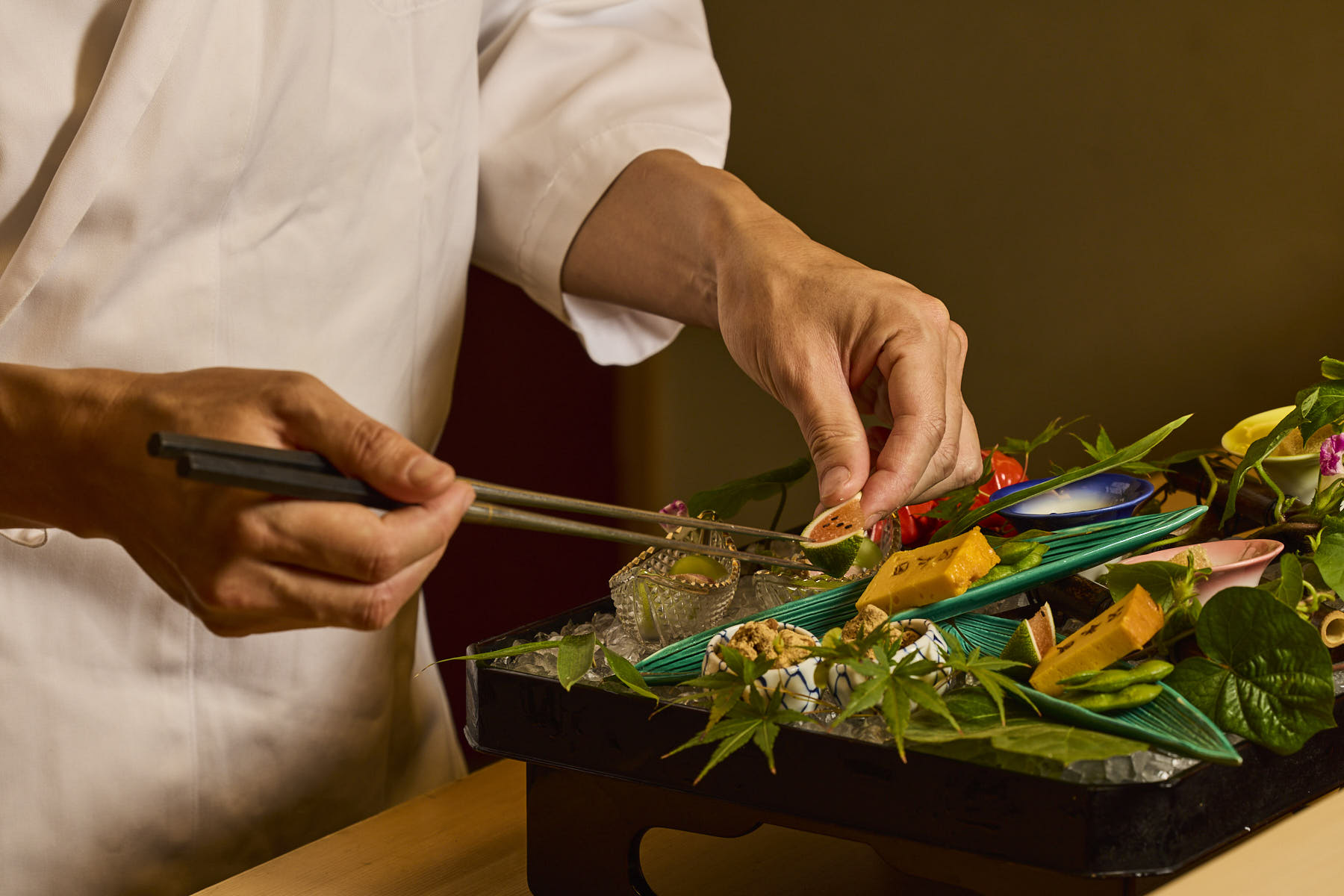
The hassun is one of Okada’s signatures, drawing on the seasonal calendar. The dish changes throughout the year, taking inspiration from celebrations and seasonal motifs including New Year, Setsubun, Hinamatsuri and moon viewing. Its presentation is meticulous, with an array of small dishes arranged across carefully chosen vessels and accented with seasonal flowers and foliage. The colorful summer platter, for example, is filled with seasonal ingredients such as junsai, pike eel roe, smoked duck, cha-mame beans and watermelon.
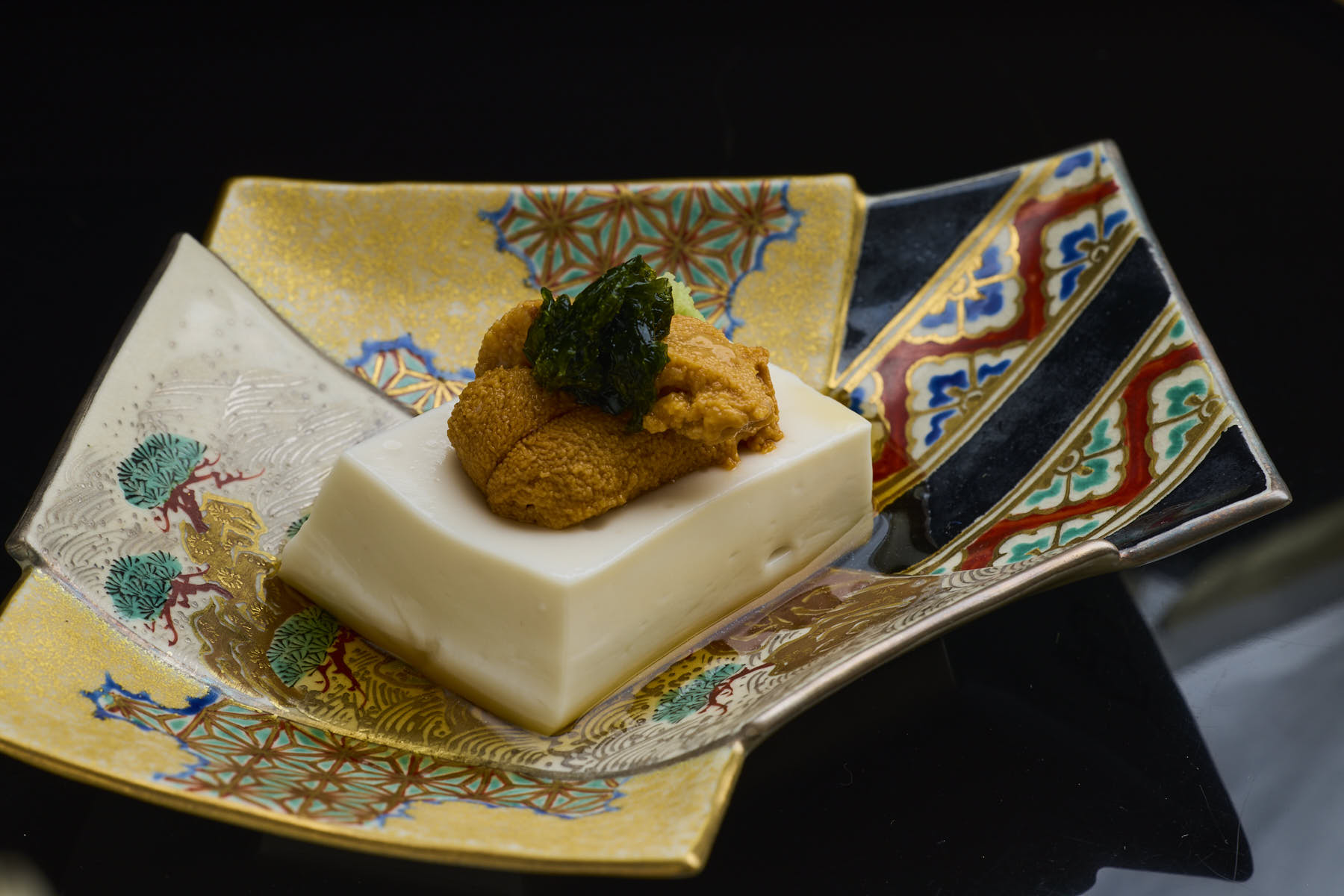
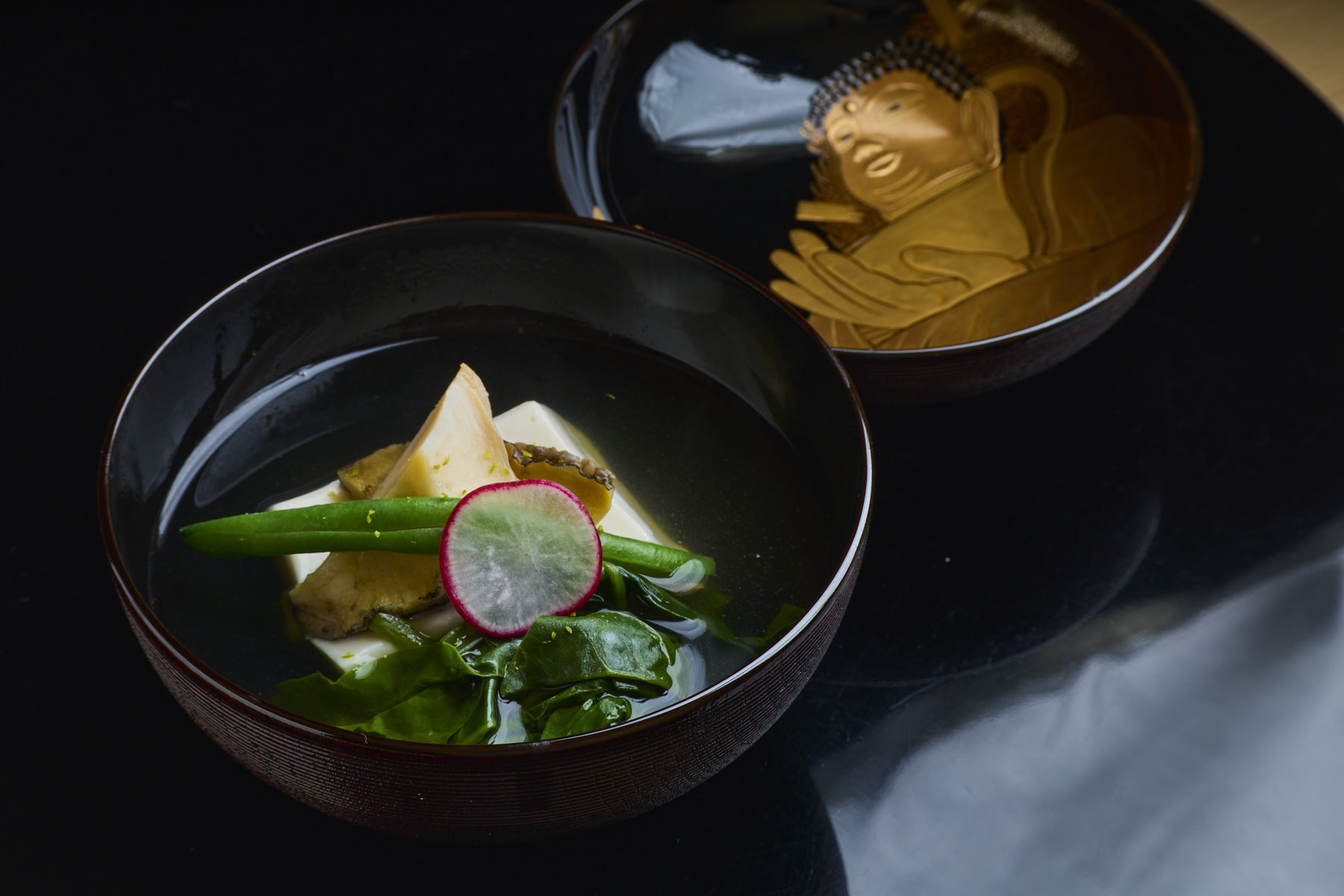
A deceptively simple sesame tofu reveals the chef’s craftsmanship. Polished sesame seeds are ground by hand for a full hour before being set with Yoshino kudzu starch, giving the tofu its smooth texture and concentrated flavor. It is finished with Hokkaido sea urchin and fresh seaweed. For the soup, high-grade ma-kombu is steeped at 65 to 70°C to extract the dashi before the temperature is lowered and bonito flakes are added for a clean yet deep flavor.
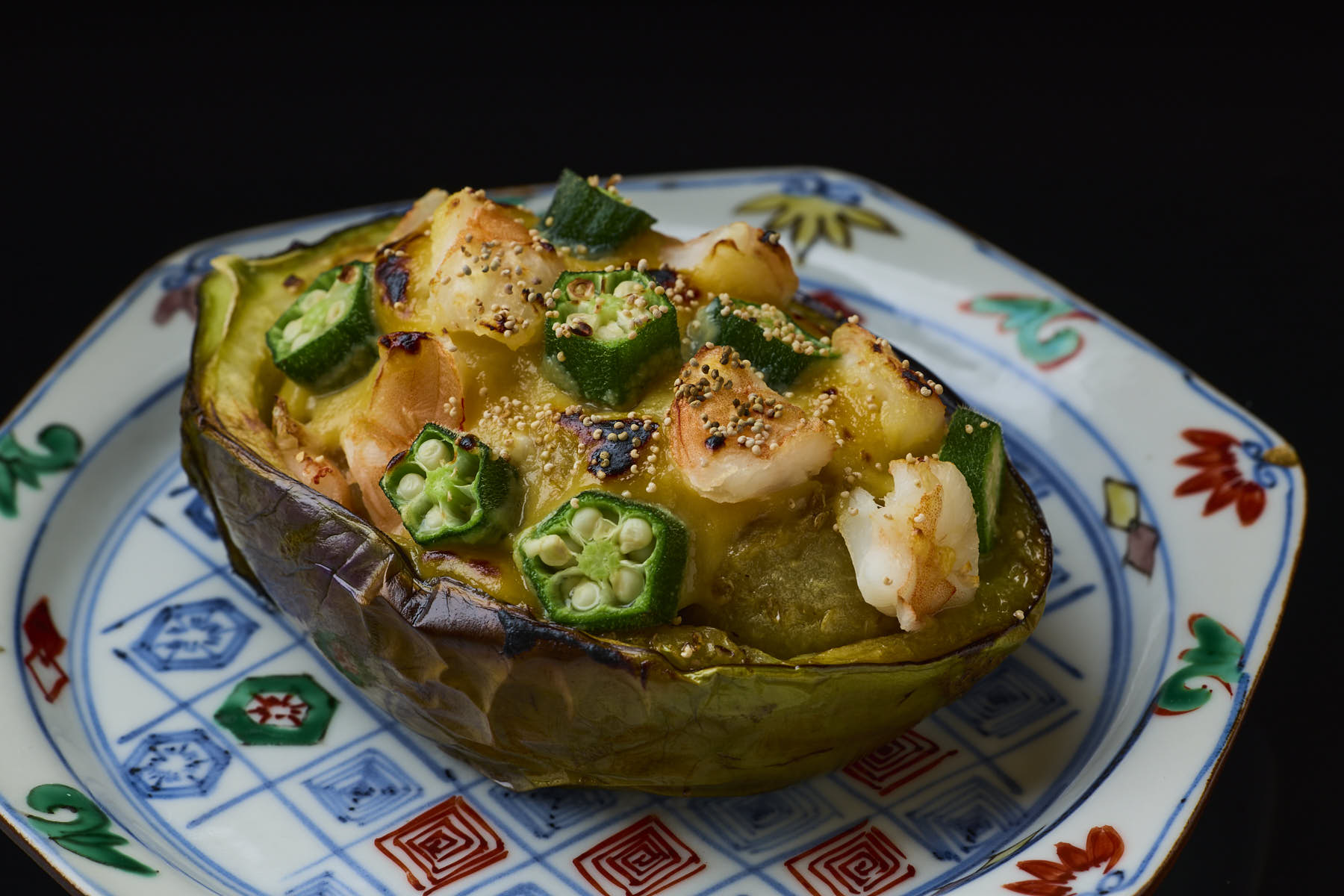
Local produce also has a prominent place on Okada’s menu. Yamato-maru eggplant, a traditional Nara vegetable, is hollowed out to form its own serving dish. The accompanying ingredients are prepared separately, before being returned to the eggplant dish. The dish is coated in tama-miso, a rich mixture of egg yolk, white miso and mirin, and grilled until lightly browned.
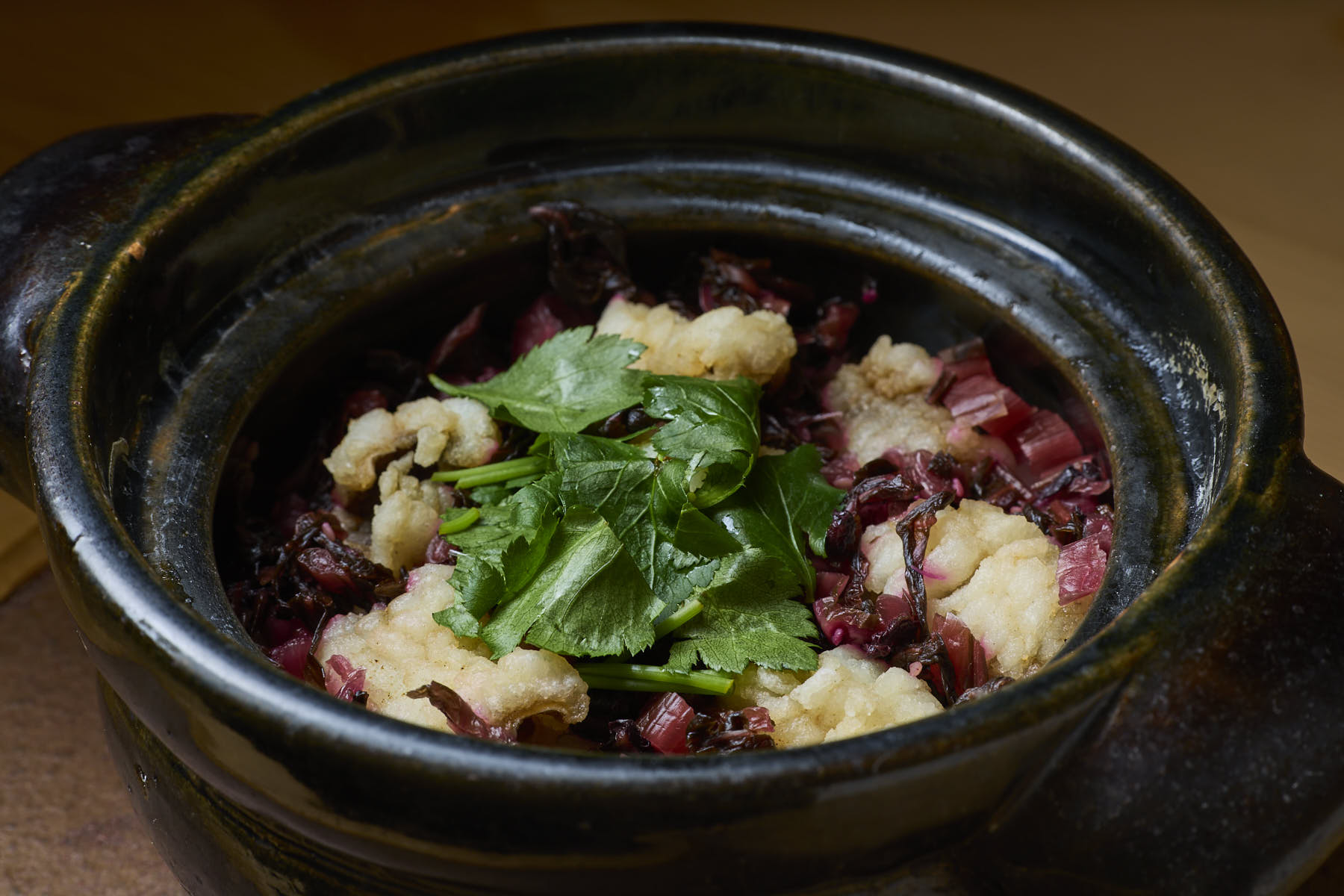
The rice dish is prepared separately for each party in a traditional clay pot. The toppings change from month to month, with combinations such as pike eel and shibazuke pickles, matsutake mushrooms, simmered conger eel with soft-boiled egg or beef with corn. When the lid is lifted at the table, the rich aroma fills the room.
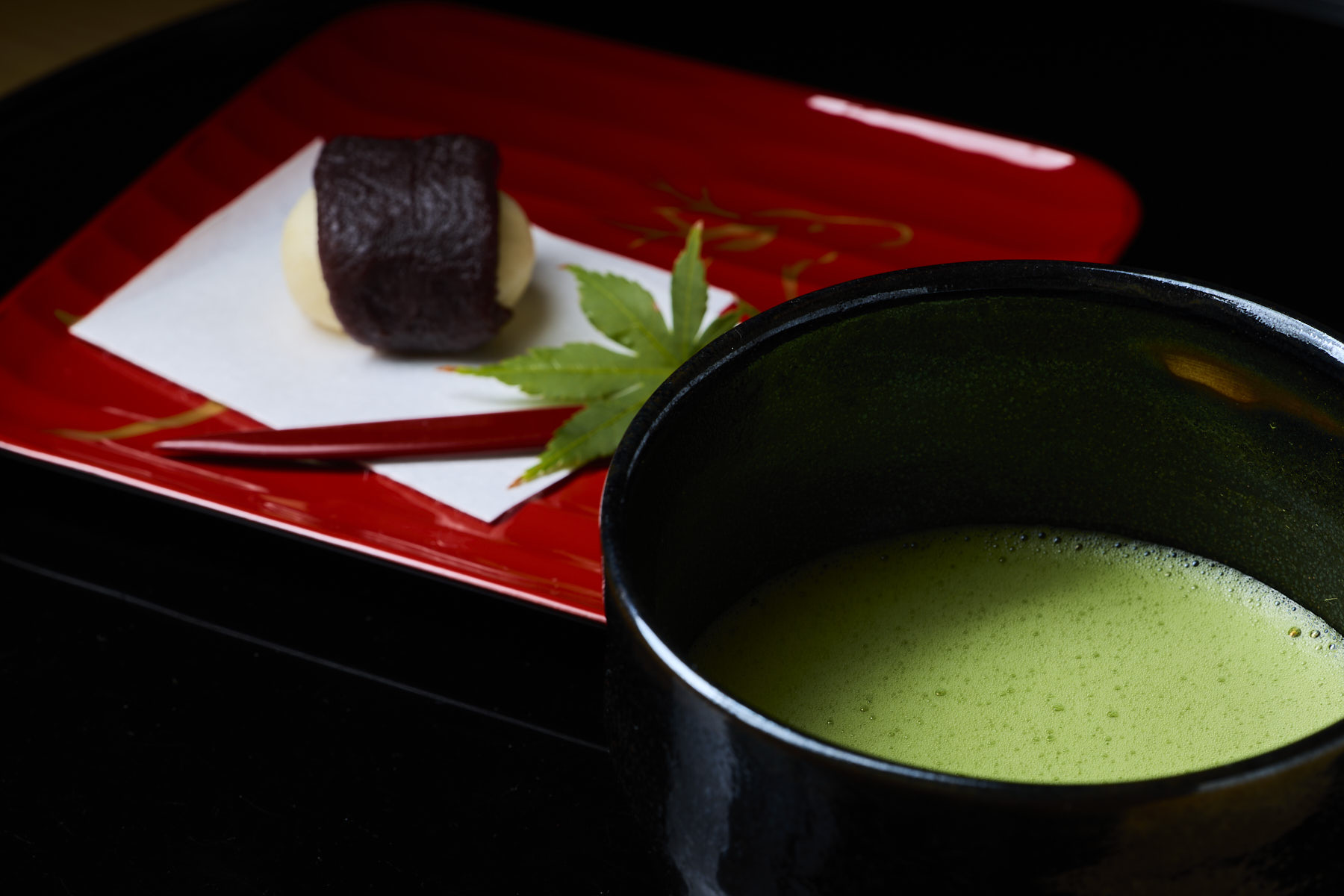
Dessert continues the seasonal theme. Around the autumn moon-viewing season, Kansai-style dango take an elongated form and are topped with sweet red bean paste, accompanied by freshly whisked matcha.
INGREDIENTS
For Okada, sourcing begins close to home. The Nara-born chef works directly with local growers, sometimes visiting farms himself shortly before the restaurant opens for service. He likes to incorporate traditional local produce, including Yamato-maru eggplant, into his menu. Yamato beef provides another connection to Nara, while Yamagata beef is also used. Seafood is sourced through Osaka and the sweetfish is wild-caught in the Yoshino region.
The chef also draws selectively from producers across Japan. Particular attention is given to the ingredients used for dashi. Ma-konbu from Kuroguchi-hama in southern Hokkaido is aged for more than two years and stored specifically for Okada’s kitchen. It is paired with hon-karebushi, fermented and dried bonito from Makurazaki, prepared with the darker, blood-rich portion of the fish removed for a cleaner aroma and flavor.
The rice comes from Shiga Prefecture, where pesticide-free Omi rice is cultivated using oxygen-rich water from the Lake Biwa region. Okada was drawn to the growing environment, where flowing river water provides the paddies with a steady supply of mineral-rich water.
CHEF
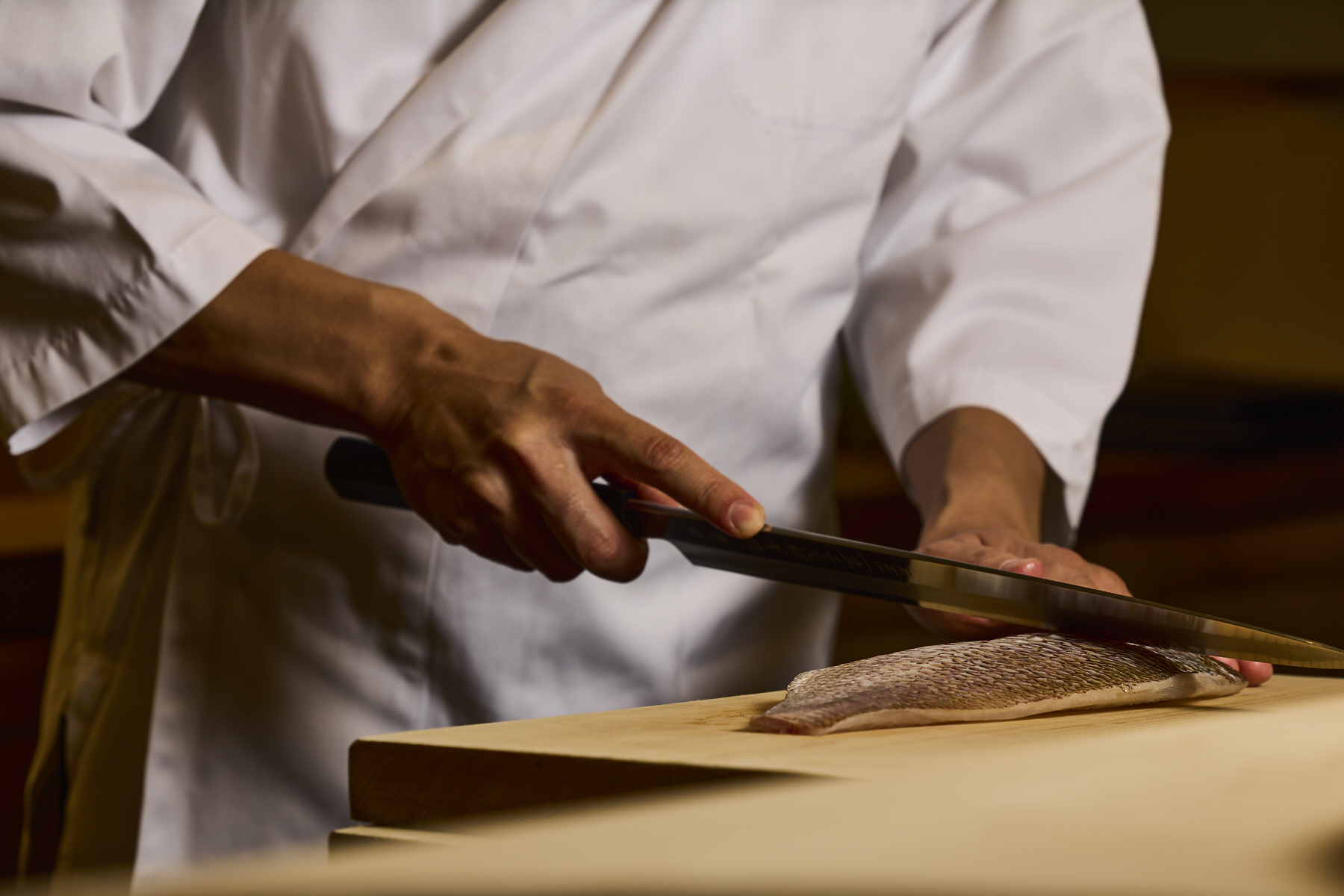
Naoki Okada
Tableware
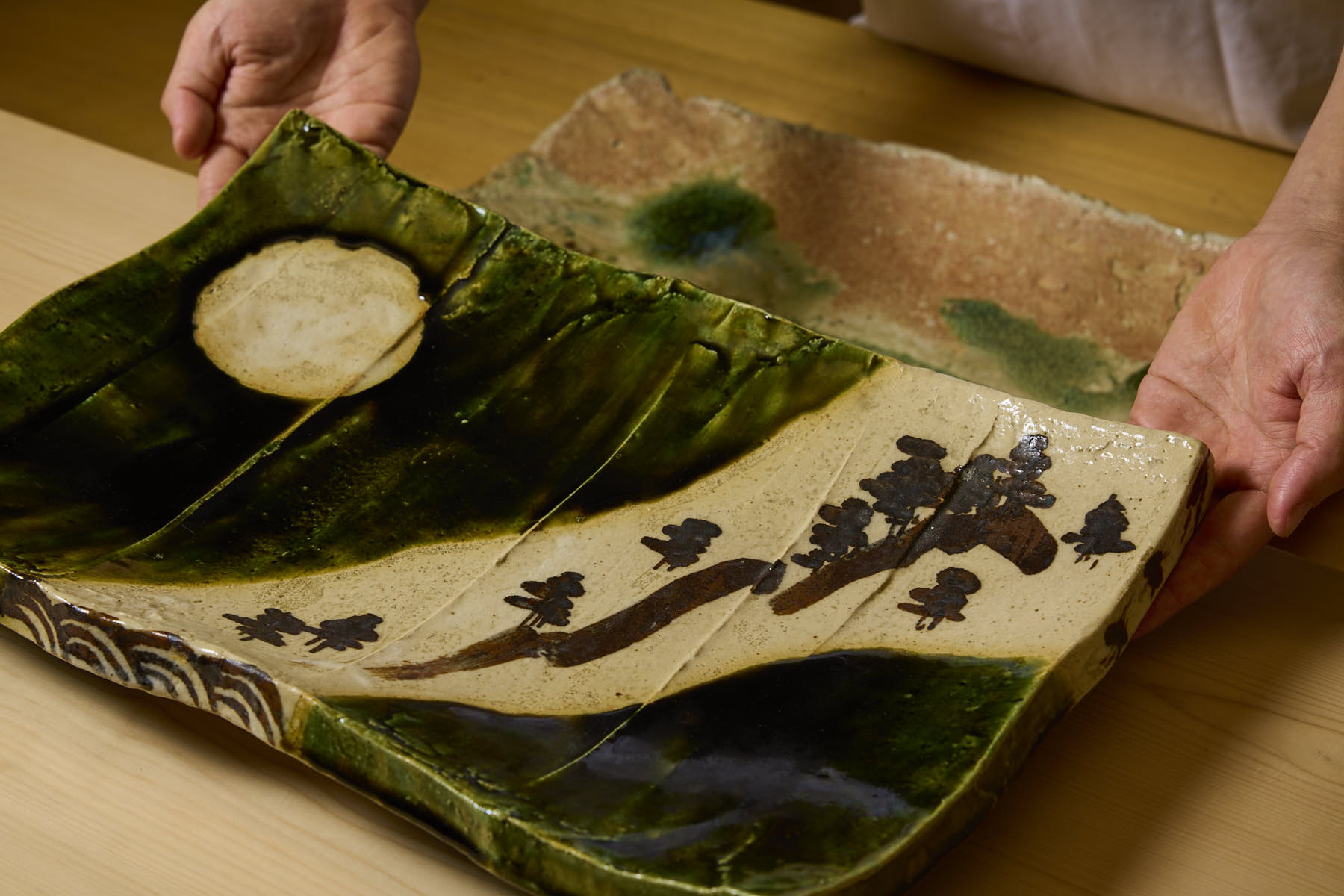
Tableware plays an essential role in Okada’s signature hassun. Among the restaurant’s collection are substantial Oribe-ware platters that the chef bought in Kyoto while still in his twenties, years before opening his own restaurant. He purchased them with the intention of one day using them at his own counter.
Today, the collection extends from ceramics to lacquerware and is large enough to require a separate warehouse about a ten-minute walk from the restaurant. As the menu changes each month, the staff selects and transports the pieces needed for the new season.
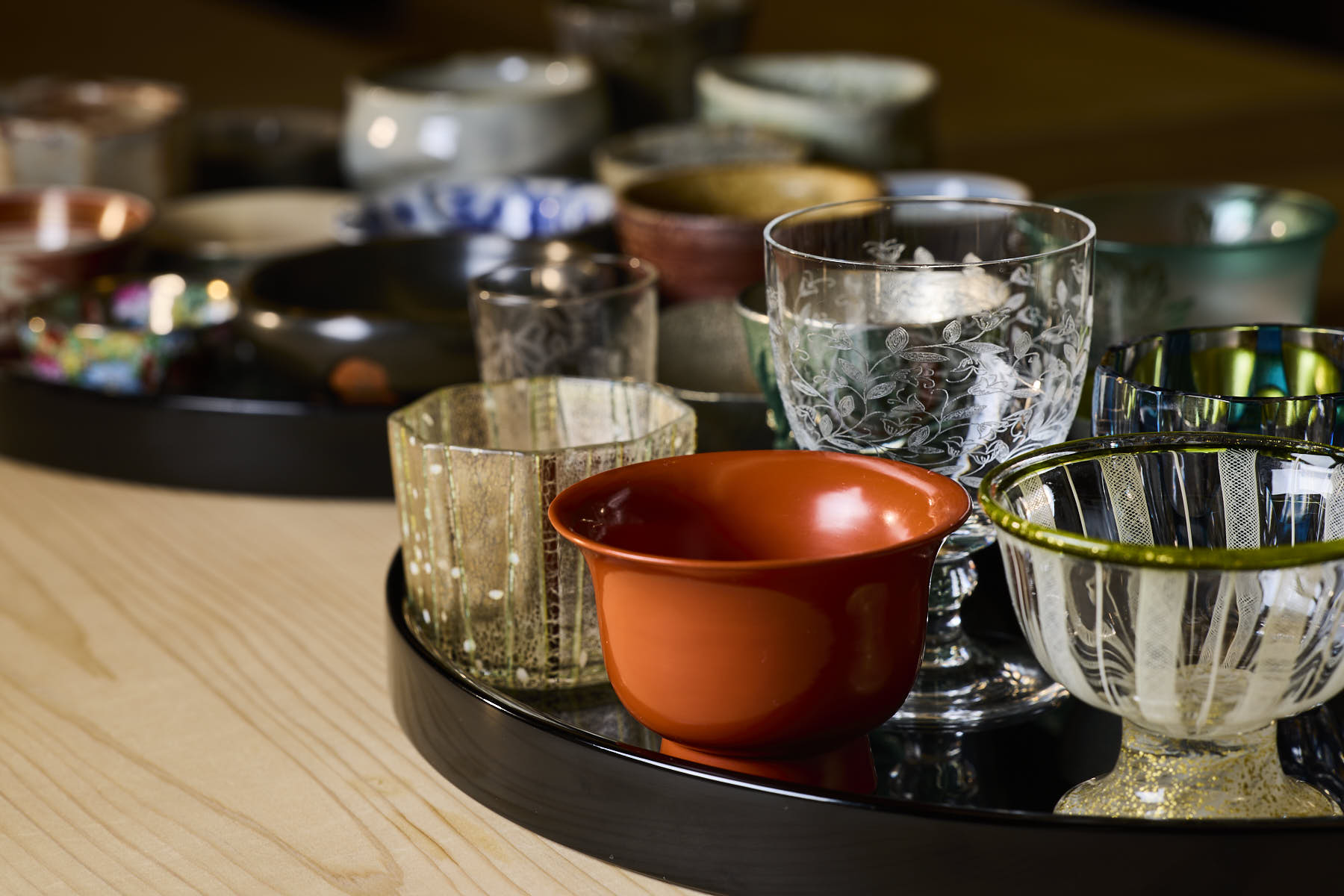
Sake glasses range from antiques to works by contemporary craftspeople, including several with connections to Nara. Among them are glass artist Shigehiko Kawakita, lacquer artist Shosai Kitamura and ceramicist Kai Tsujimura. Guests are invited to choose their own cup, adding a small personal ritual to the meal.
The restaurant also commissions its own lacquered soup bowls, with designs corresponding to each of the twelve months. Motifs range from Nara’s Great Buddha and cherry blossoms to wisteria, summer fireworks and, in December, Santa Claus. The bowls are made in Wajima, Ishikawa Prefecture, by Shokodo and the Konishi Shogoro Lacquerware Shop.
Course
- The price includes our booking fee of ¥8,000
- The price includes our booking fee of ¥8,000
- The price includes our booking fee of ¥8,000
- The price includes our booking fee of ¥8,000
- The price includes our booking fee of ¥8,000
- The price includes our booking fee of ¥8,000
- The price includes our booking fee of ¥8,000
- The price includes our booking fee of ¥8,000
Nara
Okada
おか田


- GENRE
- Kaiseki, Nara
- ADDRESS
-
Nori Building Imamikado 1F, 26-2 Imamikadocho, Nara, Nara, Japan

- OPEN
- 11:30AM-1PM/6PM-8PM
- CLOSED
- Sundays
- URL
- NA
- PHONE
- NA


