

Tokyo
Sushi Sakui
鮨 さく井
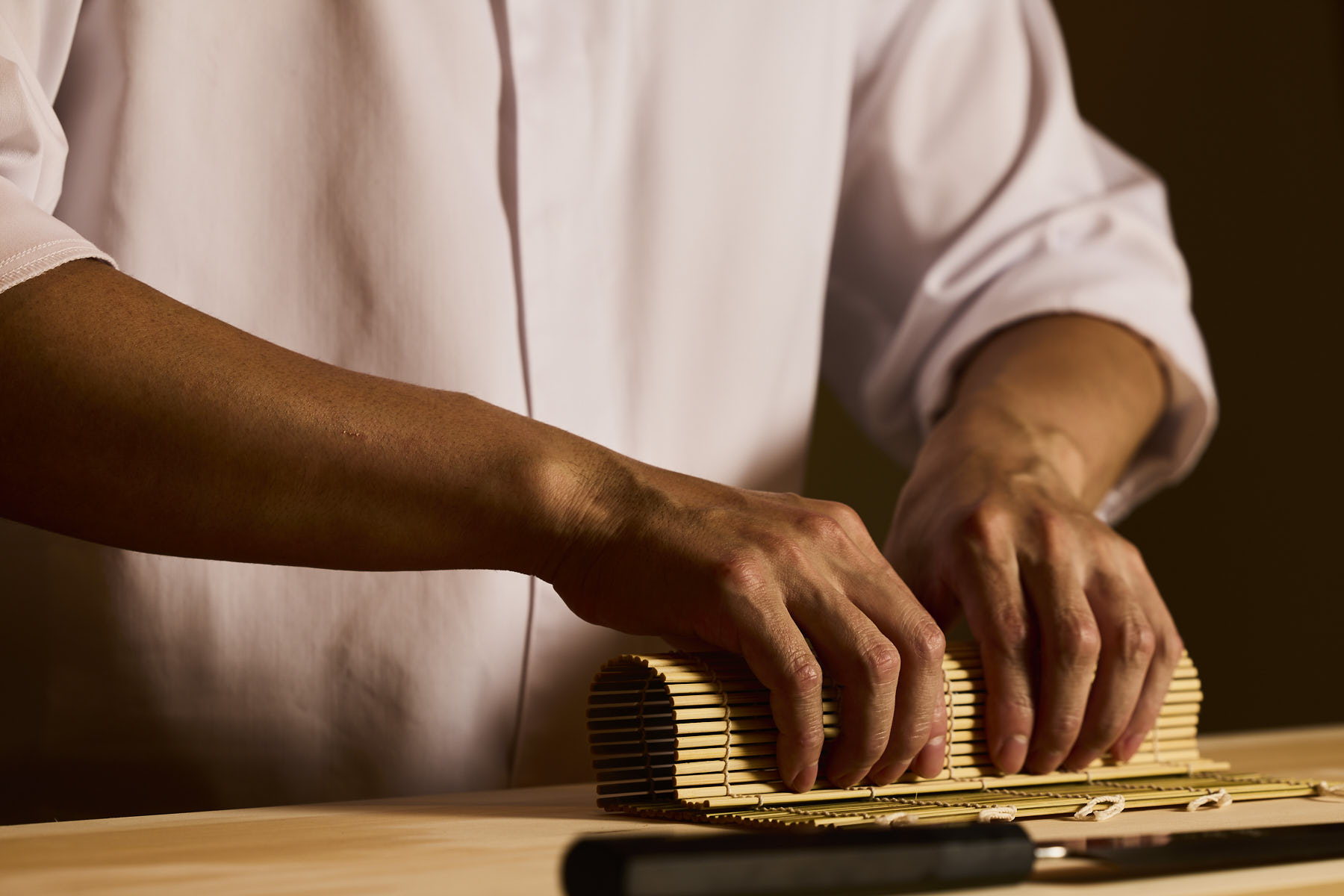
After a decade of refining his craft at renowned Sushi Masuda, Masato Sakui is ready to put his name on the door. Sushi Sakui marks a new chapter for him as he defines his own approach to Edo-mae sushi. His shari is the defining signature, lightly seasoned and shaped to gently fall apart. He also places unusual emphasis on makimono, seeing rolls as an opportunity to express his style. Watching him work across the intimate 8-seat counter, guests can sense the dignified beauty of Japanese tradition.
Opened in September 2026, Sushi Sakui is located on the third floor of a new building in Azabu-Juban, just a short walk from Roppongi Hills. Rather than choosing one of Tokyo's established luxury districts, Sakui was drawn to the neighbourhood's enduring character. "It still carries the atmosphere of old Tokyo despite being in the centre of the city," he says.
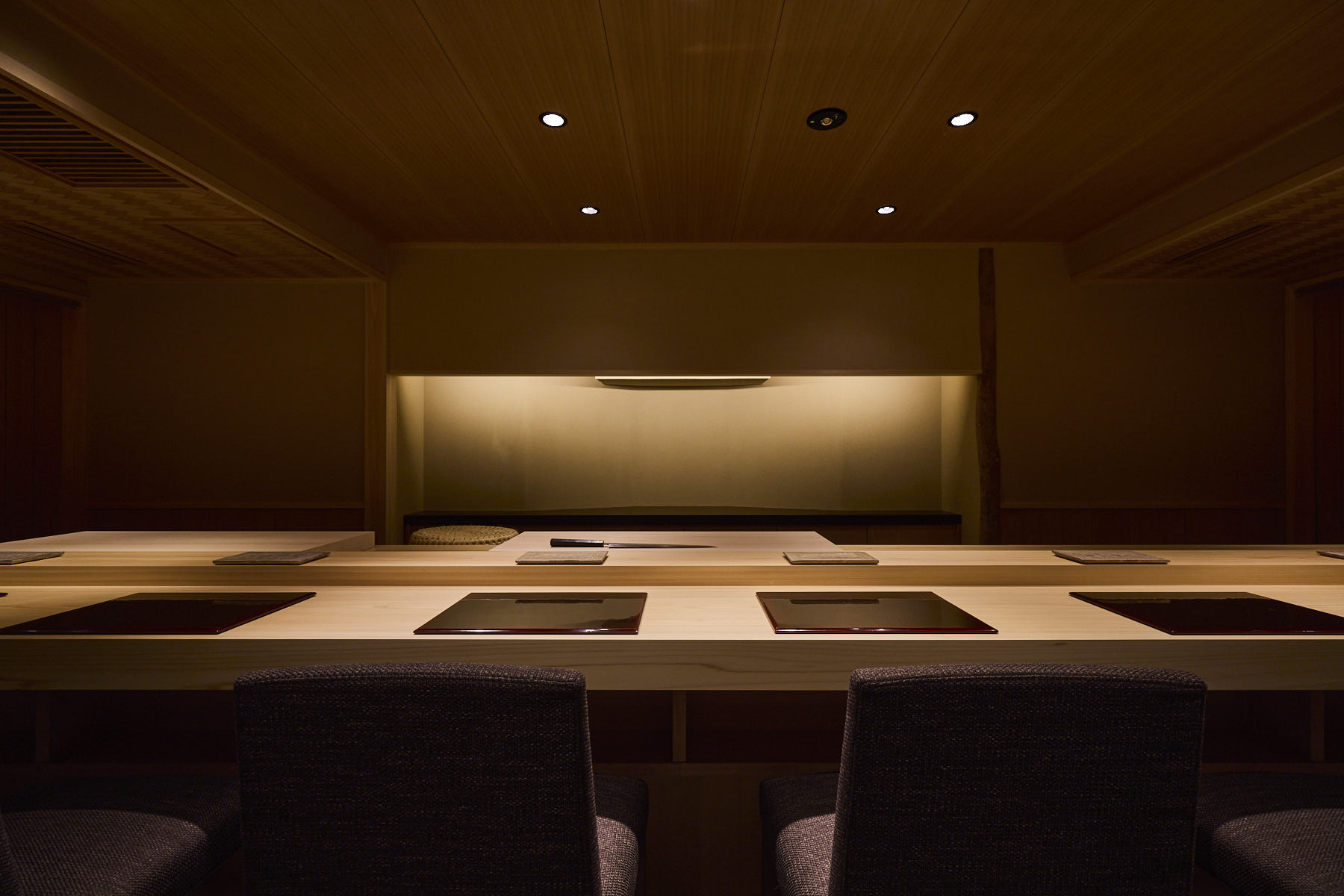
Inside, a six-meter counter carved from Kiso cypress forms the centrepiece of the dining room. Vermilion-lacquered serving trays add a subtle note of color against the natural wood. Nigiri is gently placed on Mishima ware with its understated floral and geometric motifs. The tsumami are served on contemporary ceramics collected by Sakui at exhibitions, with a particular preference for Iga-yaki pieces.
The sake selection is extensive, featuring around ten permanent labels and a further ten seasonal bottles. The collection draws from breweries across Japan, including Zaku from Mie Prefecture, brewed by Shimizu Seizaburo Shoten. Guests are encouraged to leave the selection to the chef, enjoying small pours from different producers throughout the meal.
CUISINE
Edomae precision, down to the last grain of rice.
Sakui's omakase is rooted in traditional Edo-mae sushi with seasonal tsumami and pieces of nigiri. It is often in the smallest details, from the temperature of the rice to the firmness of a cure, that his own style becomes most apparent.
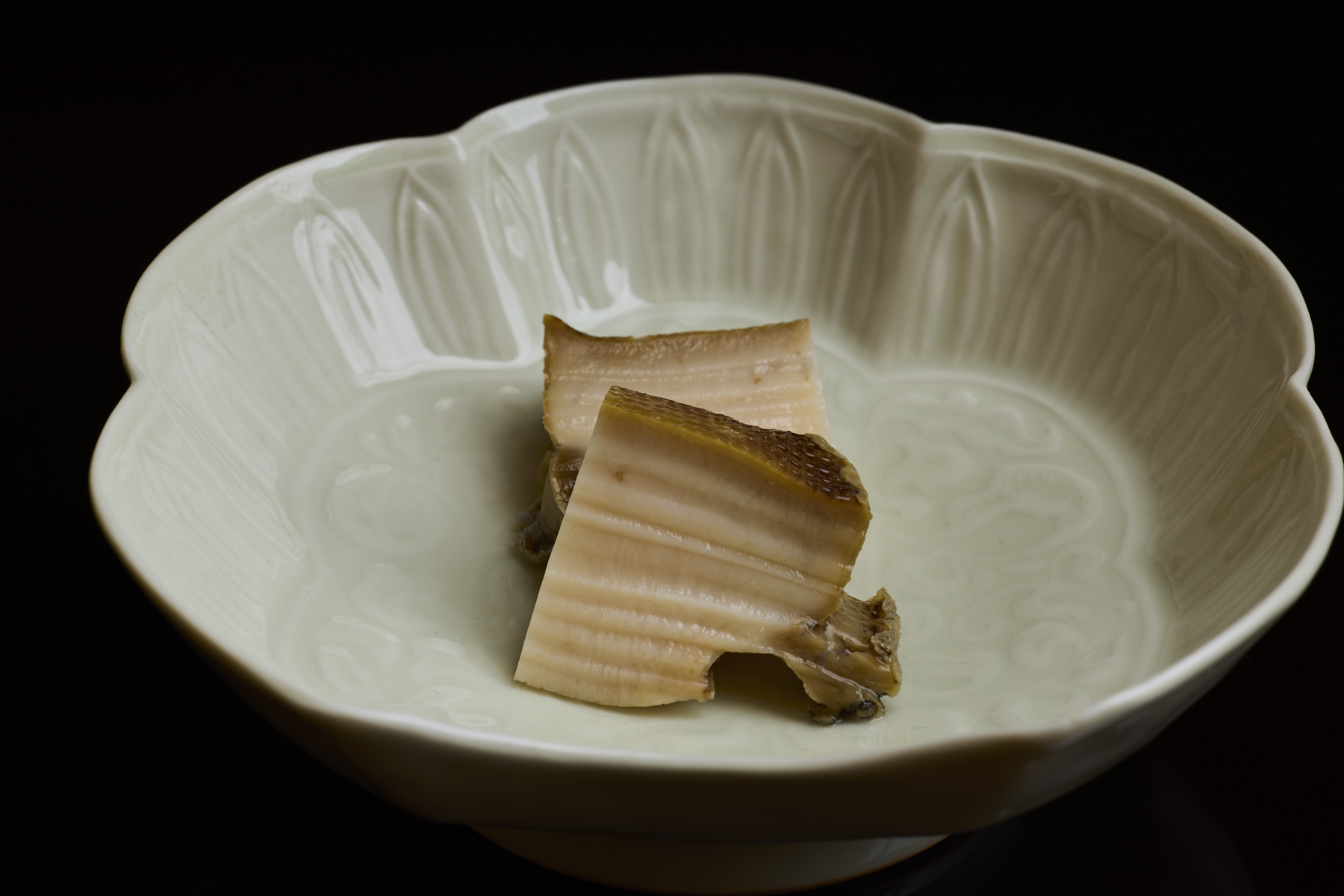
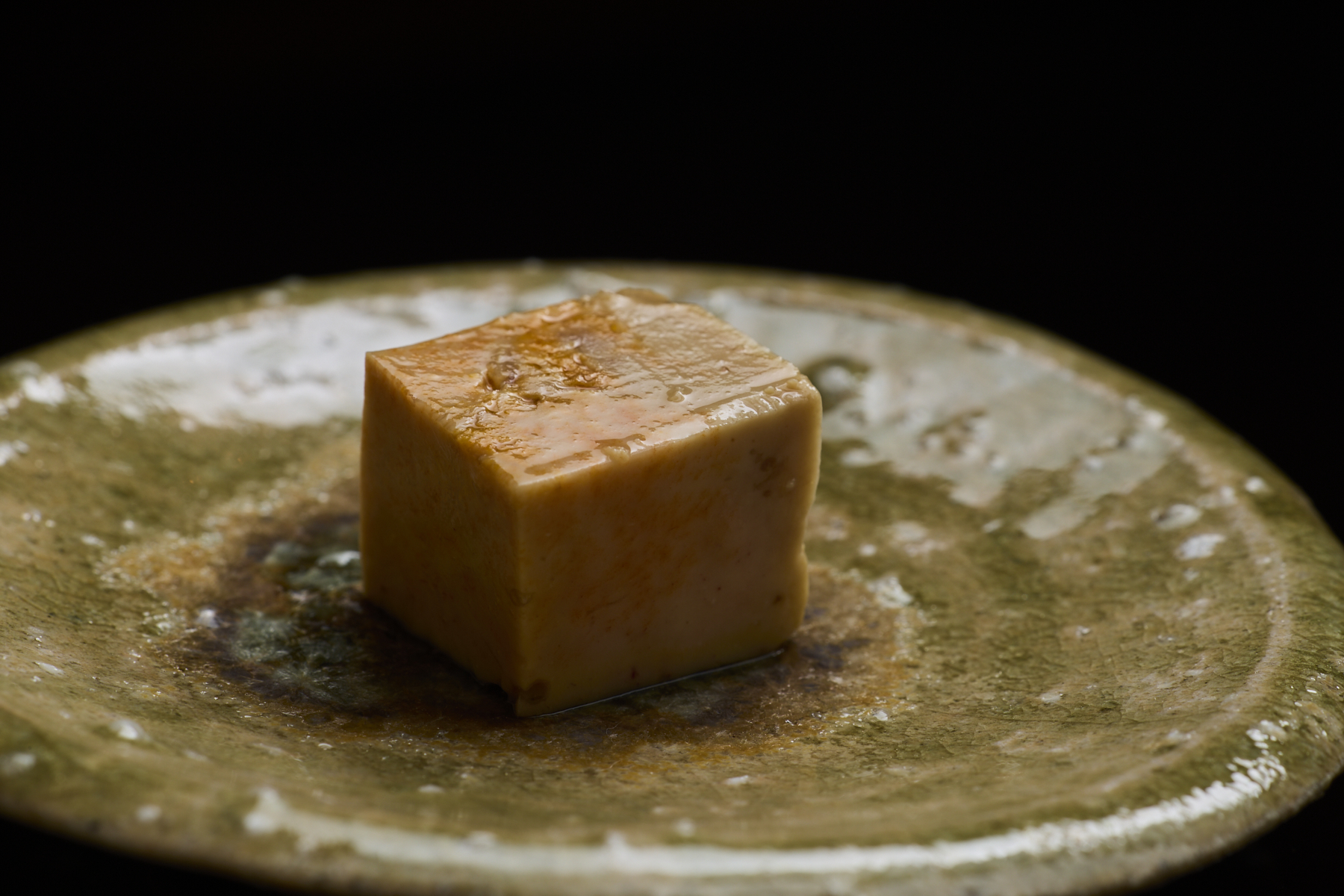
Steamed abalone is cooked gently in sake until tender, preserving both its natural sweetness and supple texture. Straw-smoked bonito brings a gentle smoky note, while monkfish liver from Hokkaido is prepared slowly at a low temperature to achieve a moist consistency. Its sweetness is restrained so that its richness does not overwhelm other flavors.
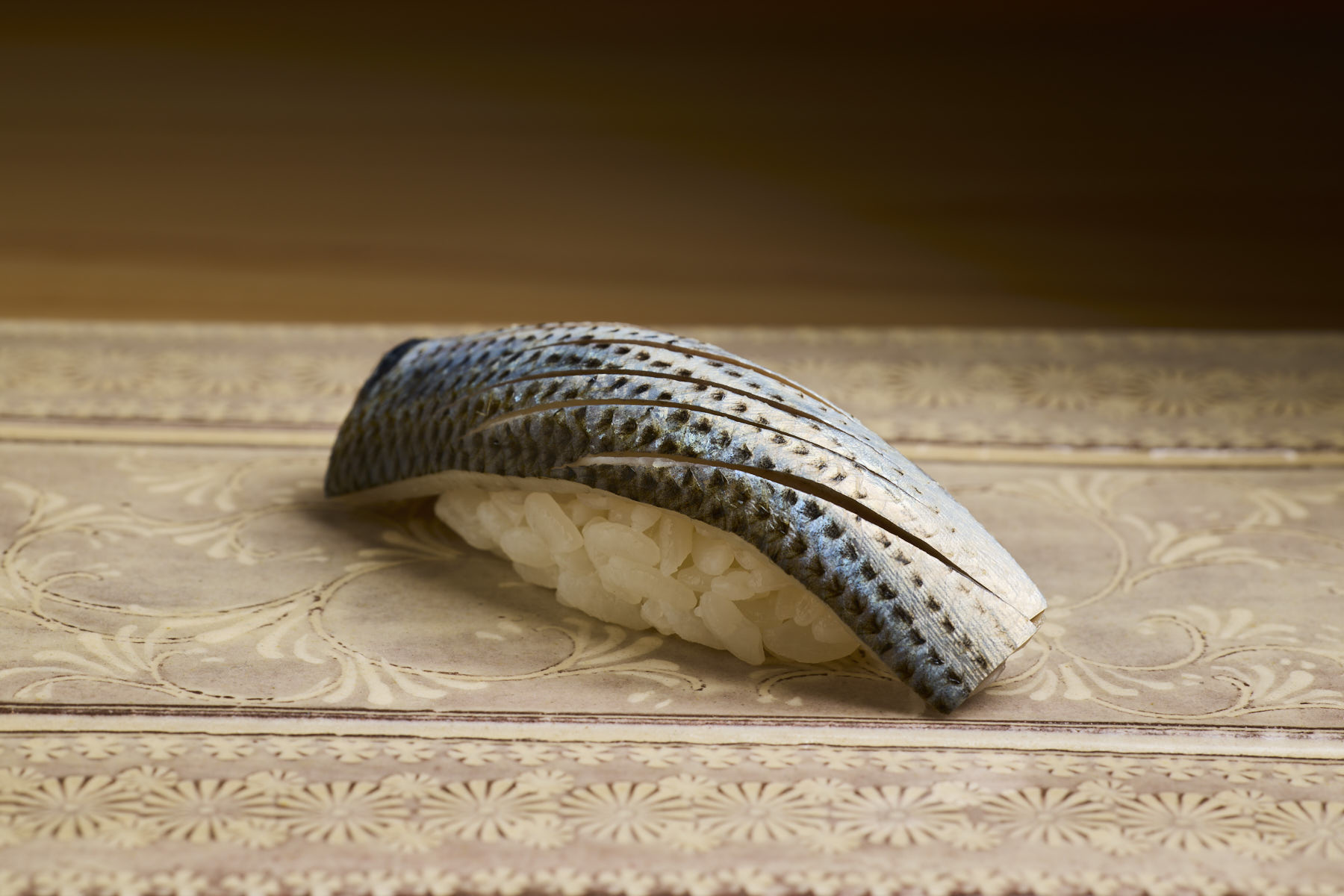
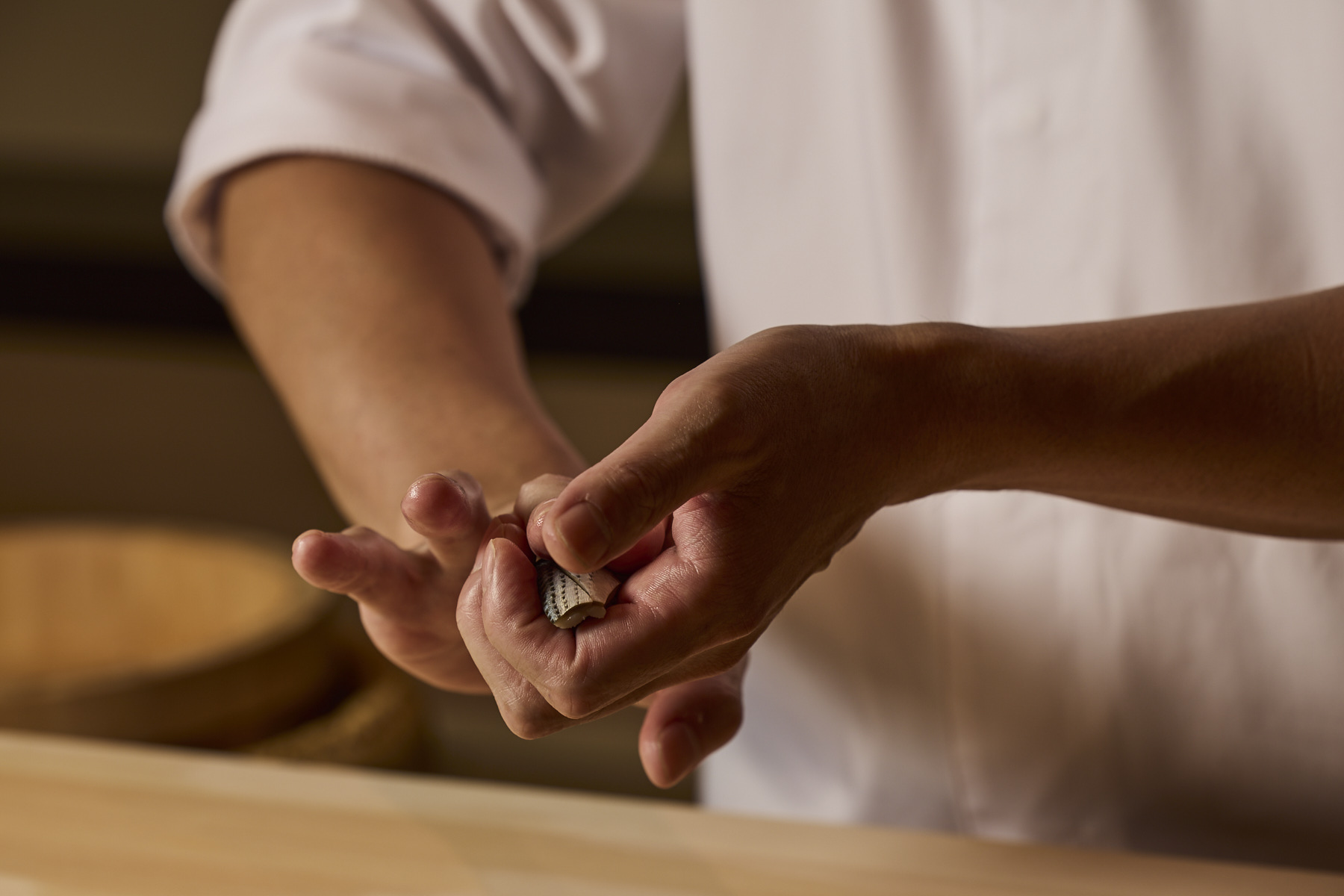
For nigiri, he places the utmost importance on the temperature and texture of his shari (vinegared rice). Lightly seasoned and delicately formed, each piece gently loosens the moment it reaches the palate, creating a precise balance between the rice and the topping. His kohada (gizzard shad) is particularly memorable. Sourced from Amakusa in Kumamoto Prefecture, the fish is firmly cured according to traditional Edo-mae techniques. The flavor is clean with a pleasing firmness and immaculate presentation.
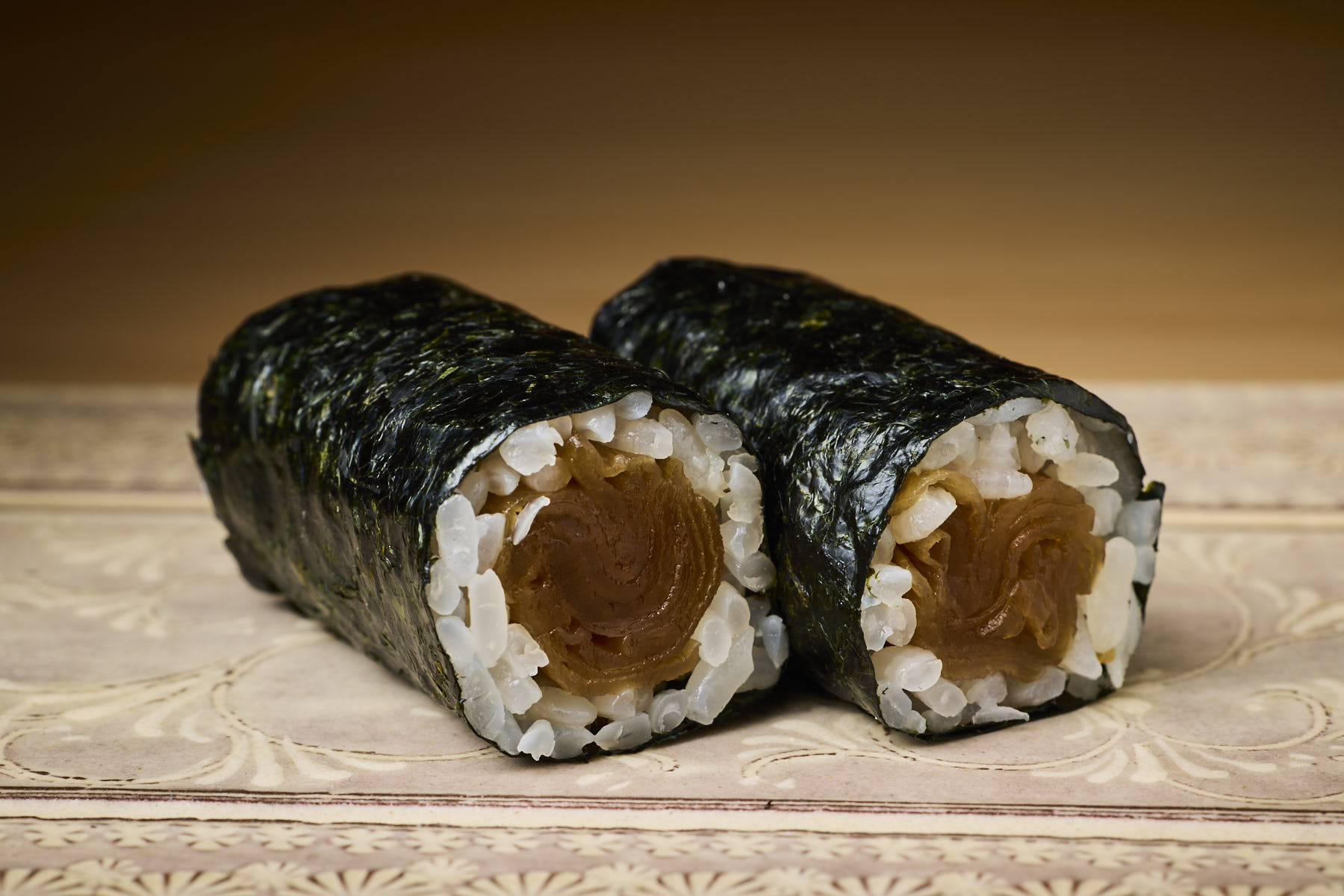
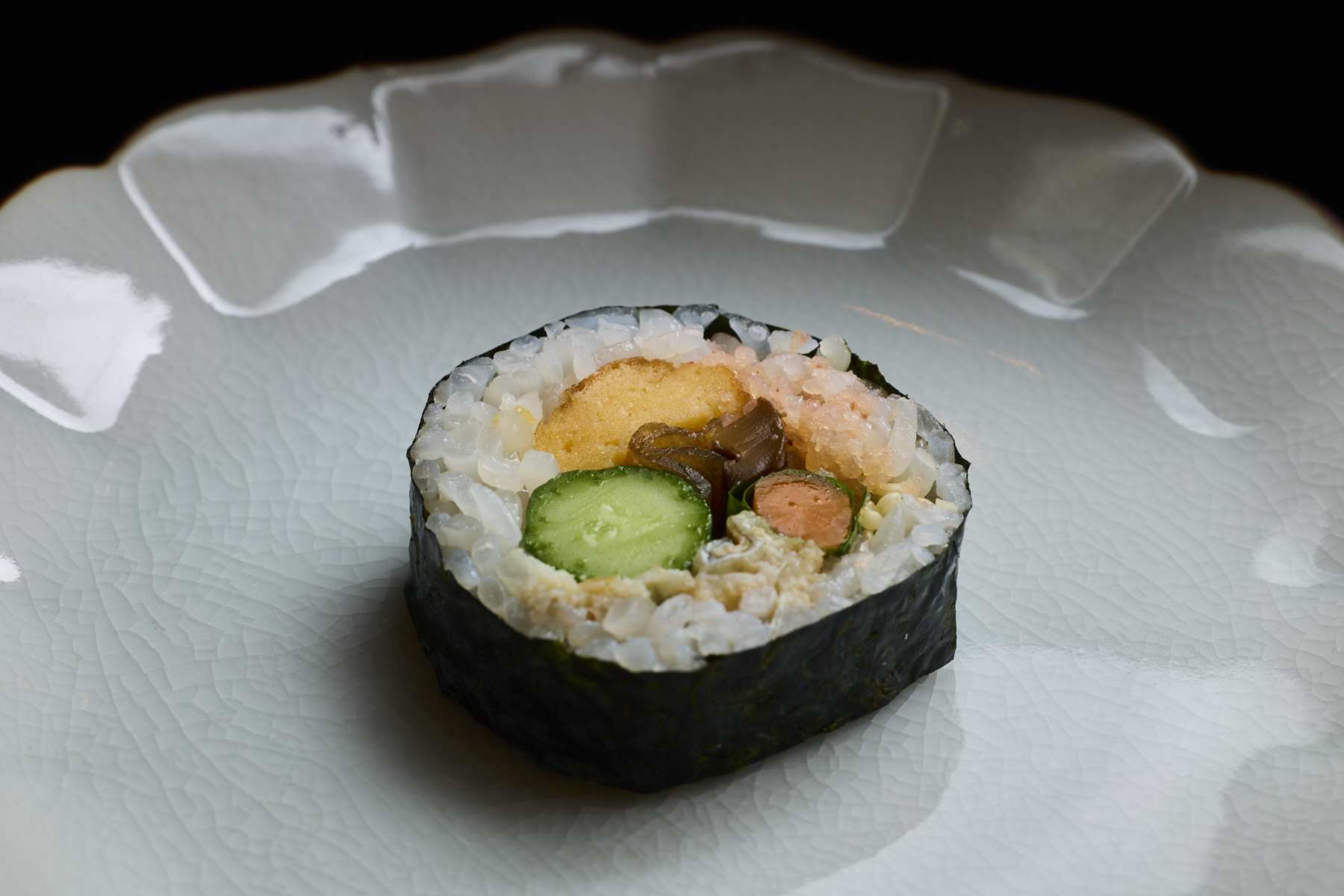
The nine-ingredient futomaki is carefully arranged. Its striking cross-section reveals egg, cucumber, conger eel, sesame seeds, miso-marinated burdock root, shiso leaf, oboro made from kuruma ebi (Japanese tiger prawn), kanpyo and shiitake mushrooms, each contributing its own flavour and texture. The kanpyo roll uses dried gourd from Tochigi Prefecture. Sakui gives it a gentler seasoning, allowing him to use a generous amount while retaining balance with his delicate shari.
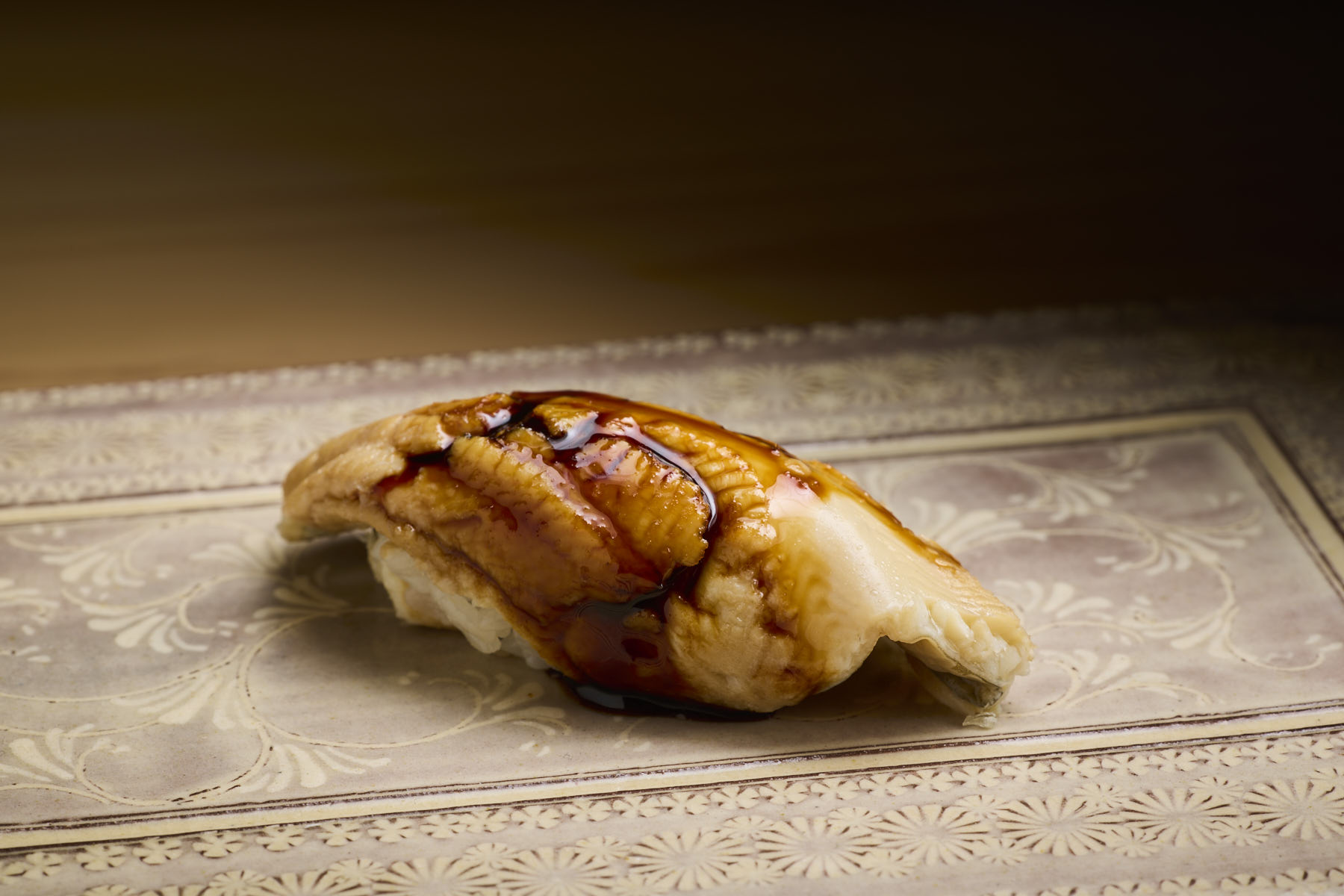
Conger eel from Tsushima in Nagasaki Prefecture is selected for its rich fat content, then cooked gently at a low temperature until exceptionally soft. The fish is finished with a rich tsume made by reducing its broth with soy sauce and coarse zarame sugar. A bowl of miso soup brings the omakase to a satisfying close.
INGREDIENTS
Sakui sources his seafood from both the Toyosu Market and direct shipments from producers around Japan. He begins most mornings at Toyosu, where years of trust established during his time at Sushi Masuda allow him access to some of the market's finest catches. He also works with smaller producers in regional communities and makes a point of visiting them routinely.
Many of the meal’s key ingredients come directly from their place of origin. White fish such as fat greenling are sourced from Ofunato in Iwate Prefecture. Abalone arrives from Boshu in Chiba Prefecture. The nori is also produced in Chiba and the salt comes from Okinawa. The ingredients trace a map of producers stretching across the country.
CHEF
Masato Sakui
The Rice
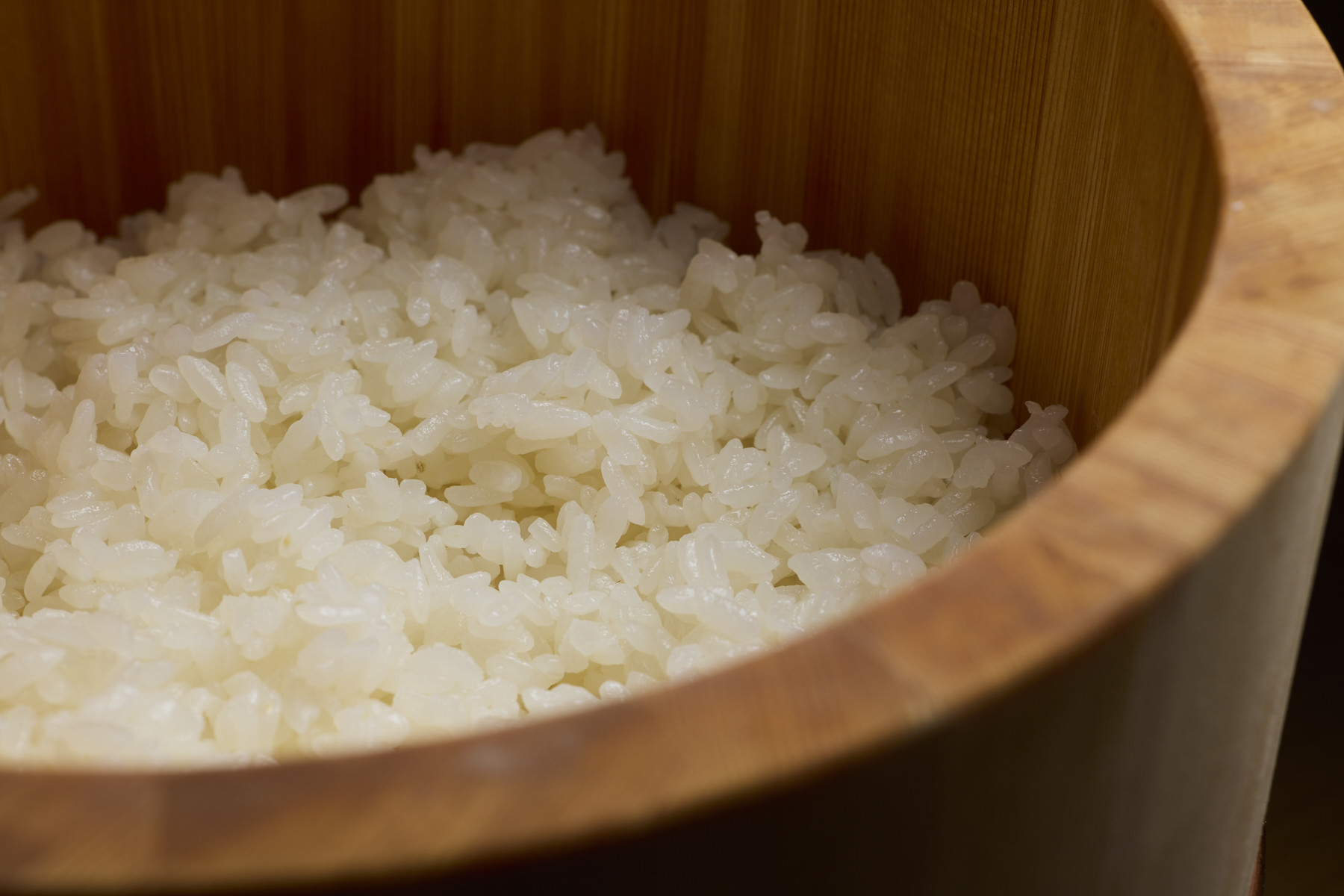
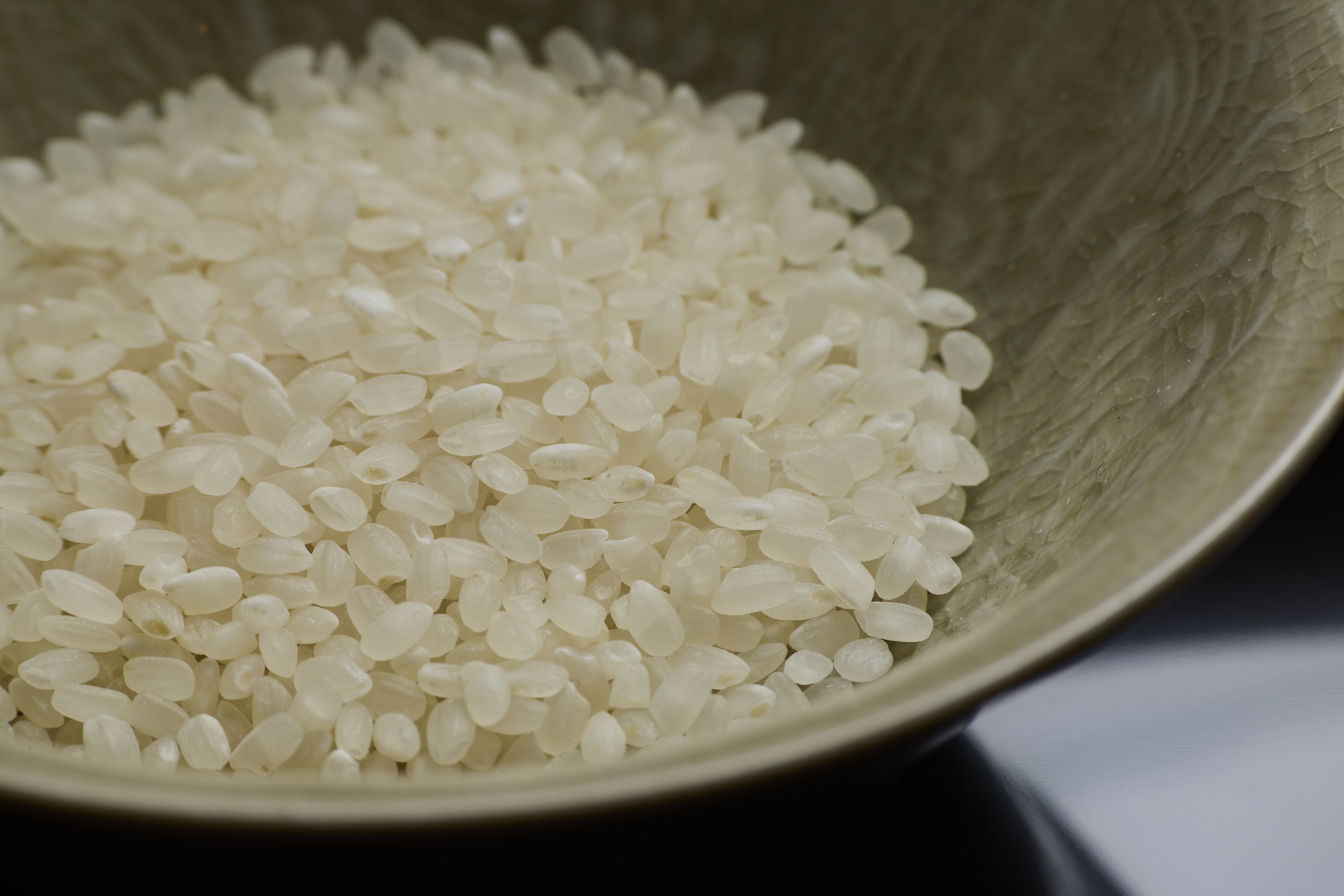
For Sakui, the shari is the foundation of every piece of sushi. He uses Aichi no Kaori rice from Aichi Prefecture, a variety characterised by unusually large grains and a pronounced flavour. While more challenging to shape than smaller-grained rice, Sakui chose it for the natural sweetness of the grain itself.
The rice is cooked in a traditional hagama pot and timed to coincide with guests' arrival. During the course, its temperature is carefully managed as each piece is formed by hand. The seasoning blends four different vinegars, with rice vinegar forming the base and red vinegar providing balance.
Course
- The price includes our booking fee of ¥8,000
- The price includes our booking fee of ¥8,000
Tokyo
Sushi Sakui
鮨 さく井


- GENRE
- Sushi, Azabu Juban
- ADDRESS
-
THE CITY Azabujuban AZUR 3F, 1-4-8 Azabujuban, Minato-ku, Tokyo, Japan

- OPEN
- 5:30PM/8:30PM
- CLOSED
- Sundays & Holidays
- URL
- NA
- PHONE
- NA


